
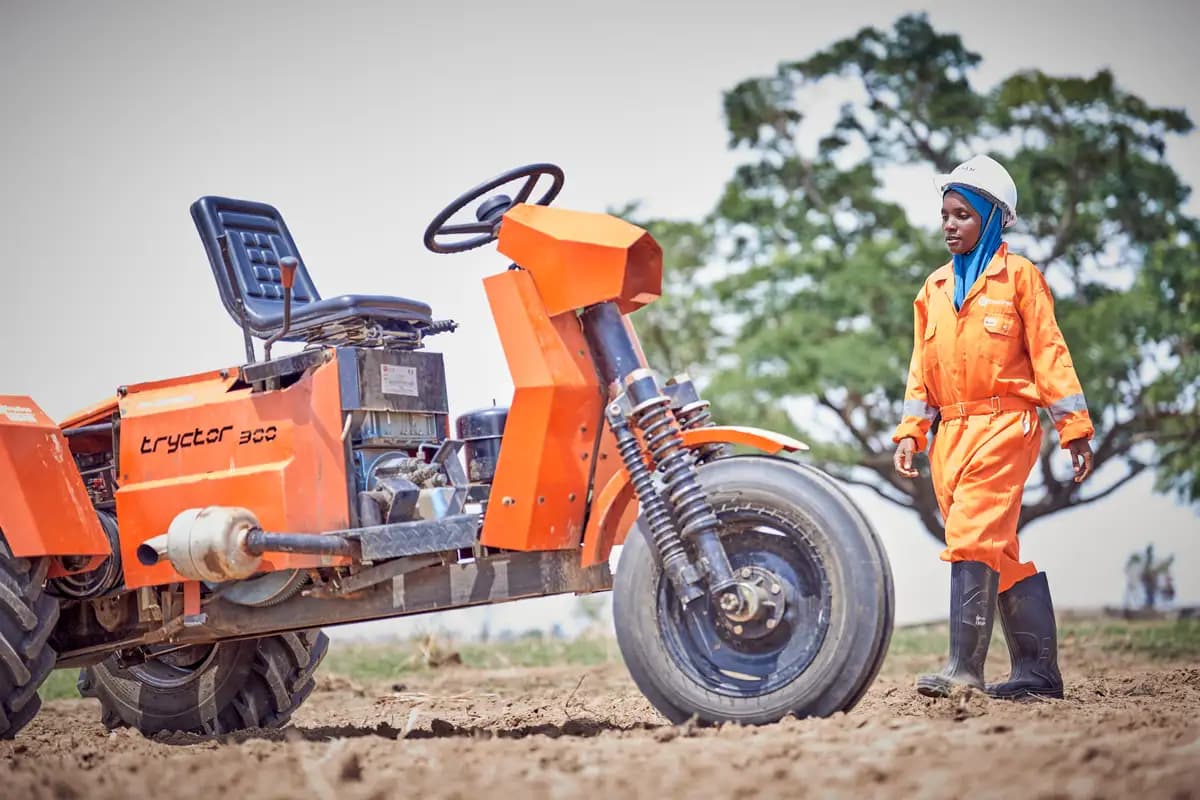
Nigeria's agricultural sector has long relied on government-led interventions to drive mechanization. From tractor distribution schemes to subsidized equipment programs, the public sector has dominated efforts to modernize farming. Yet despite decades of investment, Nigeria's mechanization level remains at just 0.027 horsepower per hectare (FAO Open Knowledge), far below the Food and Agriculture Organization's recommended 1.5 hp/hectare.
The bottleneck isn't funding alone. It's the model. Government programs struggle with sustainability, maintenance gaps, and inefficient distribution networks. The solution is a market-driven approach: Private-sector-led mechanization is already transforming agriculture in countries such as India, Kenya, and Bangladesh.
Nigeria's mechanization future won't be built by the government alone. It will be built by entrepreneurs, agribusinesses, and innovators who see opportunity where others see obstacles, working alongside a government that plays a different, yet still an essential, role.
Why Government-Led Mechanization Needs Private Sector Partnership
Government tractor schemes have been a fixture of Nigerian agricultural policy for decades, reflecting a genuine commitment to transforming the sector. But even the best-intentioned programmes face structural challenges that are difficult to solve from the public sector alone.
Maintaining equipment at scale requires local repair capacity and spare parts supply chains that take years to build. Reaching dispersed smallholder farmers across diverse geographies demands distribution networks that centralized models struggle to sustain. And when funding cycles shift, programmes that depend entirely on public budgets can lose momentum before they achieve lasting impact.
These are not failures of will. They are limitations of the model. And this is where the private sector steps in, not to replace government effort, but to extend its reach. Entrepreneurs have skin in the game in a way institutions cannot. If equipment breaks, they lose income. If farmers are not served well, competitors step in. That market discipline drives a different kind of efficiency, one that complements what government policy and infrastructure provide.
The most successful mechanization stories globally have not been government-only or private-only. They have been partnerships in which public investment in policy, infrastructure, and skills development creates the conditions for private players to deliver at scale.
How Private Sector Innovation Is Changing the Game
Across Nigeria, a new generation of agri-entrepreneurs is proving that mechanization works when it's driven by business fundamentals, not subsidies. Here's how:
1. Mechanization Service Providers (MSPs) Make Equipment Accessible
Instead of trying to get every farmer to own a tractor, MSPs offer equipment as a service. Farmers pay per hectare for plowing, planting, or harvesting, making mechanization affordable without the capital burden of ownership. These Mechanization Service Providers (MSPs) earn sustainable income, maintain their equipment (because downtime equals lost revenue), and scale by serving multiple farmers. One trained MSP can serve 50–100 farmers per season, multiplying impact far beyond what individual ownership models can.
2. Tech Platforms Connect Farmers to Services
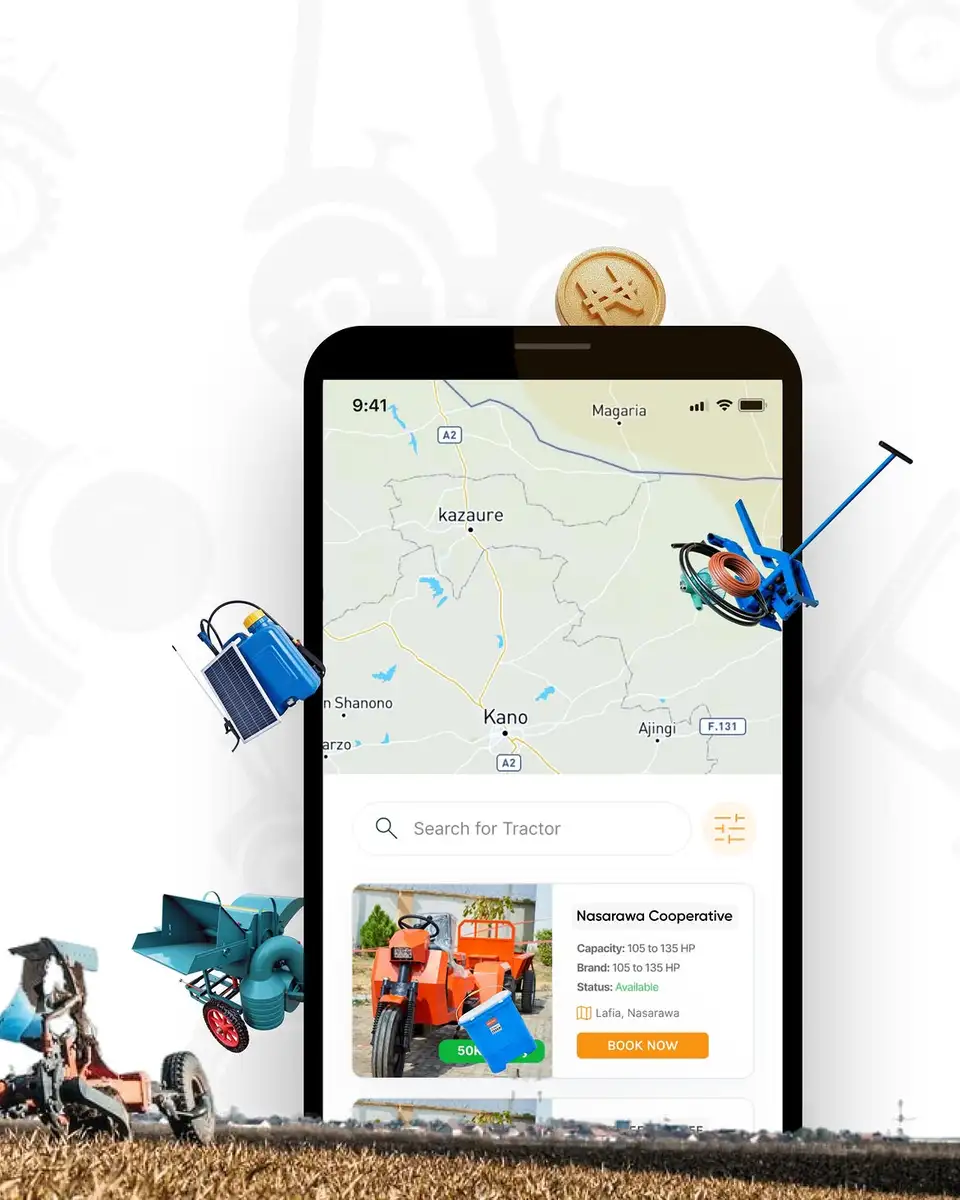
Digital platforms like TracTrac Plus, built by TracTrac MSL, are creating the "Uber for tractors," connecting farmers who need mechanization with MSPs who provide it. Real-time booking, transparent pricing, and quality ratings create accountability and trust. Technology solves the "last-mile problem" that government schemes couldn't crack: getting equipment to remote farmers quickly, affordably, and reliably.
The platform works on both sides of the equation. Farmers who need mechanization services can hire a tractor directly through the platform, booking equipment for land preparation, planting, or harvesting exactly when they need it. Tractor owners and MSPs, on the other hand, can enlist their tractors on TracTrac Plus to earn income by serving farmers in their area, turning idle equipment into a productive, revenue-generating asset.
This two-sided model is what makes service-based mechanization sustainable. The farmer gets access without ownership. The tractor owner gets utilization without having to find customers manually, and the platform creates the trust and transparency that make both sides confident enough to transact.
3. Private Investment Flows Where Business Cases Exist
Private investors don't fund projects out of goodwill; they fund them because the numbers work. Mechanization is profitable when structured correctly: equipment leasing, pay-per-use models, and value-chain financing all attract private capital because they generate returns. When the business case is clear, capital follows. Nigeria's agriculture sector can tap into billions in private investment if the enabling environment supports it.
Also Read: Why Nigerian Farmers Still Use Hoes in 2026?
4. Local Fabricators and Innovators Build Ecosystems
Nigeria has a thriving community of local equipment fabricators producing affordable alternatives to imported machinery. Small-scale threshers, planters, and processors designed for Nigerian conditions are emerging from workshops in Ilorin, Kano, Jos, and Aba.
These innovators understand local needs better than foreign manufacturers, and their solutions cost a fraction of imported equipment. Supporting local fabrication builds a sustainable mechanization ecosystem, not dependency on imports.
What the Private Sector Needs to Scale
This isn't about replacing government. The public sector still has a critical role, just a different one than the tractor distribution model it has leaned on for decades:
1. Create the enabling environment: Clear policies, land access reforms, and streamlined equipment import regulations reduce barriers for private players.
2. De-risk early-stage investment: Guarantees, concessional financing, and risk-sharing mechanisms help private businesses scale faster.
3. Invest in infrastructure: Rural roads, electricity, and irrigation amplify private sector impact by reducing operational costs.
4. Support skills development: Training programs like ISSAM (Improving Smallholder farmers' Access to Small-scale Agricultural Mechanization services, Leveraging Technology), supported by the Mastercard Foundation, create skilled MSPs that the market needs.
When the government focuses on what it does best, policy, infrastructure, skills, and the private sector focuses on what it does best, service delivery, innovation, sustainability, and mechanization scales.
The Path Forward
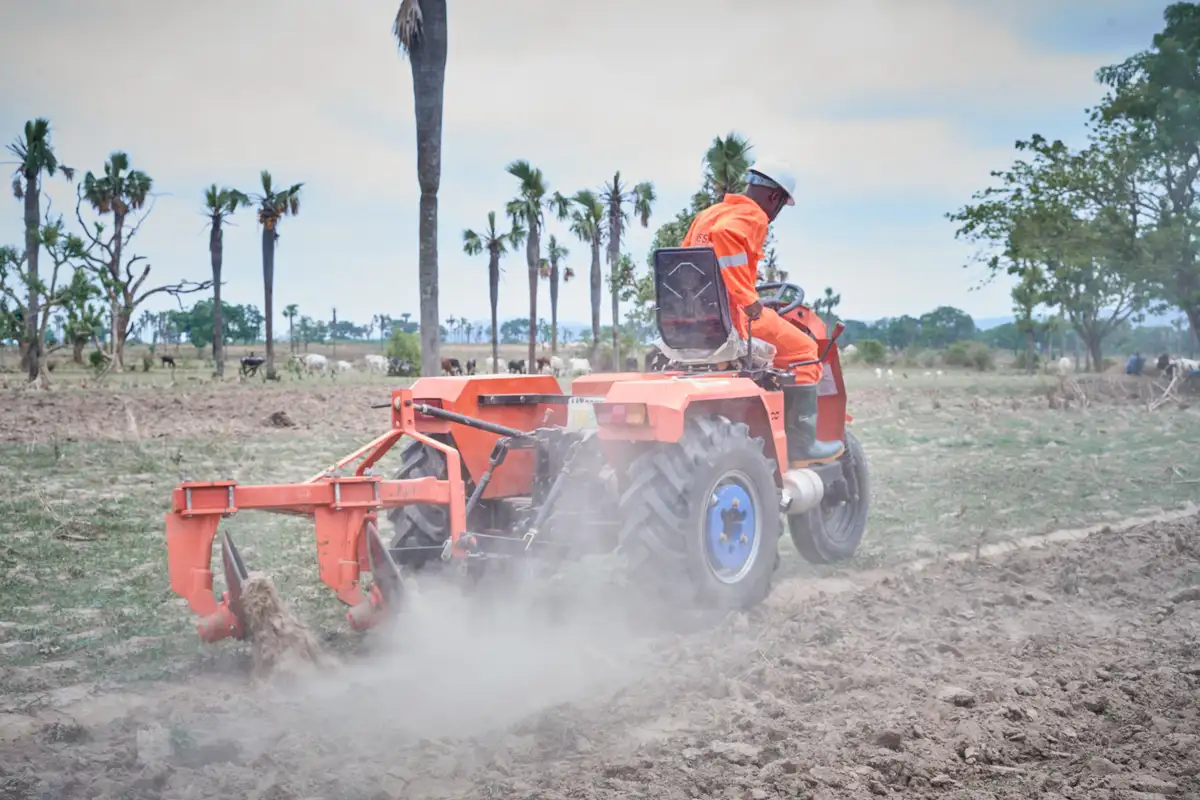
Nigeria doesn't need more government tractor schemes. It needs MSPs at scale, digital platforms connecting farmers to services, local fabricators to produce affordable equipment, and private capital flowing into mechanization businesses, backed by a government that invests in the policies and infrastructure that make it all work.
The private sector isn't just a participant in Nigeria's mechanization story; it's the engine. Entrepreneurs don't wait for perfect conditions; they adapt, innovate, and scale. One trained MSP can already reach up to 100 farmers a season. The future of mechanization in Nigeria is private, profitable, and underway. The question is, how fast can we scale it?