
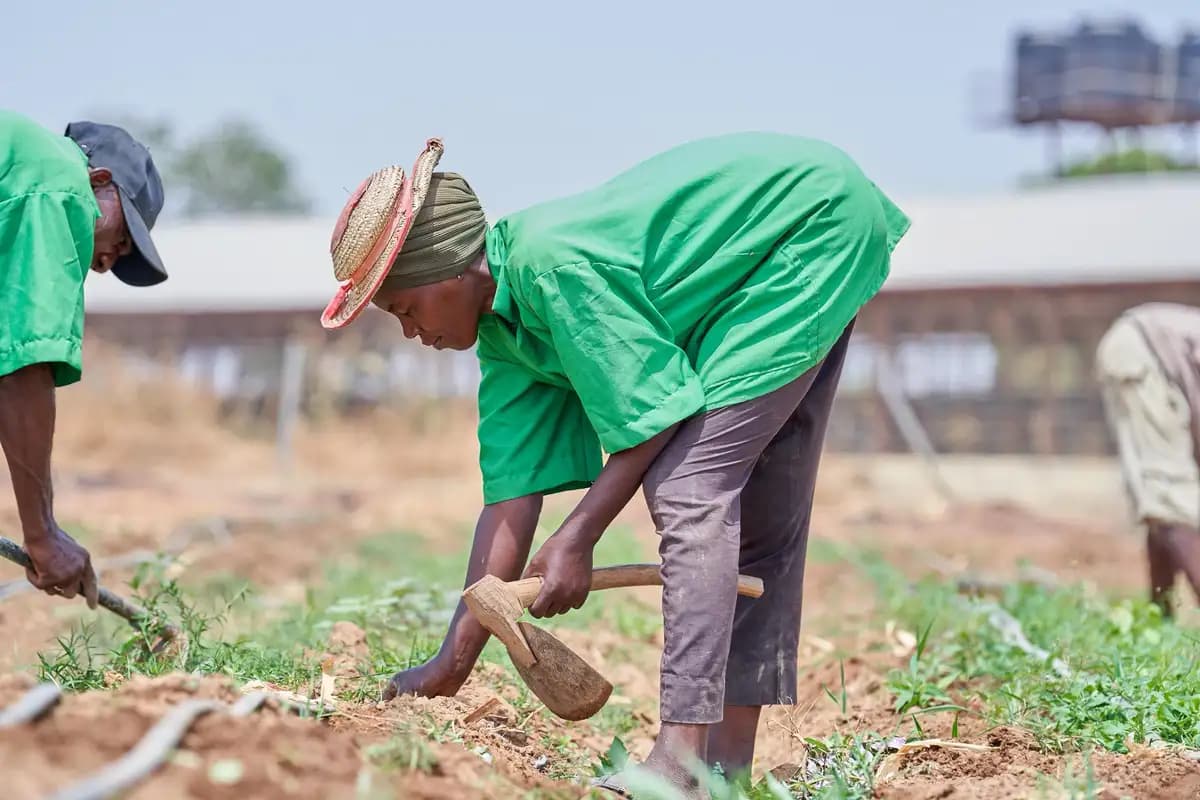
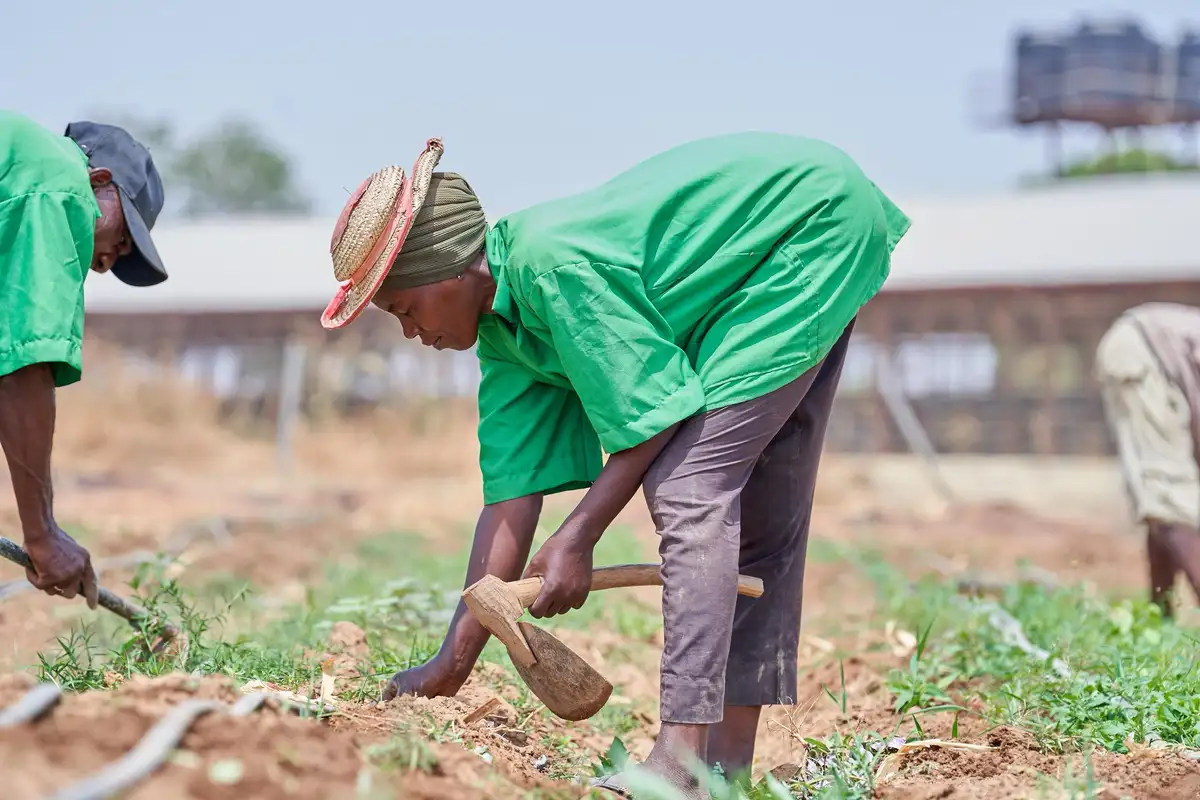
Picture this: it is planting season somewhere in Nasarawa State. A farmer is up before sunrise, hoe in hand, breaking soil on a plot he has been farming for twenty years. He does this every season. His father did it too.
This is not a story from the past. This is Nigerian agriculture in 2026.
At TracTrac, we have spent years working directly with smallholder farmers in Nigeria’s agricultural mechanization ecosystem. We have seen this reality up close, in Nasarawa, in Kaduna, in the fields where the people feeding this country wake up before dawn to do by hand what machines could do in hours.
The industry data reflects what we already know from the ground: an estimated 68 percent of Nigerian farmers still depend on manual labour and animal traction to work their land. Only 7 percent use tractors.
For a country with over 36 million farming households, some of the most arable land in Sub-Saharan Africa, and a population projected to hit 400 million by 2050, that number should stop us in our tracks.
So the real question is not just what the statistics say. It is: how did we get here, and what is actually about to change?
Understanding the Agricultural Mechanization Gap in Nigeria
Agricultural mechanization is the use of machines and technology to make farming faster, easier, and more productive. It covers land preparation, planting, harvesting, threshing, and processing. A tractor preparing land in two hours instead of two weeks is mechanization. A motorized thresher that separates rice grains from stalks in minutes rather than days is a form of mechanization. Even a motorized grater used to process cassava into garri is mechanized.
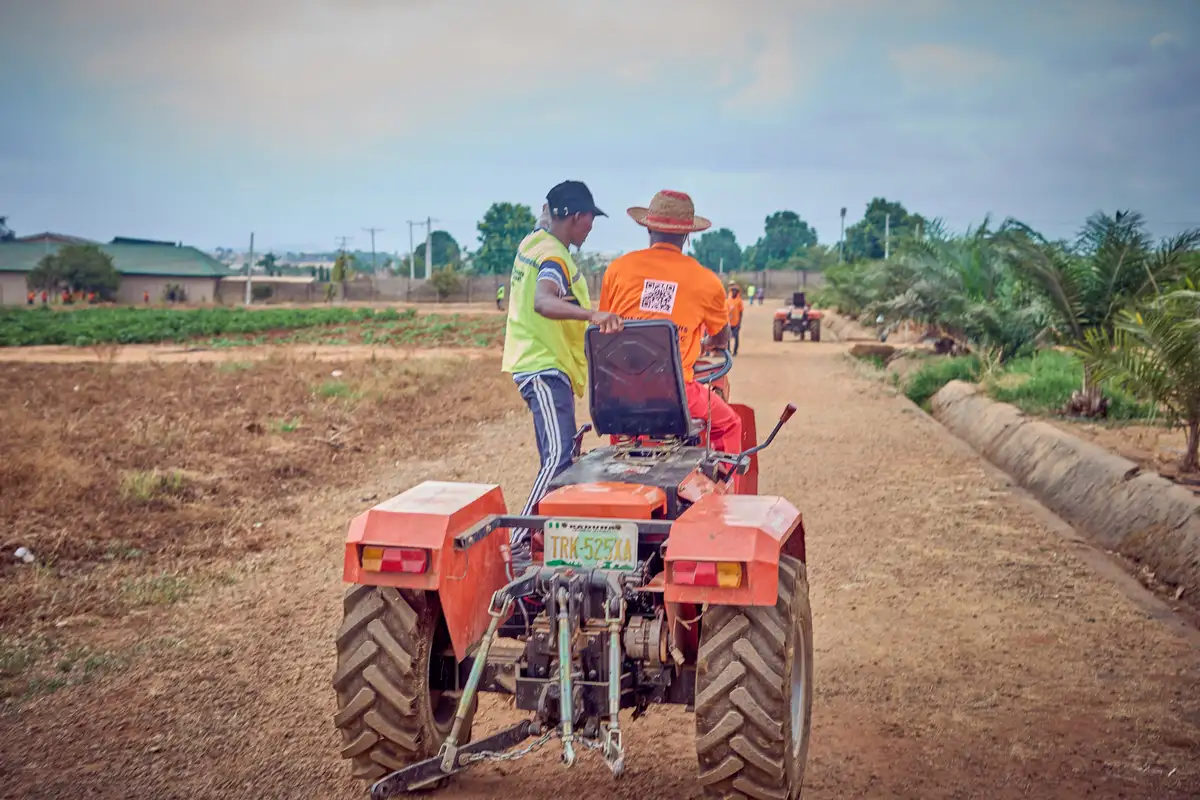
The gap is measurable. The Food and Agriculture Organization recommends a minimum of 1.5 horsepower per hectare for sustainable farming. Nigeria sits at below 0.5. Kenya is at about 0.7. India is at over 2.0. Nigeria, with more farmland than either country, is farming with less power than both.
Nigeria has between 5 and 25 tractors per 100 square kilometres of agricultural land. The recommended benchmark is 135. This is not a gap. That is a chasm.
Why Agricultural Mechanization In Nigeria Has Been Difficult to Scale
Nigeria has not ignored this problem. Mechanization programmes have existed since the 1970s. Government tractor schemes have come and gone. The National Centre for Agricultural Mechanization was created to drive this agenda. So why, decades later, are farmers still holding hoes?
We have worked closely with this sector and see four main reasons.
The first is cost. Tractors and harvesters are too expensive for most smallholder farmers. Without affordable financing, lease options, or accessible credit, ownership is out of reach.
The second is land fragmentation. Most farms are small, scattered, and often lack clear titles. Machines are designed for larger, continuous fields, so using them on small plots is often not cost-effective.
Then there is maintenance. Many machines arrived without spare parts, trained mechanics, or service systems. They broke down and stayed broken. Farmers who invested were burned, and many are now cautious as a result.
Finally, the support system is fragmented. Different agencies work in silos, there is no unified framework, and the private sector ecosystem is still not strong enough to fill the gaps.
Also Read: How 25-Year-Old Chiluun Terver Is Growing His 25-Hectare Agribusiness
What Is Changing In Nigeria’s Agricultural Mechanization Sector
This is where the conversation shifts and why this moment matters for Nigerian agriculture.
There is growing momentum around a private sector-led model for mechanization, where the government creates the right conditions and private players deliver the services.
The direction is becoming clearer: better financing for mechanization, service and hiring centres farmers can access without owning tractors, cooperative land use so smallholders can pool resources, and more use of digital tools to plan and manage mechanization.
For smallholder farmers who have been let down before, the issue is not whether these ideas make sense. It is whether they will actually work this time. Delivery is the real test, and it depends on a private sector that is structured, well-funded, and able to scale.
This also connects to wider continental goals. From the African Union Agenda 2063 to the Malabo Declaration and the Sustainable Development Goals, improving agricultural productivity depends heavily on mechanization. What happens in Nigeria matters beyond Nigeria.
Why Agricultural Mechanization In Nigeria Is Gaining Momentum
It is fair to be skeptical. Nigeria has talked about transforming agriculture many times before. But there are a few reasons this time feels different.
More people are now on the same page about the problem. Farmers’ groups, state governments, banks, private companies, research institutions, and development partners are all better aligned on what is wrong and what needs to change. That kind of shared understanding was not there ten years ago.
The private sector is already stepping in. Some companies are helping farmers access tractors and other machinery rather than focusing solely on ownership. They are building systems where farmers can share equipment through service centers and cooperative groups. This is already working in practice. What it needs now is scale.
Funding is also starting to improve. New financing models, including partnerships and risk-sharing arrangements with development partners, are making it easier to support mechanization at a larger scale than before.
The Hoe Has Served Its Time
The farmer in Nasarawa waking up before sunrise to break soil by hand is not farming that way because he prefers it. He is farming that way because, for most of his life, there has been no affordable, reliable, accessible alternative within reach.
That is what we are working to change at TracTrac and what the wider ecosystem is starting to align around. Agricultural mechanization in Nigeria is no longer a far-off idea. It is already happening, with real farmers, real machines, and real urgency behind it.
Nigerian agriculture is at an inflection point. The private sector is moving. The technology exists. The financing is mobilizing. What comes next depends on whether all of these pieces are held together with the consistency and accountability this moment demands.
The hoe has served its time. What replaces it and how quickly are questions Nigeria will now answer.