
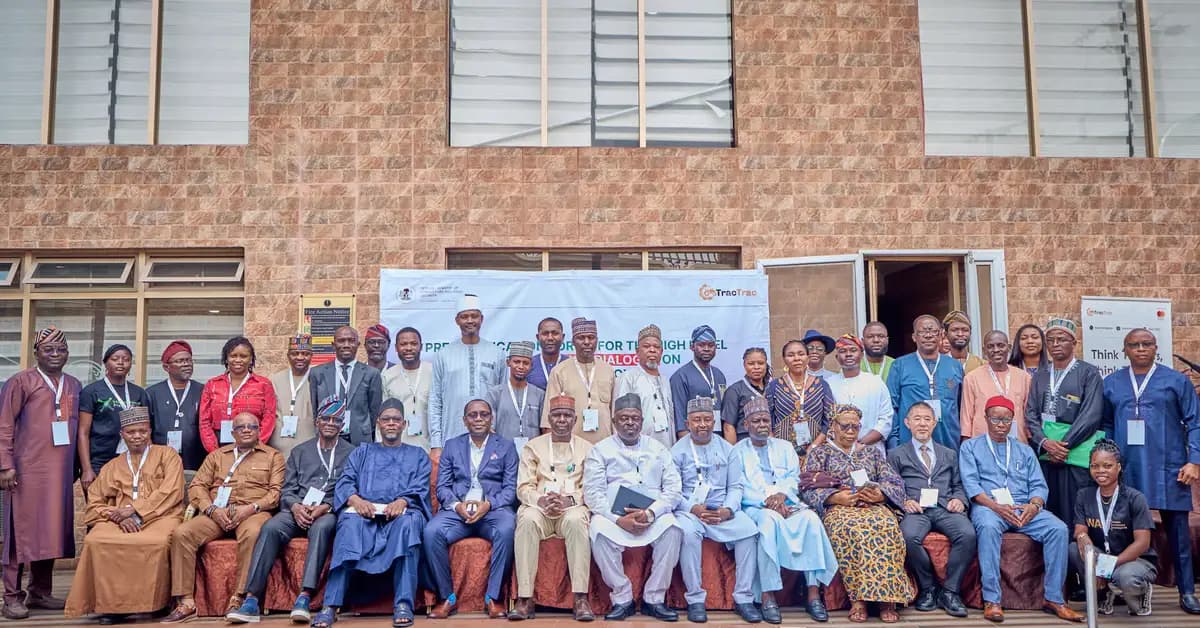
For years, one question has shaped conversations around agricultural mechanization in Nigeria: how do we get modern farm equipment into the hands of the millions of farmers who need it most?
The answers have never been simple.
At TracTrac, we've had the privilege of being part of that conversation, not only through our work supporting access to mechanization, but also through engaging with stakeholders committed to building a stronger future for Nigerian agriculture.
Now, with the National Agricultural Mechanization Policy (NAMP) ratified, it is worth looking back at the journey that brought Nigeria to this point. It is a story of recognizing long-standing challenges, bringing different parts of the agricultural ecosystem to the table, testing ideas through dialogue, refining the framework, and ultimately reaching a national commitment to a more coordinated approach to mechanization.
Recognising the Need for National Direction
The conversation that started this process was honest and uncomfortable.
When stakeholders assessed the state of agricultural mechanization in Nigeria, what emerged was a clear picture of recurring gaps: limited access to affordable mechanization services, weak financing mechanisms, inadequate technical capacity, poor maintenance ecosystems, a limited machinery manufacturing base, and too few opportunities for young people, women, persons with disabilities, and smallholder farmers to participate meaningfully in the value chain.
These challenges are not entirely new.
Nigeria has made several attempts to promote mechanization over the years, but fragmented interventions, inadequate funding, maintenance challenges, limited access to finance, and other systemic barriers have continued to limit their impact. The NAMP itself recognizes these historical challenges and frames the need for a more systematic approach to agricultural modernization.
The real shift was recognizing that these could no longer be treated as separate problems.
Nigeria needed a national framework capable of connecting the different pieces: access to machinery, financing, technical skills, private-sector investment, local manufacturing, research, infrastructure, digital technologies, climate resilience, insurance, and institutional coordination.
That framework became the National Agricultural Mechanization Policy.
Building NAMP with Everyone at the Table
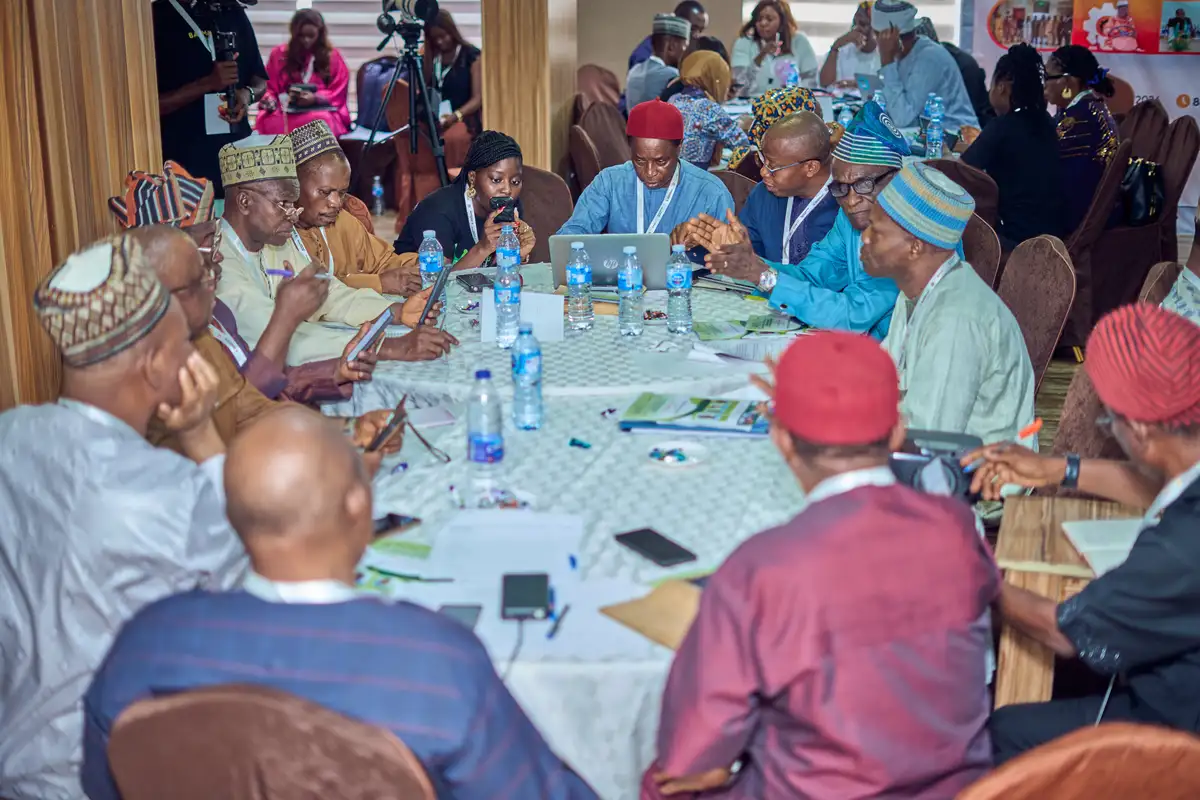
From the start, we knew a single institution could not develop a policy of this scale alone.
The process brought together government institutions, development partners, financial institutions, private-sector operators, equipment manufacturers, mechanization service providers, academia, research institutions, youth organisations, women's groups, and industry experts.
That broad participation mattered because agricultural mechanization does not exist in isolation. A farmer's ability to use a tractor, for example, depends not only on whether the machine exists but also on whether financing is available, whether an operator is trained, whether spare parts can be accessed, whether the service can reach the farm, and whether there is a sustainable business model behind it.
Our role at TracTrac MSL was to help make that collaboration work by convening stakeholders, facilitating dialogue, supporting the drafting process, and ensuring perspectives from across the sector were part of the conversation.
Speaking to our policy lead, Chika Nelson Cole, she described the vision behind the process:
"The vision was to develop a policy that is practical, evidence-based, and nationally owned. Bringing everyone to the table ensured that the policy was co-created with a shared national agenda and broad stakeholder ownership."
The policy document itself reflects that collaborative foundation, acknowledging contributions from government institutions, development partners, state and local governments, the private sector, farmers' associations, civil society organisations, research institutions, academia, and other stakeholders involved in consultations and validation workshops.
Also Read: Beyond Tractors: How ISSAM Project Is Powering Rural Farming with Labour-Saving Devices
The April Dialogue: Where Conversations Became Solutions
One of the most important moments in the journey came during the April Agricultural Mechanization Dialogue, which served as a pre-ratification platform for serious stakeholder review of the draft policy and its accompanying Investment Strategy.
The discussions focused on the policy framework, investment and financing, public-private partnerships, climate-smart and digital mechanization, and meaningful opportunities for youth and women. What struck us most about the day was the shift in the room: the conversation moved beyond identifying problems to discussing practical solutions around financing, coordination, implementation, and inclusion.
As our CEO, Godson Ohuruogu, put it during the dialogue:
“Nigeria cannot transform its agriculture without transforming how we power it, and that's why we are here.”
The dialogue allowed stakeholders to test the policy against the realities of the sector and contribute to the solutions needed for implementation. Those recommendations did not end in the room. The technical drafting team documented and reviewed the feedback, using it to further refine the policy, strengthen implementation strategies and governance arrangements, and develop the Investment Strategy around more practical financing and investment approaches.
The result was a policy framework that takes a broader view of what sustainable mechanization requires. Its priorities include increasing access to appropriate and affordable mechanization technologies, strengthening private-sector participation and financing, developing technical and human capacity, supporting local researchers and fabricators, improving machinery standards, integrating climate-smart and digital technologies, strengthening extension services, and developing risk-mitigation and insurance mechanisms.
August 11–12: From Policy Development to Ratification
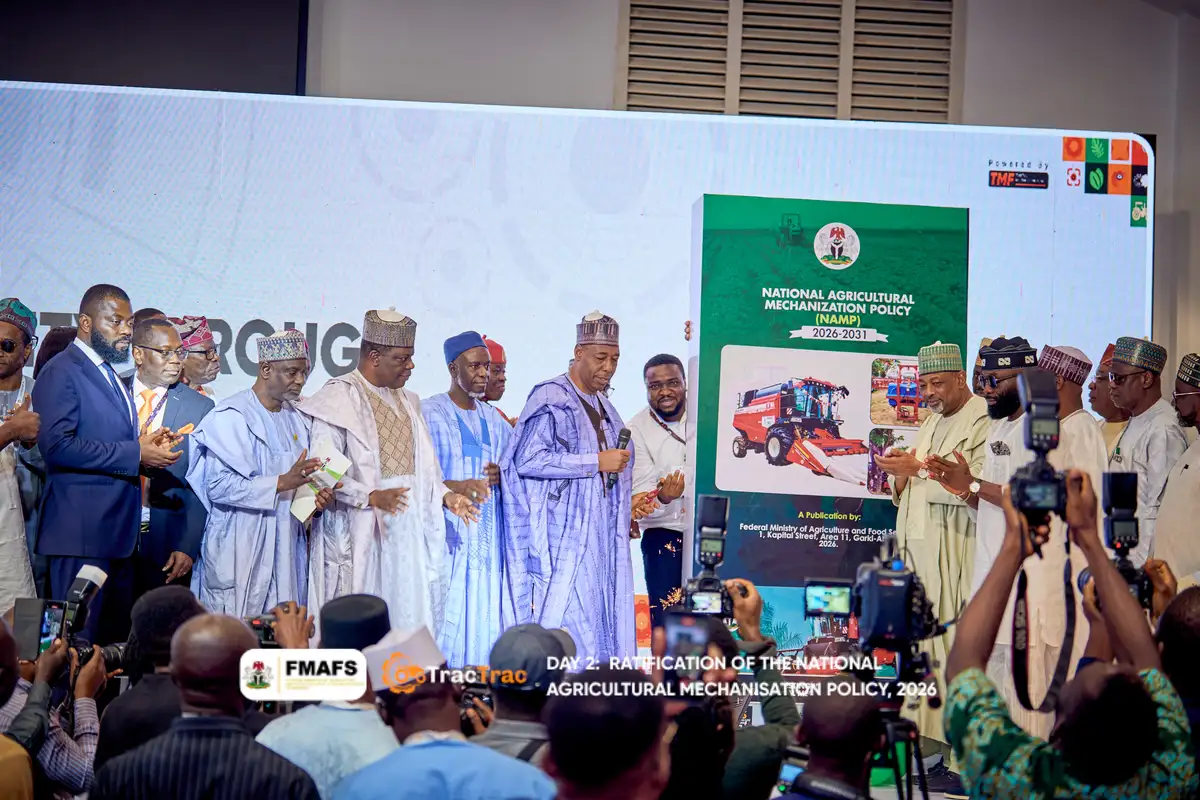
After months of consultation, drafting, review, and engagement, the journey reached its defining milestone on August 11 and 12, with a two-day programme culminating in the ratification of the National Agricultural Mechanization Policy.
The first day brought stakeholders together for a gala night, creating space to recognize the journey and the people and institutions that had contributed to it.
The following day was the main high-level dialogue and ratification event, bringing together senior government officials, development partners, private-sector stakeholders, industry experts, researchers, and representatives from across the mechanization ecosystem.
The significance of the gathering was reflected in the level of participation. The room brought together policymakers and practitioners who have a direct role in determining how agricultural mechanization evolves in Nigeria. It also included young people involved in the sector, including members of Young People in Mechanization (YPIM), a movement initiated by TracTrac to strengthen youth participation in agricultural mechanization.
Their presence mattered because NAMP places deliberate emphasis on inclusion, recognizing the role young people, women, and other groups can play across the mechanization value chain. The policy's broader vision is not only to increase the use of machinery but also to develop the people, businesses, skills, financing, and institutions needed to sustain the ecosystem.
The voices at the ratification reflected this broader vision too.
Dr. Marcus O. Ogunbiyi, FNSE, FNAIE, R. Eng., Permanent Secretary, Federal Ministry of Agriculture and Food Security, captured the shift from planning to implementation:
"Nigeria is moving from ambition to delivery. Machines alone cannot transform agriculture. The objective is to build a mechanization ecosystem that connects finance, technology, skills, policy, and access to farmers, creating sustainable opportunities across the agricultural value chain."
That ecosystem approach is central to NAMP. The policy does not position mechanization as simply an exercise in increasing machinery ownership. It identifies financing, private investment, skills development, local manufacturing, research, digital innovation, climate-smart agriculture, standards, insurance, and service delivery as interconnected parts of the transformation Nigeria needs.
Senator Dr. Aliyu Sabi Abdullahi, CON, Honourable Minister of State for Agriculture and Food Security, also spoke to the wider transformation taking place within agriculture:
"Agriculture is no longer a symbol of neglect. It has transitioned into a domain of enterprise, technology, and wealth creation."
That shift in perception is so important, as a modern agricultural sector requires farmers to have access to the tools and services that allow them to operate as productive businesses. It requires entrepreneurs who can build around machinery, technology, logistics, maintenance, financing, and other services. And it requires an enabling environment in which those businesses can grow.
Government Cannot Do It Alone
One of the clearest messages from the ratification was that the responsibility for agricultural mechanization cannot sit with the government alone.
Senator Abubakar KYARI, CON, Honourable Minister of Agriculture and Food Security, put it plainly:
"The federal government cannot mechanize agriculture alone. While the federal government provides policy, standards, coordination, and development, the private sector must invest, innovate, and deliver services."
This is also reflected in the direction of NAMP itself. The policy identifies the private sector as an important driver of mechanization services, manufacturing, investment, technology adoption, and innovation. It also recognizes the need for sustainable financing mechanisms and stronger partnerships between government, financial institutions, development partners, manufacturers, service providers, and farmers.
For TracTrac, this is particularly significant because our work sits at the intersection of access, technology, service delivery, policy engagement, and the people who make mechanization work on the ground. The ratification therefore represents not an endpoint for our involvement but a stronger foundation for the work ahead.
Putting Young People at the Center of the Next Chapter

If mechanization is going to become a sustainable part of Nigeria's agricultural economy, young people cannot be viewed only as future tractor operators. They can be operators, technicians, entrepreneurs, equipment owners, technology providers, service providers, financiers, engineers, and business leaders.
That is the thinking behind YPIM and why youth participation has been important throughout this journey.
As our CEO said at the ratification:
"Our task is not to train young people to run someone else's machine. It is to empower them to own, manage, finance, and build businesses around mechanization."
That vision aligns closely with the broader direction of NAMP, which identifies human-capital development, employment creation, technical skills, and the emergence of stronger mechanization enterprises as important parts of the transformation ahead. The policy's theory of change anticipates millions of new jobs across the mechanization value chain over time, alongside a more skilled workforce and stronger private-sector participation.
What Ratification Means and What Comes Next
The ratification of NAMP marks an important shift in Nigeria’s mechanization story. Beyond access to machinery, the policy provides a national framework for connecting financing, skills, private investment, local manufacturing, research, digital and climate-smart technologies, standards, insurance, and service delivery to a more productive and resilient agricultural sector.
But ratification is not the finish line. It creates the framework; implementation will determine its impact. For us at TracTrac, the journey has shown what is possible when government, development partners, the private sector, academia, research institutions, farmers, and young people work towards a shared goal.
Now comes the work of turning that vision into systems that function: machinery farmers can access, sustainable mechanization businesses, financing that reaches the right actors, opportunities for young people, and technology that improves productivity.
The ratification of NAMP closes one chapter and opens the one that matters most: turning policy into progress.