
Across Kaduna and Nasarawa states, smallholder farmers planting sorghum, maize and rice have long relied on manual threshing, hand-dug wells and unprotected spraying to get their crops to market. These methods cost time, income and, often, the quality of the harvest itself. Under the Improving Smallholder Farmers' Access to Small-Scale Agricultural Mechanisation Services (ISSAM) project, TracTrac Mechanisation Services Limited, in partnership with the Mastercard Foundation, set out to close that gap. At the end of year one, the numbers tell a clear story.
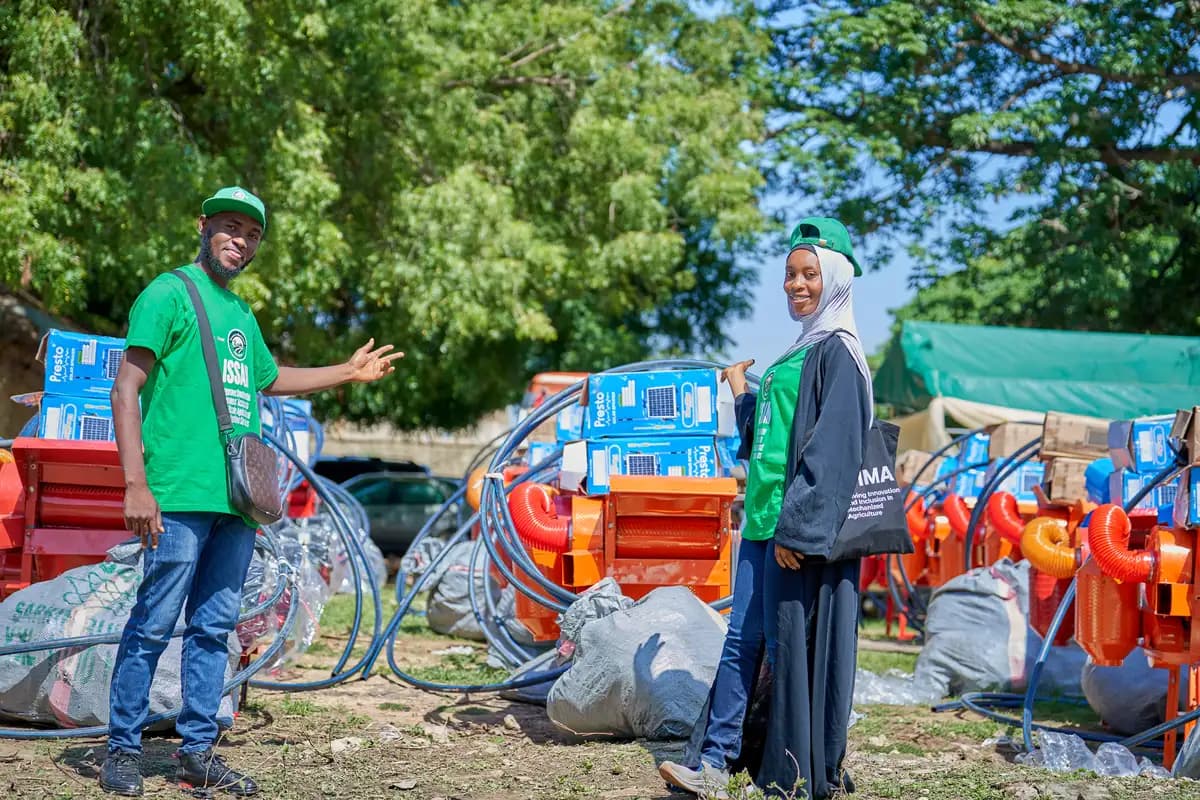
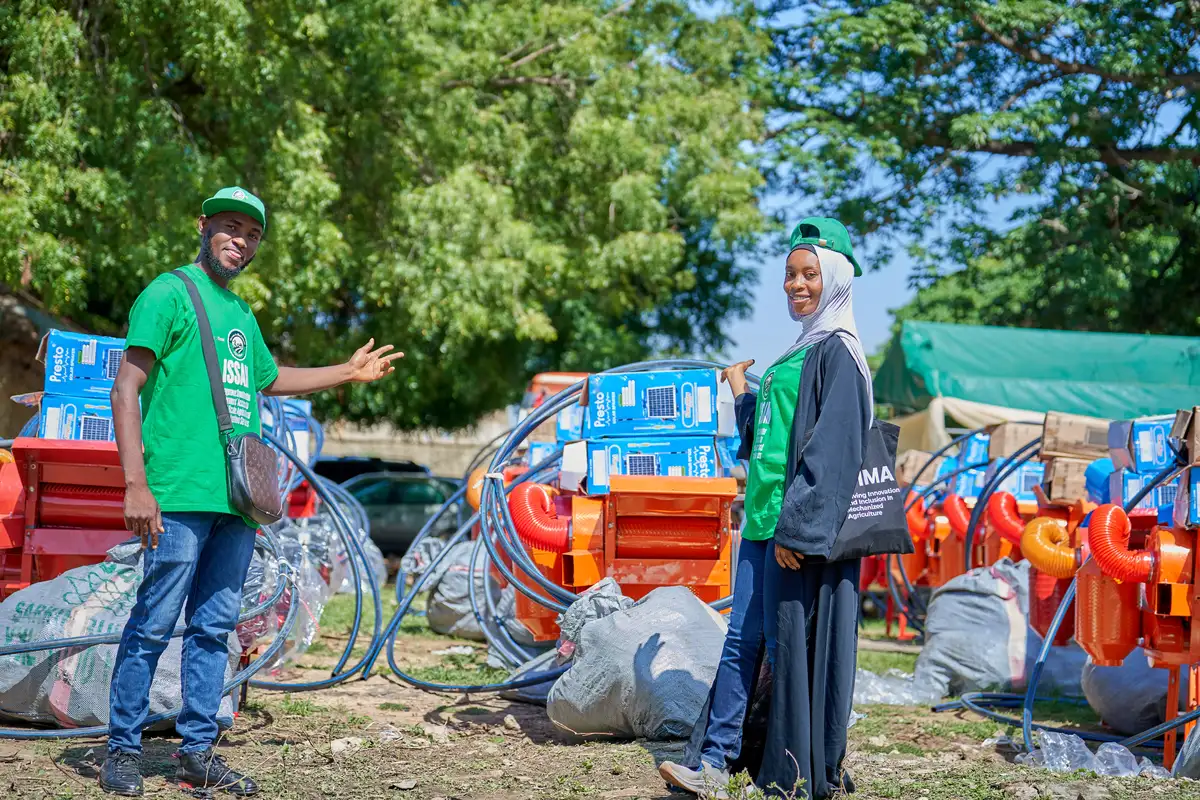
The project trained 2,512 individuals to become certified Mechanisation Service Providers (MSPs) and supported the formation of 283 youth-led cooperative businesses across the two states. These cooperatives received 154 Tryctors, each fitted with four implements: a harrow, a disc plough, a trailer bucket and a planter. But it didn’t end there. Alongside the tractors, the project distributed 283 grain threshers, 283 treadle pumps, 566 solar-powered knapsack sprayers, 566 fertiliser applicators and 283 soil testing kits.
Together, these figures describe an approach built to make mechanisation available and accessible across the full farming cycle, from land preparation through to harvest. Tractors prepare land faster, but they cannot thresh the harvest, irrigate the land, or apply fertilizer safely. Nigeria's mechanisation gap is not a single problem with a single machine as its solution. It is a chain of smaller, labour-intensive bottlenecks that sit between planting and profit, and each one carries its own cost in time, money and physical strain. The ISSAM project's strategy was built to break that chain at multiple points, not just one.
A Market Systems Problem, Not a Machinery Problem
It is easy to read an agricultural mechanisation project as an equipment distribution exercise. Speaking to our team, Godsfavour Nyoyoko, Procurement Manager on the ISSAM project, shared in an interview that equipment selection was never simply a matter of distributing devices to co-operatives. Rather, it followed a needs assessment across the target areas, one that looked at crop systems, terrain, labour patterns and the scale of farming operations before a single device was procured.
"We try to make sure that equipment selection matches the actual work the farmers are doing, rather than simply distributing devices," Ms. Godsfavour Nyoyoko says. That distinction matters more than it might first appear. A market systems approach asks a different question than a typical donation drive. Instead of asking what equipment is available to give, it asks what constraint is actually limiting a farmer's or a cooperative's output and works backward from there. In ISSAM's case, the constraint was rarely land or seed. It was labour: costly, time-wasting and physically demanding, particularly at threshing and irrigation.
"Labour-saving devices are especially valuable where labour is scarce, costly, or physically demanding and where small improvements in efficiency can make a major difference in output and income," she notes.
Procurement itself followed a fit-for-purpose standard, weighing functionality, durability, ease of maintenance, local usability, and value for money against each other, rather than defaulting to the cheapest available option or the most advanced. Nyoyoko is direct about why durability and maintainability carried as much weight as raw productivity gains. "Farm machinery is more likely to stay in use when users understand it, can repair it locally, and see clear benefits from daily use," she says. This captures a common failure point in mechanisation programmes globally: equipment that arrives and then sits idle within a year because no one nearby can fix it, or because the training ended the day the equipment arrived.
The ISSAM project delivered operator training alongside labour-saving devices (LSDs) with simple maintenance requirements and compatibility with local conditions into the rollout from the outset, treating sustainability as a design requirement rather than an afterthought.
The return on that design choice, according to Ms. Godsfavour Nyoyoko, is not just measured in hours saved. "These devices are valuable investments because they save time, they reduce manual labour, improve productivity, and the cooperatives achieve more with limited labour," she says. "Over time, this will translate into better farm management, higher yields, and stronger livelihoods." The ISSAM project is not simply handing out free labour-saving devices. It is seeding a rural mechanisation services market that did not previously exist at this scale, one cooperative at a time, with the expectation that these businesses will keep functioning long after the project's direct support ends.
What the Equipment Actually Changes on the Field
Numbers on a distribution sheet only mean something once they reach a farmer's hands. In Karu Local Government Area, MSP Victoria Uden puts the shift in blunt terms: "Before, farming was not important in our community because they suffered a lot. But now there is equipment to help us, to help the youth." Uden is describing a change in how farming itself is regarded in her community, from a source of suffering to a source of opportunity, and she credits that shift directly to the arrival of equipment and the young people trained to operate it.
In Akwanga LGA, MSP Hussaini Basir says, "we really learned a lot in the training and today we have many implements that we are going to use to render services to farmers in our villages in Andaha and Nasarawa state at large," he says. "We learned to drive the tractor, use the thresher and so many other implements at the TracTrac MSP Training." Basir's account is a reminder that equipment without training is inert. The value ISSAM created did not begin the day the Tryctors or LSDs arrived. It began earlier, in the training rooms where young people who may have never operated a machine before learned to drive one, maintain one and eventually build a business around one.
As a whole, Uden's and Basir's testimonies point to two distinct but related outcomes of the same intervention: a change in social perception of farming as viable, dignified work, and a tangible transfer of technical skill that did not exist in these communities at this scale before ISSAM.
Margaret Malachi: What Inclusion in Mechanization Looks Like in Practice
Margaret Malachi's story shows what it looks like for people often left out of the mechanisation ecosystem.
Before joining the ISSAM MSP Capacity Development Training, Margaret, a person with disability, faced barriers that many empowerment programmes never account for. Simple farming activities like harvesting corn often required depending on others for support, and earning a stable income was difficult. She chose to complete the recruitment process anyway and was selected for the programme.
The change since then has been structural, not cosmetic. Margaret now chairs the Ovyesha MSP Cooperative, a role that placed her at the head of an organised, business-focused enterprise creating mechanisation opportunities in her community. Her community has noticed. Margaret says people now call her "Hajiya TracTrac," a nickname she describes not as casual banter but as a marker of respect, leadership and recognition for the work she is doing in agricultural mechanisation. In a sector where women and particularly persons with disabilities are rarely portrayed as leaders, that nickname has been symbolic.
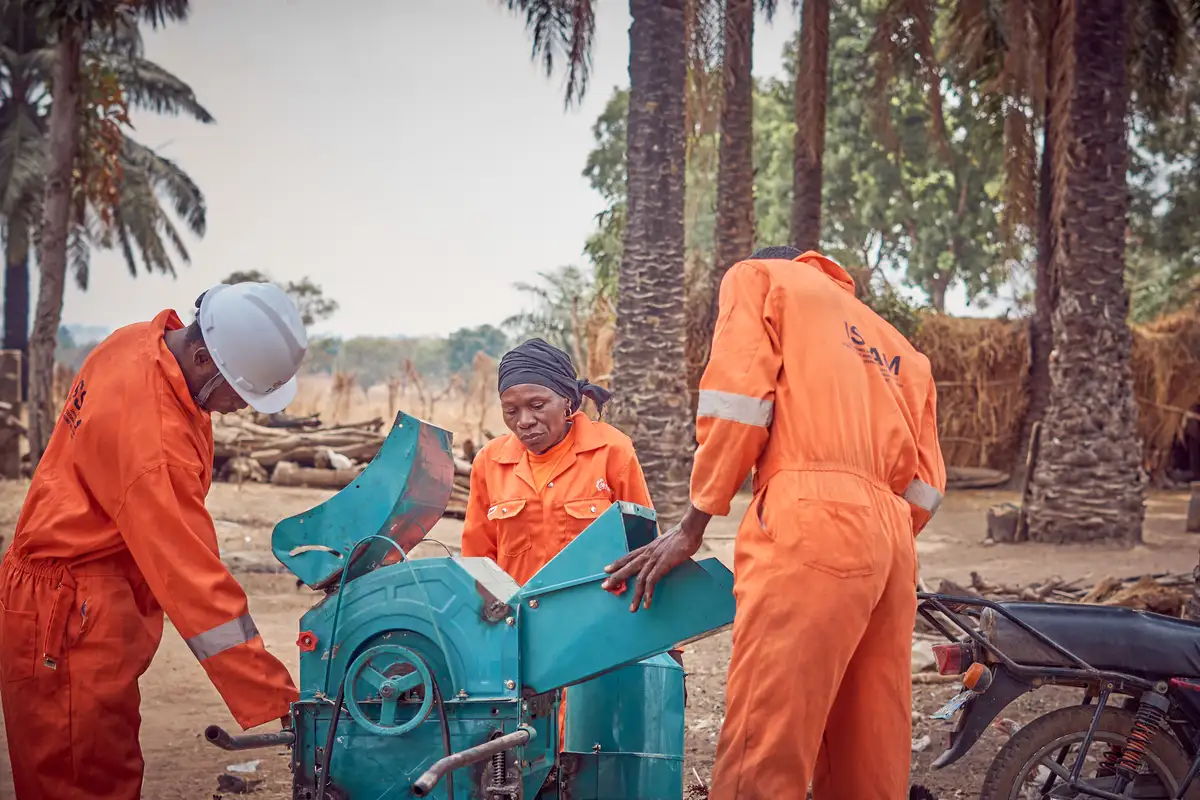
The Ovyesha team now uses a thresher and other labour-saving devices provided by the ISSAM project to perform jobs faster and more efficiently. Young men within the cooperative are gainfully employed as MSPs, earning sustainable income for themselves and their families under Margaret's leadership. In eight months of operation, the cooperative has earned over ₦600,000.
Margaret's leadership shows up in the cooperative's operating decisions too, not only its headline earnings. Instead of sending all seven members to every farm job, a pattern that used to eat into their margins through unnecessary transport costs, she introduced smaller working groups of two or three people per job. The change lets the cooperative take on more jobs simultaneously while reducing transportation expenses per job, a small operational fix with a compounding effect on profitability over a season.
Margaret's story is evidence for why ISSAM's approach to inclusion reaches the people market systems typically leave out. Access, training and equipment, deployed together, produced a cooperative that is organized, profitable, and led by someone the market would otherwise have overlooked.
Closing the Distance Between Farmers and Services
None of this changes anything for smallholder farmers unless it also changes how quickly and affordably they can get a service done. This is where the labour-saving devices earn their name. A cooperative equipped with a thresher, a treadle pump, fertiliser applicators, soil testing kits and knapsack sprayers can serve more farmers, more often, at a lower cost per job than manual labour ever allowed. Farmers in Karu, Akwanga, Zaria, Igabi, Sabon-gari, Kokona and many more participating communities in the ISSAM project no longer have to wait for scarce, expensive mechanisation services to travel in from outside their area. The service, and the people who deliver it, now live locally.
This is precisely the last-mile vision Godson Ohuruogu, CEO of TracTrac MSL, describes as TracTrac’s founding goal. "Taking mechanisation to the last mile will always be our goal," he says. "I see a future for Nigeria where every farming community can easily access and afford mechanisation services, and it starts with putting this equipment and machinery in the hands of their youths."
One completed year into the ISSAM project, that vision has measurable shape across Kaduna and Nasarawa states: over 2,500 people trained, 283 youth-led cooperatives formed, and thousands of labour-saving devices now doing the daily work of threshing grain, drawing water and applying inputs safely across thousands of hectares of farmland. The tractors draw attention because they are large and visible. But it is the threshers, treadle pumps, sprayers and soil testing kits, paired with people like Margaret, Victoria and Hussaini, that are doing the work of closing Nigeria's mechanisation gap from the ground up.