
For years, the conversation around agricultural mechanisation in Nigeria has centered on this question: how do we get more tractors into the hands of farmers?
But the more we have worked within the mechanisation ecosystem, the clearer it has become that the challenge is bigger than tractors.
Nigeria has an estimated seven tractors for every 100 square kilometres of farmland, compared with a global benchmark of about 195 according to the World bank data. Around 90% of agricultural activities are still carried out manually, while an estimated 200,000 to 250,000 additional tractors are needed to close the country’s mechanisation gap.
Meeting that need could require between US$5 and 6.25 billion in capital. The numbers show the size of the problem, but they also point to something else: mechanisation is a significant investment opportunity.
The question is how we unlock it, and we started by listening to the ecosystem. Our work over the past year has reinforced one thing: no single institution can solve Nigeria’s mechanisation challenge.
In 2025, we convened a stakeholder dialogue with the Mastercard Foundation to examine the state of the country’s mechanisation ecosystem. That conversation brought together actors across the value chain and highlighted the financing, coordination, capacity, and service delivery gaps limiting access to mechanisation.
Since then, the conversation has continued.
Following the work around the National Agricultural Mechanisation Policy 2026, we began looking more closely at what would be required to move from policy ambition to an ecosystem that can attract and deploy capital at scale.
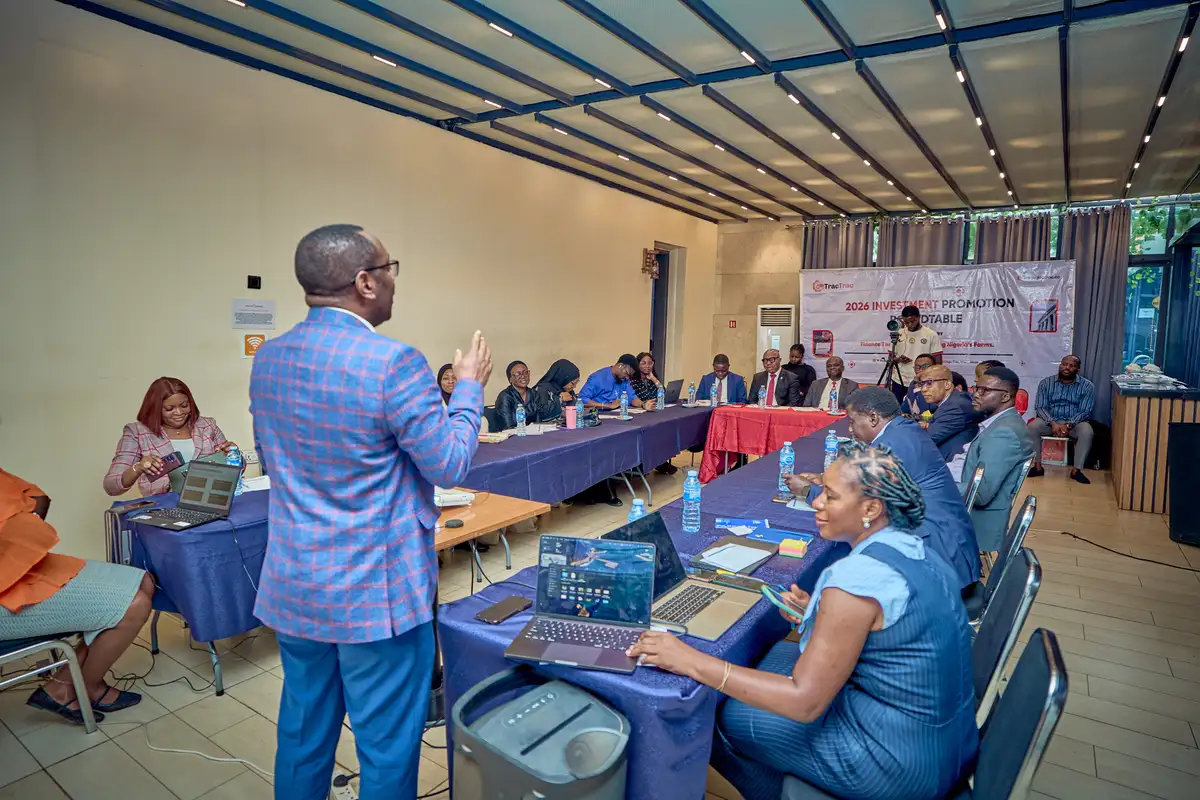
Over the past two months, we sat with commercial banks, government institutions, development finance institutions, foundations, private investors, equipment vendors, regulators and other ecosystem actors through seven targeted stakeholder roundtables.
We were not looking to simply identify the challenges. We wanted to understand what would make the sector work better for everyone involved and, importantly, what would make mechanisation financeable.
The conversations pointed to a common reality: capital exists, but unlocking it requires greater visibility, stronger structures and clearer pathways to viable opportunities.
“We cannot close Nigeria’s mechanisation gap by treating mechanisation as a development ask. We have to build an investable ecosystem around it, one that gives capital providers confidence, enables service providers to grow, and gives young Nigerians the opportunity to build and lead in the sector," said Godson Ohuruogu, CEO of TracTrac MSL.
Closing the gap will require more than putting tractors on the farm. It will require financing structures that work, partnerships that unlock capital, stronger service delivery systems and an ecosystem that makes mechanisation commercially viable and accessible to more smallholder farmers.
What the conversations are telling us
One of the clearest lessons is that the capital gap cannot be addressed by financing tractors in isolation.
A tractor is an asset, but its value depends on the ecosystem around it: trained operators, maintenance, logistics, monitoring, viable service models, and consistent demand from farmers.
For financial institutions, this means greater visibility into the operators and assets they finance.
For equipment manufacturers and vendors, it means creating financing pathways that can support equipment acquisition and expand the market for mechanisation services.
For mechanisation service providers, cooperatives, and equipment owners, it means access to appropriate capital and the capacity to build sustainable businesses around those assets.
For farmers, it ultimately means reliable, timely, and affordable access to mechanisation services.
This is where we believe the conversation needs to move not simply from “How many tractors do we need?” but to “What kind of investment ecosystem will allow those tractors to work, generate returns and reach the farmers who need them?”
Building around the opportunity
The conversations are shaping the proposed Mechanisation Investment Facility, which is designed to mobilise approximately US$28 million for mechanisation service providers, cooperatives, equipment owners and agribusinesses and support the growth of the sector over the next five years.
The idea is straightforward: create stronger pathways between capital and credible mechanisation opportunities.
That means working across the ecosystem rather than treating financing as a standalone intervention.
It also means using the data and infrastructure already being developed within the sector to improve visibility and confidence.
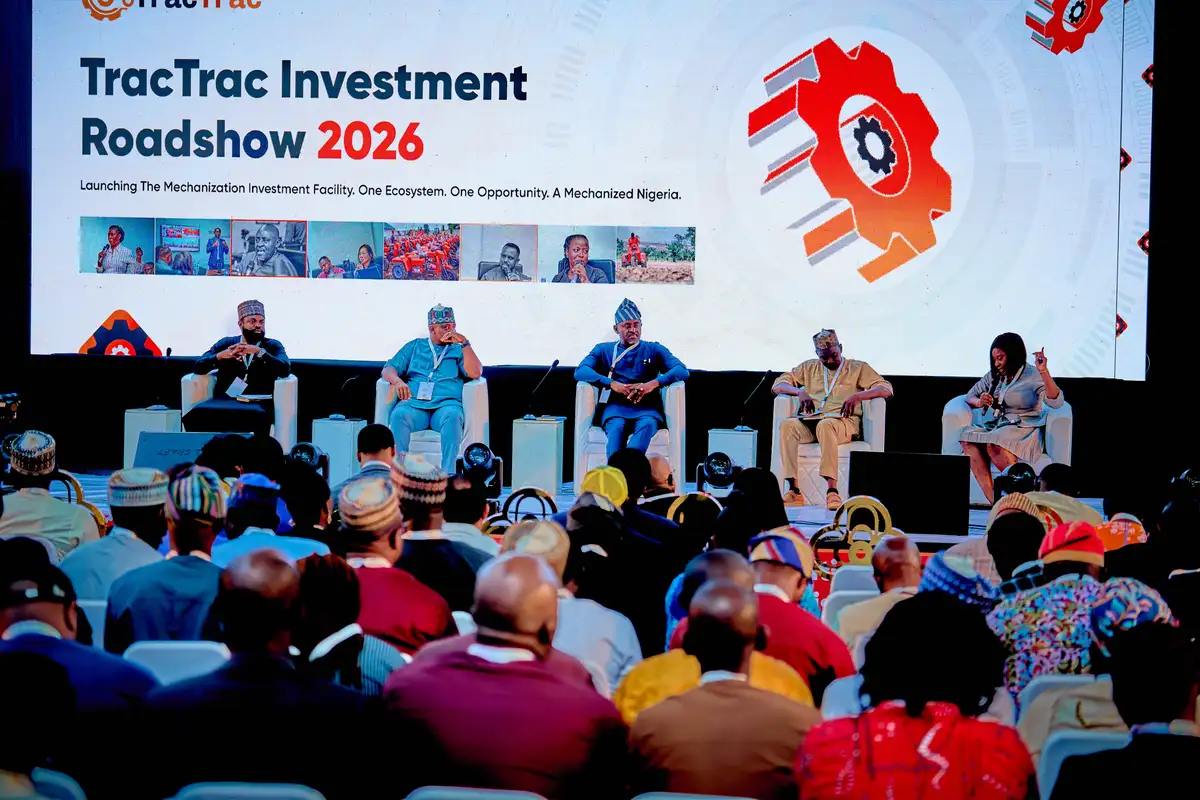
That confidence is also being built from the finance side. At the Roadshow, Olabode Olagunji, Finance Manager at the Nigeria Incentive-Based Risk Sharing System for Agricultural Lending (NIRSAL), set out the institution's Credit Risk Guarantee, interest drawback, insurance and geo-cooperative instruments available to mechanisation service providers and cooperatives, and what a bank needs to see before that guarantee applies.
NIRSAL's own target, from now to 2030, is to raise ₦1 trillion in risk-sharing guarantees, a sign of how much de-risking capacity already exists in the system, waiting to be matched with bankable mechanisation opportunities.
Through TracTrac Plus, we have been building digital infrastructure that enables the onboarding, management, monitoring, and performance tracking of mechanisation service providers. The platform is helping create greater visibility into operators and their activities, while generating data that can support better decision-making across the ecosystem.
Our experience through the Mastercard Foundation-supported ISSAM programme has reinforced the same lesson. Expanding access to mechanisation requires more than putting equipment in communities. It requires capable operators, viable businesses, financing, technology and partnerships that can sustain the model.
That is the ecosystem we are working to strengthen.
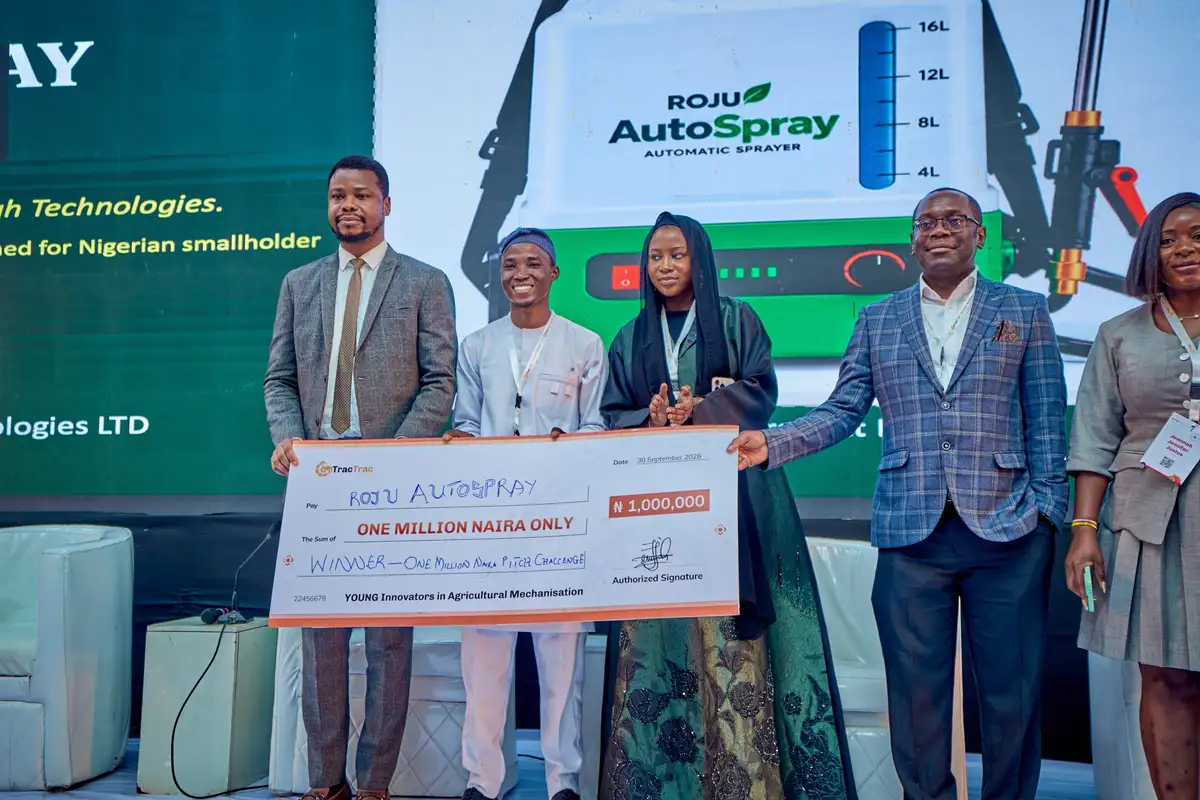
There is also a generation to build it
The future of mechanisation will not be built only through institutional capital. It will also be built by the young Nigerians who will operate machines, build mechanisation businesses, develop technology, provide technical services and create new ways of connecting farmers to equipment.
This was an important part of the conversations around the National Agricultural Mechanisation Policy 2026, and it is something we believe must continue beyond policy discussions.
The ₦1 Million Pitch Challenge for Young Innovators in Agricultural Mechanisation is one way we are creating space for that participation, giving young Nigerians an opportunity to put forward ideas that can improve mechanisation services, logistics, equipment access, technology and machinery support.
For us, youth participation is not a side conversation. If Nigeria is building a new mechanisation economy, young people should be among those building it.
From policy to investment
The National Agricultural Mechanisation Policy has given Nigeria an important framework for where the sector needs to go, but the next challenge is implementation.
That requires government, but it also requires banks, DFIs, investors, equipment manufacturers, foundations, technology providers, MSPs, cooperatives and young innovators to see their role in the ecosystem.
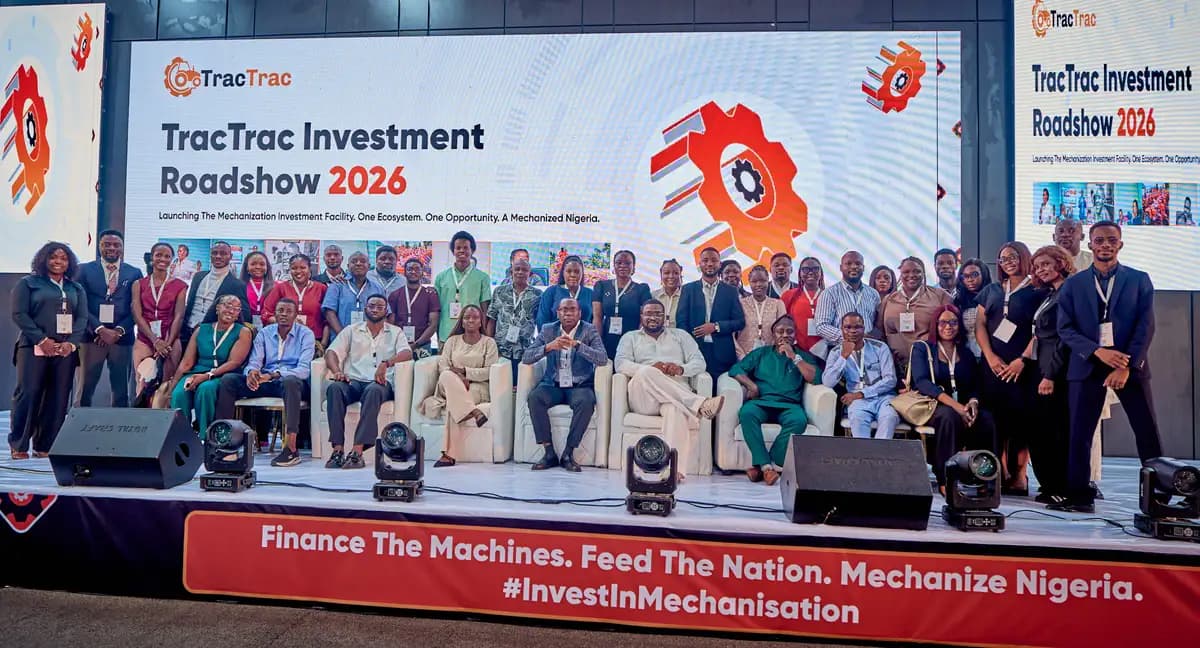
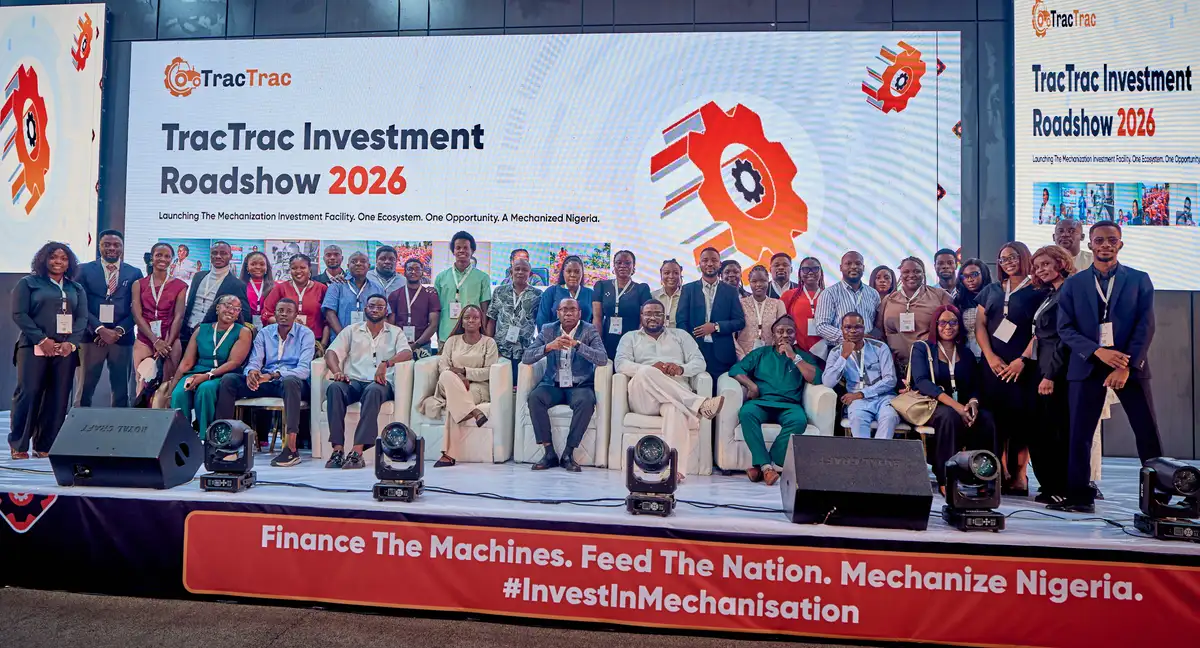
This is why we brought these conversations together through the TracTrac Mechanisation Investment Roadshow. The Roadshow is a continuation of the work — from the stakeholder dialogues, to the policy conversation, to the investment discussions now taking shape around the Mechanisation Investment Facility.
Our goal is not simply to talk about the size of Nigeria’s mechanisation gap. It is to help build the structures, partnerships and investment pathways that can begin to close it.
There is a US$5–6.25 billion gap to address. There is also an opportunity of similar scale to build a more productive agricultural economy around it.
The work is already underway. What's left is to make the opportunity investable, actionable and accountable, and that will take an ecosystem willing to build it together.