
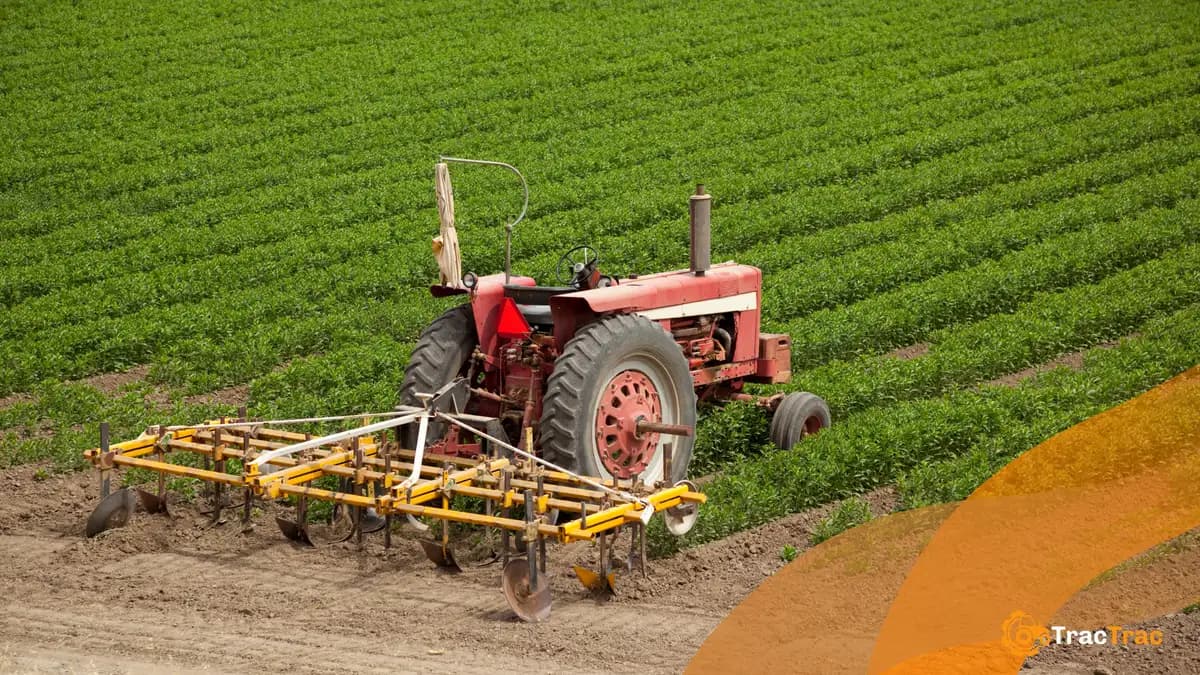
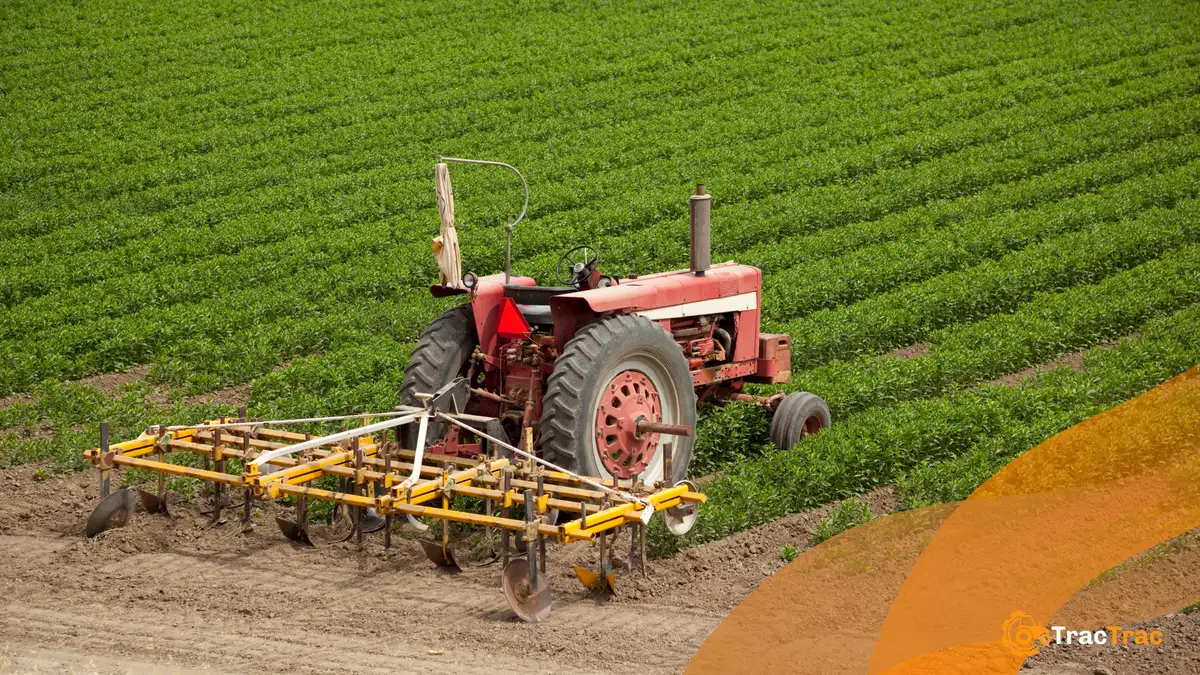
For most Nigerian farmers, owning a tractor is out of reach. A mid-range tractor costs tens of millions of naira, and importing one adds customs charges that can equal 35 percent of the machine's value until recently, when it was reduced to 0%. Renting a tractor has become the practical route to mechanised land preparation, and a growing number of digital platforms, or tractor-hailing apps now make it possible to book a tractor from a phone. This guide walks through how to rent a tractor online, what documents providers ask for if at all, which companies and government schemes offer the service, and what the going rates look like across different states.
Can You Rent a Tractor Online in Nigeria?
Yes. Tractor rental in Nigeria has shifted from word-of-mouth arrangements with local tractor owners through middlemen to app-based booking, similar in spirit to ride-hailing. Several platforms now let a farmer request a tractor from a smartphone and get matched with a machine and an operator nearby.
The TracTrac Plus app is one of the clearest examples of this shift. Through the tractor-hailing app, a farmer can hire a tractor, use a farm mapping tool to measure their land by GPS walk-around, hire other farm tools and connect with a network of vetted mechanisation service providers (MSPs) for a quote. The same app also lets equipment owners enlist their tractors and lets users register as agents or operators, so it functions as a single marketplace for the whole rental process rather than separate tools for each party. TracTrac reported around 2,500 downloads of TracTrac Plus in a single month in 2025, and its CEO Godson Ohuruogu has said the platform has facilitated over 2,000 mechanisation service engagements while supporting more than 500,000 farmers through its wider network of over 6,000 mechanisation service providers.
Hello Tractor is the other major digital player. Its booking app connects farmers with tractor owners, and it has grown to serve over 2.5 million smallholder farmers through more than 6,500 registered equipment owners. Because many rural farmers are still uncomfortable navigating an app directly, Hello Tractor relies heavily on trained booking agents, community members who take a farmer's details and place the booking on their behalf.
Tractor On The Go (TOG), accessed through the TOGworld app, offers a similar tractor-hailing model and has partnered directly with the Lagos State government to deliver the Eko Agro Mechanisation Scheme to smallholder farmers.
So online booking is real and growing, and it works two ways in practice: a farmer with a smartphone can book directly through an app, or a farmer without one can go through a local booking agent or a mechanisation hub who places the request on their behalf.
What Documents Are Needed to Rent Heavy Machinery
Renting a tractor is far less paperwork-heavy than buying or importing one, since no vehicle registration or road-worthiness certificate is required for equipment that mostly operates off-road on farmland. But also the needs differ from platform to platform. For instance, the TracTrac Plus app only requires basic information at the sign-up stage, as highlighted by the Programs Lead at TracTrac, Stephen Aguebor when we sat with him for a chat. However, across the platforms and providers reviewed for this guide, the details typically requested at booking include:
- Full name and phone number of the farmer or booking contact
- Farm location, either a physical address or GPS coordinates captured through the app's mapping tool
- Size of the farmland in hectares or acres, used to generate a price quote
For farmers or entrepreneurs who want to enlist a tractor for hire or set themselves up as an equipment owner or agent on a platform, providers may also ask for a valid means of identification, bank account details for payouts, and in some cases a registered business name with the Corporate Affairs Commission (CAC).
Companies That Offer Reliable Tractor Rental for Farming
A mix of agri-tech platforms, associations, and state agencies currently serve the tractor rental market in Nigeria:
- -TracTrac Plus, run by TracTrac Mechanisation Services Limited, offers app-based booking, farm mapping, and a network of trained MSPs. It has deployed more than 800 tractors and built a network of over 6,000 mechanisation service providers, and it is active in Abuja, Kaduna, and Nasarawa, with plans to expand. TracTrac is also involved in shaping Nigeria's draft National Agricultural Mechanisation Policy alongside the Federal Ministry of Agriculture and Food Security.
- -Hello Tractor operates an app and a network of booking agents and offers a pay-as-you-go financing model that has helped tractor owners and agents acquire equipment with as little as a 5 percent down payment.
- -Tractor On The Go (TOG), through the TOGworld app, offers nationwide booking and has an active partnership with the Lagos State Government.
- -TOHFAN (Tractor Owners & Hiring Facilities Association of Nigeria), established in 2003 and based in Zaria, Kaduna, is a longstanding association of tractor owners, operators, mechanics, and hiring agents, with published standard rates for ploughing, harrowing, and ridging.
- -State-run schemes, such as Lagos State's Tractor Hiring Units and Eko Agro Mechanisation Scheme, and the Lagos State Agricultural Input Supply Authority, which also deals in tractor hiring.
- -Classified listings and community groups, such as Jiji.ng and Nairaland agriculture threads, where individual tractor owners advertise hiring services directly. These can be useful for finding a nearby machine quickly, though they generally lack the vetting, GPS tracking, or dispute resolution that an app-based platform provides.
How to Rent a Tractor With an Operator for Land Preparation
In Nigeria, tractor rental for farm work is usually bundled with an operator. Tractors are specialised equipment, and owners rarely hand over a bare machine to a farmer to self-drive, both for insurance and safety reasons and because most farmers do not have tractor-operating experience. Steve Aguebor shares from his decades of experience what models equipment owners operate, especially in the northern parts of Nigeria, and how it affects pricing.
“The first model, especially in parts of Kaduna, is one where you rent a tractor with an implement, and it doesn’t come with an operator. The farmer will find an operator, pay the operator and also fuel the tractor. Renting the tractor alone will cost about ₦100,000 for a day," he says.
Describing the second model, he shares, "the rental package will come with the tractor and operator. So, the tractor owner will fuel the machine and also pay the operator. But you have to agree beforehand on how many hectares the operator will be working on. This package can cost up to ₦150,000 for a day.”
“For the TracTrac Plus app, where we have three-wheel tractors available on the app, it costs less because the tractor consumes less fuel. MSPs on the app charge around ₦65,000-₦75,000 for a day."
However, here is what the typical process in the larger ecosystem looks like:
- -Book through an app, agent, or association. On TracTrac Plus, this means opening the app, selecting "hire a tractor", and using the farm mapping tool to measure the plot or reaching out to a TracTrac Agent in your community. On Hello Tractor, it usually means contacting a local booking agent who takes down the farmer's details.
- -Share the job details. This includes the farm's location, its size, the crop being planted, and the specific operation needed (ploughing, harrowing, ridging, or a combination).
- -Receive a quote and schedule a date. Prices are generally quoted per hectare rather than per day, and the provider will estimate how many hectares the machine can cover in a day based on soil and terrain.
- -The mechanisation service provider (MSP) or operator arrives with the tractor. TracTrac Plus and Hello Tractor both work with a network of trained operators, and TracTrac's MSPs go through equipment-use and maintenance training under programmes such as the Improving Smallholder Farmers' Access to Small-Scale Agricultural Mechanisation Services (ISSAM) project.
- -Work is completed and measured. Some platforms like TracTrac Plus use GPS tracking on the tractor to confirm the actual hectares covered, which supports transparent billing.
- -Payment is made.
Farmers who prefer a fully human-mediated process can also go through associations like TOHFAN, which hire out tractors with operators directly and publish standard per-hectare rates for common jobs.
Also Read: Top 5 Tractors for Farming in Nigeria and Their Prices
How Much It Costs to Rent a Tractor for a Day in Nigeria
Tractor rental costs in Nigeria are quoted mostly per hectare, and they move with the price of diesel.
Mr. Steve Aguebor also states that “costs of tractor rentals are determined by the accessibility and availability of tractors in that area. The laws of demand and supply are at play here. For regions with higher tractor density, renting a tractor with an operator can cost about ₦120,000 for a day, and the operator can work up to 3 hectares. But for regions with lower tractor density, it will cost about ₦150,000 or more.”
- -In Benue State, there are reported standard rates of N70,000 per hectare for ploughing and N65,000 per hectare each for harrowing and ridging, while some AFAN members in the state reported ploughing costs of N65,000 to N75,000 per hectare and harrowing at N40,000 to N50,000 per hectare.
- -In Kwara State, farmers in 2026 reported an average of N50,000 to plough one hectare.
- -In Niger State, farmers cited a cost of about N70,000 per hectare for tractor use.
- -In Taraba State, operators were charging around N120,000 per hectare, up sharply from about N32,000 a year earlier.
- -In Plateau State, farmers reported paying at least N120,000 per day for a combined ploughing and harrowing job.
- -In Kaduna State, a plough job that cost around N50,000 to N65,000 previously has in some areas risen to N100,000, and larger jobs that cost N160,000 have risen to around N250,000.
- -An earlier Guardian Nigeria report found hourly rates rising from N7,000-N8,000 to as high as N50,000 as diesel prices climbed.
The consistent pattern across these reports is that diesel prices are the single biggest driver of tractor hire costs. Providers and farmers alike point to fuel, rather than equipment scarcity alone, as the main reason a job that cost tens of thousands of naira two or three years ago can now cost two to three times as much.
The Best Tractor Rental Services Available in Nigeria
Choosing a provider comes down to four practical factors: how far the provider's network reaches, whether pricing is clear before the job starts, whether operators are trained and vetted, and how quickly a request gets a tractor to the farm.
-Coverage. TracTrac Plus currently operates in Abuja, Kaduna, and Nasarawa, with a stated aim of expanding further; however, it also has a listing of compact tractors that are more affordable and can manoeuvre through rough lands and terrains for smallholder farmers compared to bigger tractors. Hello Tractor has a presence across more than 20 African countries and a strong network in Nigeria built around booking agents in rural communities. TOG has a nationwide booking claim and a direct partnership with the Lagos State Government.
-Pricing transparency. TracTrac Plus generates quotes after a farmer measures their exact field size using the app's GPS mapping tool, which reduces disputes over how much land was actually worked. Hello Tractor's pay-as-you-go model and GPS-tracked tractors give both farmers and equipment owners visibility into hours worked and hectares covered. TOHFAN's long-published per-hectare rate sheet offers a useful public benchmark, even though actual charges now sit well above those historical figures.
-Operator vetting. This is an area where TracTrac Plus stands out, since its mechanisation service providers go through training in equipment use, maintenance, and entrepreneurship, and the app markets its network as "vetted providers." Hello Tractor also certifies operators and technicians in partnership with universities and technical and vocational training institutions.
-Response time. In one case documented by TechCabal, a cooperative of maize farmers in Nasarawa State registered on TracTrac Plus and had a mechanisation service provider arrive to measure and prepare their fields the next day, after facing years of delay under the old arrangement of waiting for tractor owners to travel to their village. Hello Tractor farmers have described similar improvements, noting that tractors that once took weeks to arrange now come within a day or two once a booking agent is involved.
Taken together, TracTrac Plus, Hello Tractor, and TOG represent the three most consistently documented options for reliable, app-based tractor rental in Nigeria today, with TracTrac Plus offering the added convenience of combining hiring, farm mapping, and provider vetting inside a single app.
Also Read: Tractor Uses in Agriculture: The Ultimate Guide to Types, Applications & Benefits
Where to Find Agricultural Equipment for Hire Beyond Tractors
Land preparation is rarely just about the tractor itself. Most jobs need an implement attached to the tractor, and a good rental provider should be able to supply these alongside the machine:
- -Ploughs, for the initial breaking of the soil
- -Harrows, for smoothing the soil surface and removing weeds after ploughing
- -Ridgers, for forming ridges suited to crops like yam, cassava, and maize
- -Planters, for precision planting
- -Trailers, for hauling produce, inputs, or other equipment around the farm
- -Sprayers, for applying herbicides and pesticides across larger plots
- -Fertiliser applicators, for even distribution of fertiliser
- -Threshers, for separating grain from harvested crops
The TracTrac Plus app is designed to cover the full range of implements, rather than just tractors. Through the app, farmers can hire ploughs, harrows, trailers, planters and other tools alongside a tractor, and every piece of equipment on the platform comes with a certified operator, which removes the need to separately source an implement and someone who knows how to run it. On the TracTrac Plus app, you can also rent fertiliser applicators, knapsack sprayers, and grain threshers with certified operators. Lagos State's Eko Agro Mechanisation Scheme took a similar approach, procuring ploughs, harrows, tipping trailers, and boom sprayers alongside its tractors so that farmers registered with the scheme could access a complete land preparation package. Farm equipment marketplaces such as DRISA Farmdepot also list a range of implements, including disc ploughs, offset disc harrows, boom sprayers, and agricultural loaders, for farmers who prefer to source equipment independently of a tractor-hailing app.
Conclusion
Renting a tractor has become one of the most practical ways for Nigerian farmers to access mechanisation without the high cost of ownership. With tractor hailing apps like TracTrac Plus and Hello Tractor, trained operators, GPS-enabled farm mapping, and expanding networks of mechanisation service providers, finding and booking a tractor is now far more accessible than it was a few years ago. Whether you choose TracTrac Plus, Hello Tractor, TOG, or a state-backed hiring scheme, the key is to compare providers, confirm what is included in the quoted price, and book early, especially during peak planting seasons when demand is highest.
When it comes to pricing, the figures move with fuel prices and local tractor availability, the most reliable way to get an accurate cost for a specific farm is to request a quote through a platform like TracTrac Plus, Hello Tractor, or TOG, or to contact a local Tractor Hiring Unit where one exists, rather than relying on a single fixed number.
Taking these steps can help ensure timely land preparation, reduce delays, and improve the chances of a successful farming season.
Frequently Asked Questions
-Can I rent a tractor online in Nigeria? Yes. Tractor-hailing apps such as TracTrac Plus, Hello Tractor, and TOG (through the TOGworld app) let farmers request a tractor from a smartphone. TracTrac Plus also includes a farm mapping tool so farmers can measure their land and get a quote before booking. Farmers without a smartphone can still book through a local agent working with one of these platforms.
-What documents are needed to rent heavy machinery in Lagos? Lagos farmers generally need to provide their name, phone number, farm location within one of the state's agrarian clusters, and the size of the land to be worked. This can be done through the Ministry of Agriculture and Food Systems' Tractor Hiring Units in Ikorodu, Badagry, Agege, Ajah, or Epe, or through the TOGworld app under the Eko Agro Mechanisation Scheme. A full land title is not usually required since the scheme is aimed at smallholder farmers working family or community land.
-Which companies offer reliable tractor rental for farming in Nigeria? TracTrac Plus, Hello Tractor, and Tractor On The Go (TOG) are the main app-based platforms, alongside the longstanding TOHFAN association in Kaduna and state-run schemes such as Lagos State's Tractor Hiring Units. TracTrac Plus combines hiring, farm mapping, and operators inside one app, which makes it a strong option for farmers who want the full process handled in one place.
-How do I rent a tractor with an operator for land preparation? Book through an app or agent, share the farm's location and size, and specify the task needed, such as ploughing, harrowing, or ridging. The provider sends a trained operator with the tractor, since almost all tractor rental in Nigeria comes with an operator rather than as a self-drive rental. Work is often measured by GPS before payment is finalised.
-How much does it cost to rent a tractor for a day in Nigeria? Costs vary widely by region and by fuel prices. Recent reports put ploughing at roughly N50,000 per hectare, with some markets reporting full-day combined jobs reaching N120,000 to N205,000. Getting a live quote through a platform like TracTrac Plus is the most accurate way to know the current cost for a specific farm.
-Where can I find agricultural equipment for hire in Nigeria? Beyond tractors, implements such as ploughs, harrows, ridgers, trailers, sprayers, fertiliser applicators, and threshers can be hired through the TracTrac Plus app, which pairs every implement with a certified operator, through equipment marketplaces such as DRISA Farmdepot, and through state schemes like Lagos State's Eko Agro Mechanisation Scheme, which supplies ploughs, harrows, trailers, and sprayers alongside its tractors.