
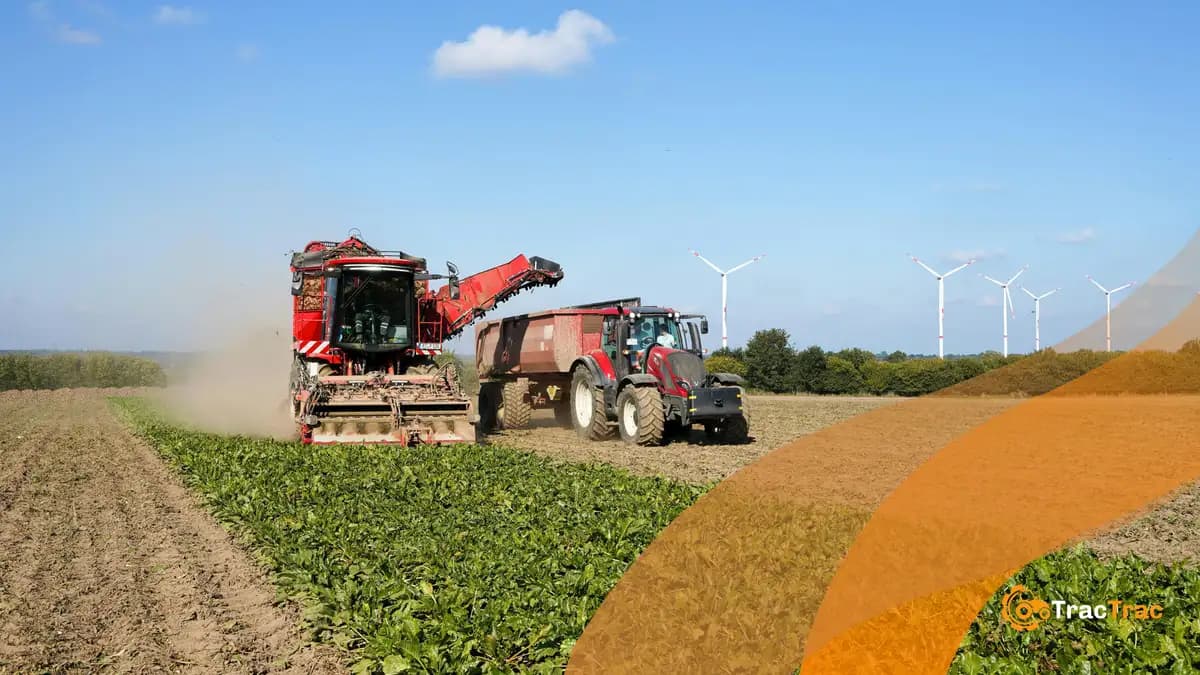
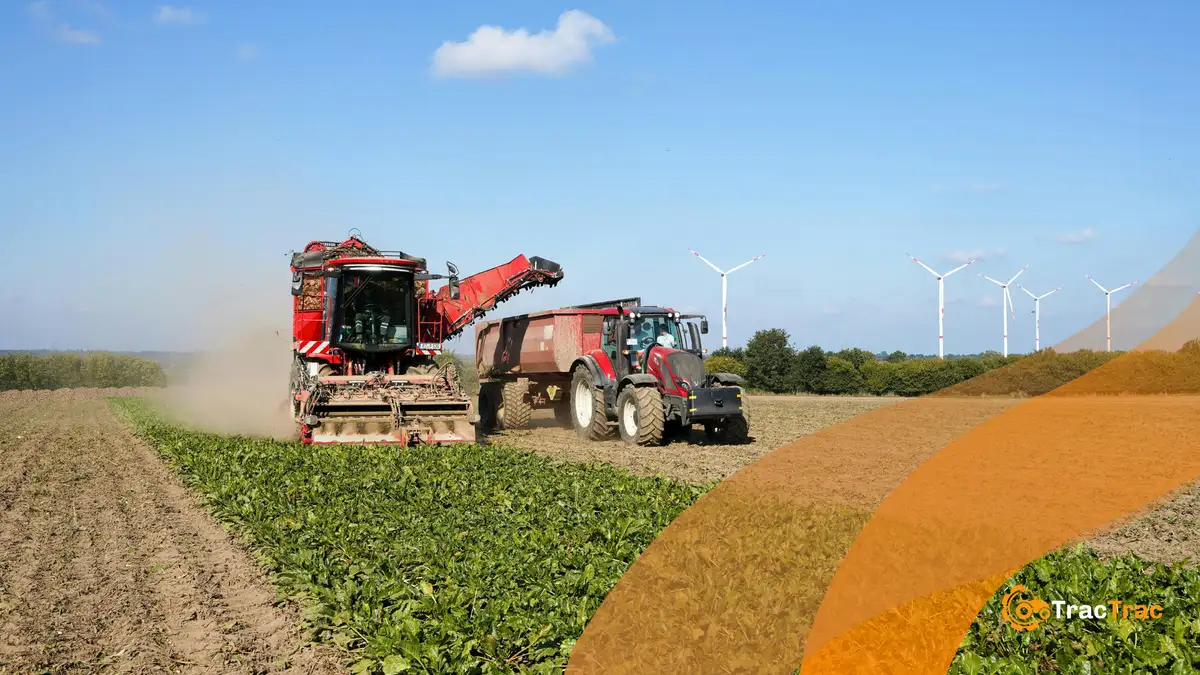
It is nearly impossible to discuss modern agriculture without discussing tractors. From land preparation and planting to harvesting and transportation, tractors have become the primary power source for most mechanized farming systems worldwide. Whether on a 4-hectare smallholder farm, a commercial grain operation in Brazil, or a highly automated farming enterprise in the United States, the tractor remains the single most transformative machine in agricultural history. It is not simply a vehicle. It is the central power source, the operational anchor, and the economic enabler behind virtually every mechanized farm activity.
Before tractors, agriculture was largely defined by the limits of human and animal labor. Plowing a single hectare with ox-drawn implements could take a full day under favorable conditions. Today, a midrange utility tractor fitted with a disc plow can turn the same area in under two hours. This shift in productive capacity from subsistence-scale operations to commercially viable enterprises is at the core of what agricultural mechanization has delivered to farming communities worldwide.
The Food and Agriculture Organization of the United Nations (FAO) has consistently identified agricultural mechanization as an essential driver of food production efficiency and rural economic development. Mechanized agriculture can reduce labor requirements by up to 50 percent for certain operations, increase yields by improving the timeliness of planting and harvesting, and substantially reduce post-harvest losses. For a world expected to feed nearly 10 billion people by 2050, these gains are not marginal; they are existential.
The World Bank has further documented that countries with higher rates of agricultural mechanization tend to demonstrate stronger rural income growth, lower rates of agricultural labor poverty, and stronger food supply chains. In Africa, where the FAO estimates that over 60 percent of farmland is still cultivated using hand tools, the mechanization gap represents both a significant productivity challenge as well as an enormous investment opportunity.
The African Union's Comprehensive Africa Agriculture Development Programme (CAADP) and successive frameworks have placed mechanization at the center of the continent's agricultural transformation agenda. Initiatives such as the Mastercard Foundation's agrifood programs in West and East Africa, like the ISSAM project, have sought to expand smallholder farmers' access to tractor services through innovative Mechanization Service Provider (MSP) models—recognizing that individual ownership is not the only, or even the most efficient, pathway to mechanization.
This guide is written for anyone who needs to understand tractor uses in agriculture: from the smallholder farmer assessing whether to invest in a compact tractor to the agribusiness professional structuring a mechanization service enterprise to the development practitioner designing a rural agriculture program. We cover the full scope of agricultural machinery, explain why tractors anchor modern farm systems, classify the major types of tractors in use today, detail the implements and attachments that extend tractor productivity, and quantify the economic and food security benefits that mechanization delivers.
Major Types of Agricultural Machinery Used in Modern Farming
Agricultural mechanization is a broad ecosystem. While tractors often occupy the center of that ecosystem, they work alongside — and frequently power — a wide range of specialized machinery designed for specific stages of the farming cycle. Understanding these categories is the starting point for any serious engagement with modern farm systems.
Agricultural machinery is generally classified according to its primary function in the production chain. These categories are consistent with the sequential operations of crop production: soil preparation, planting, crop care, harvesting, post-harvest handling, and logistics.
Soil Cultivation Equipment
Soil cultivation equipment encompasses all machinery used to prepare land for planting. Proper soil preparation creates the ideal seedbed: loose, aerated, and free of weeds and crop residue. Without adequate tillage, seed-to-soil contact is poor, germination rates decline, and root development is restricted.
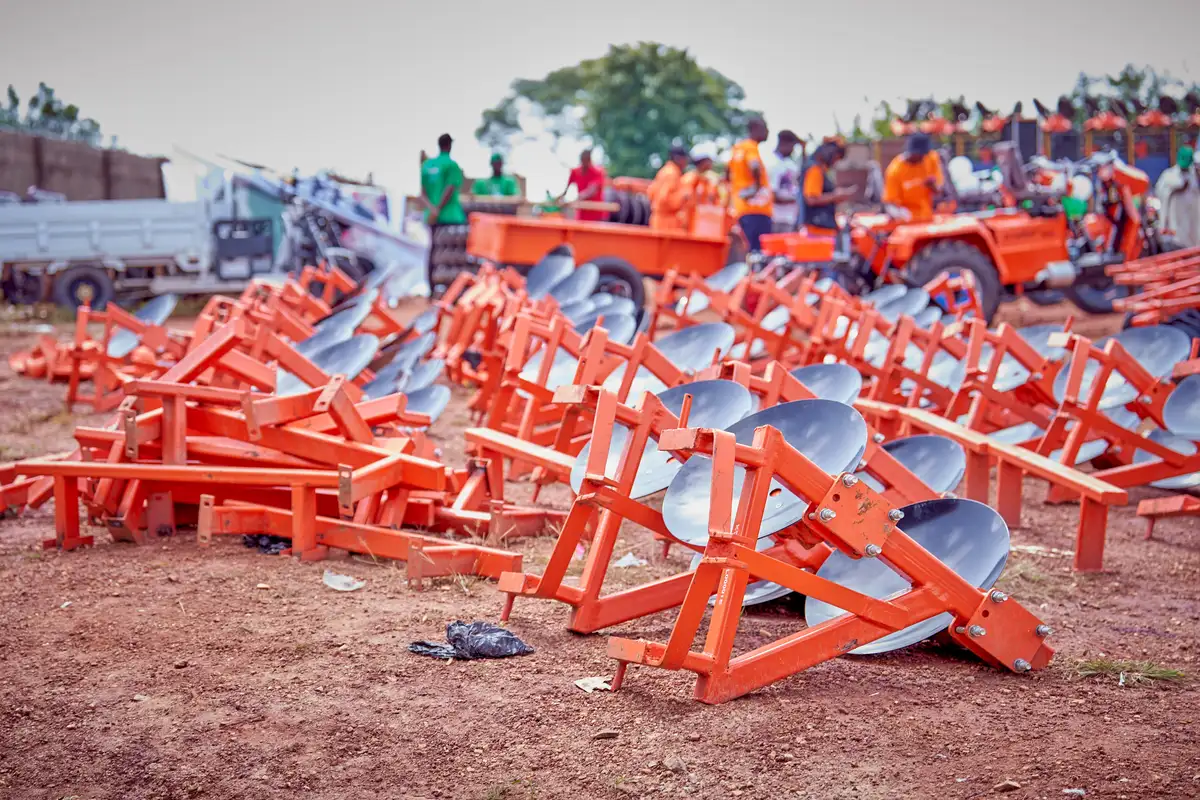
- -Disc plows are among the most widely used primary tillage implements in Africa and other regions with heavy clay soils. They use a series of concave steel discs to cut through hardpan soil and crop residue, turning the soil to bury organic matter and expose fresh earth. They are typically tractor-mounted and work efficiently at depths of 15 to 30 centimeters.
- -Harrows are secondary tillage implements used after the initial plowing to break up large clods, smooth the soil surface, and incorporate crop residue or fertilizer. Disc harrows, chain harrows, and tine harrows each serve slightly different secondary tillage functions.
- -Cultivators are multipurpose implements used both in land preparation and for between-row weed control during the growing season. They work the soil to shallower depths than ploughs, improving moisture retention and aeration without fully inverting the soil profile.
- -Rippers (also called subsoilers) break through deep compaction layers known as hardpan or plough pan that restrict water infiltration and root penetration. They operate at depths of 40 to 60 centimeters and require significant tractor horsepower to pull effectively.
- -Rotavators (or rotary tillers) use powered rotating blades to chop, mix, and pulverize soil into a fine tilth in a single pass. They are powered through the tractor's Power Take-Off (PTO) system and are especially valued in vegetable farming and paddy rice production systems where fine seedbed preparation is critical.
Planting and Seeding Machinery
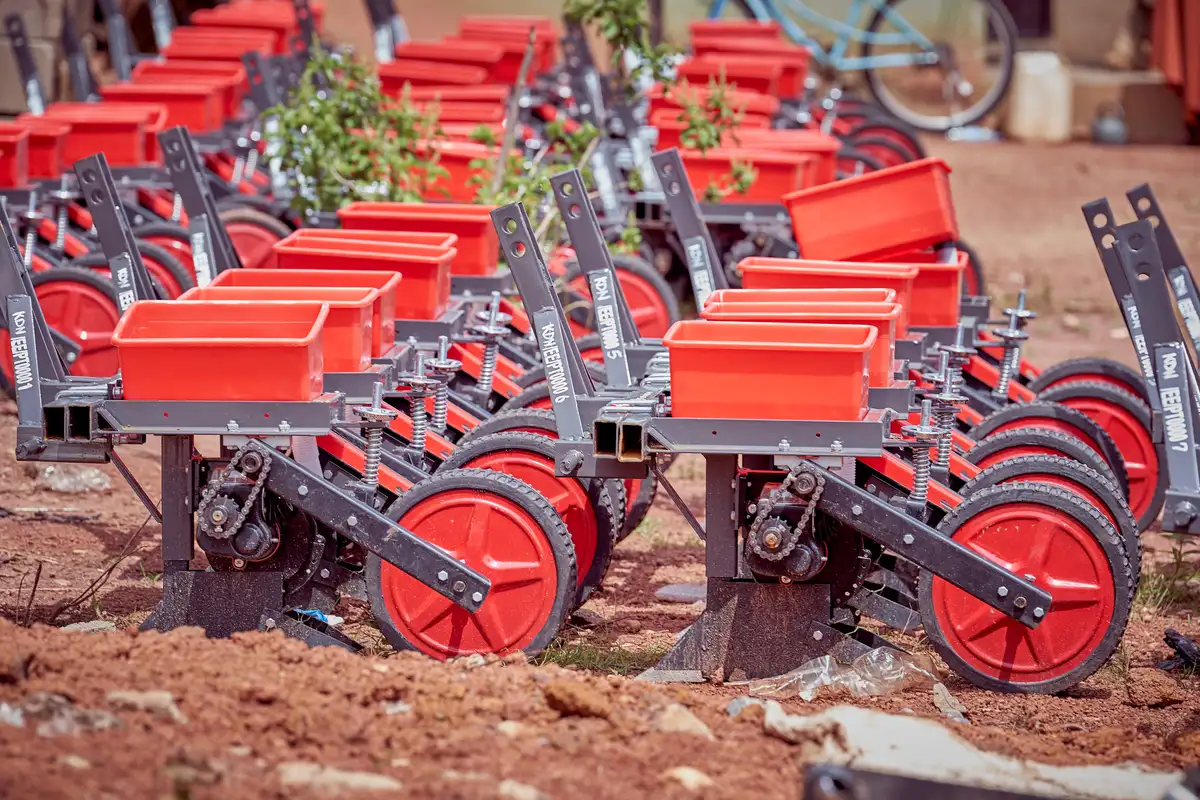
Planting machinery controls the precision, depth, spacing, and rate at which seeds enter the soil. These parameters have a direct and measurable impact on crop yields. Research consistently shows that mechanized planting, compared with manual broadcasting, improves germination uniformity, reduces seed waste, and allows more effective mechanized weed management.
- -Seed drills place seeds at consistent depth and spacing in rows. Mechanized seed drills can be calibrated for different seed sizes, row spacing requirements, and seeding rates. Combine drill systems simultaneously place seed and fertilizer in adjacent bands, improving fertilizer use efficiency.
- -Precision planters are the high-accuracy evolution of the seed drill, placing individual seeds at precise intervals in each row. They are common in maize, sunflower, soybean, and cotton production, where correct plant population per hectare has significant yield implications.
- -Broadcast seeders spread seeds over a wide area without row placement. While less precise, they are suitable for pasture establishment, cover crops, and small-seeded crops where row spacing is not critical.
- -Transplanters are used for crops started in nurseries, such as rice, tomatoes, and certain vegetable crops. Mechanized transplanters significantly reduce the labor intensity of transplanting operations, which can otherwise require large seasonal labor forces.
Also Read: Farm Tractor vs. Mini Tractor: Which Is Right for Your Needs?
Irrigation Equipment
Water is the single most limiting input in agricultural production across large parts of Africa, South Asia, and the Middle East. Irrigation equipment extends the cropping season, enables dry-season production, and provides a buffer against rainfall variability, which climate change is making increasingly unpredictable.
- -Sprinkler systems distribute water through pressurized nozzles that simulate rainfall over the crop canopy. They are widely used in cereals, vegetables, and orchard crops. Sprinkler systems require pump equipment, which can be tractor-powered using PTO-driven pumps.
- -Drip irrigation systems deliver water directly to the root zone of individual plants through a network of emitters and lateral pipes. Drip systems achieve water-use efficiency rates significantly higher than flood or furrow irrigation — studies supported by the International Fund for Agricultural Development (IFAD) have documented water savings of 30 to 50 percent in comparable systems. They are especially useful for high-value horticulture crops.
- -Center pivot irrigation systems rotate around a central water supply point, irrigating large circular areas. They are common in large-scale commercial agriculture in Southern Africa, North America, and the Middle East. A single center pivot can irrigate 50 to 100 hectares with minimal labor.
- -Water pumps — including centrifugal pumps, submersible pumps, and tractor-mounted PTO pumps- are the mechanical foundation of any irrigation system. PTO-powered pumps allow farmers with tractors to deploy irrigation without requiring a separate pump engine.
Crop Protection and Fertilizing Machinery
Crop protection machinery applies pesticides, herbicides, fungicides, and fertilizers to growing crops. The timing, coverage, and dosage accuracy of these applications directly affect both their effectiveness and their environmental impact. Poorly calibrated application equipment wastes expensive inputs and can cause crop damage or environmental contamination.
- -Boom sprayers are tractor-mounted systems consisting of a liquid tank and a horizontal spray boom fitted with multiple nozzles. Boom widths typically range from 6 to 36 meters for field sprayers, allowing rapid coverage of large areas. Boom sprayers are used for applications of herbicides, insecticides, fungicides, and foliar fertilizers.
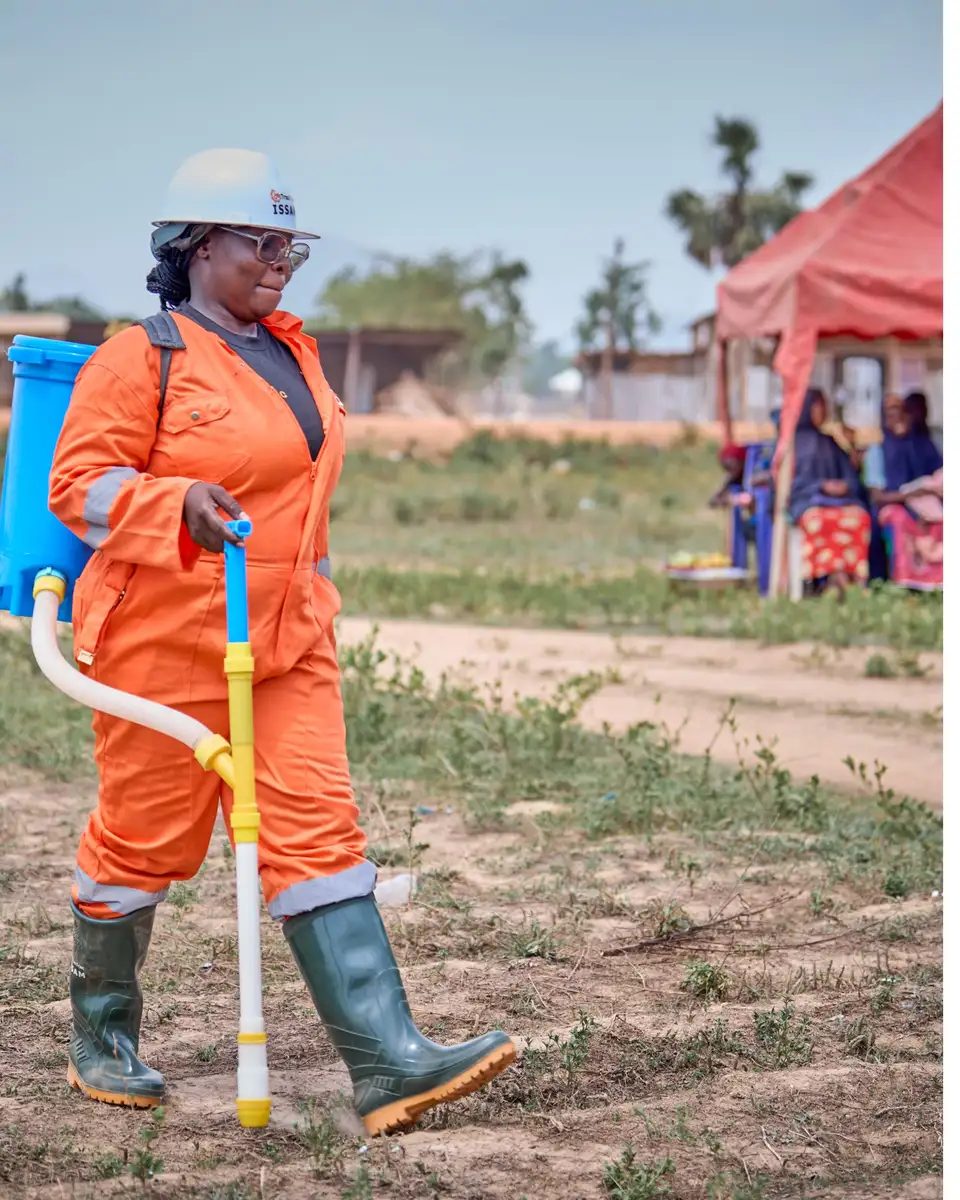
- -Knapsack sprayers are manual, operator-carried sprayers used for targeted small-scale applications. While not mechanized in the tractor-powered sense, they remain widely used by smallholder farmers across Africa and Asia for spot treatments and vegetable crop protection.
- -Fertilizer spreaders distribute granular or liquid fertilizer across the field surface. Centrifugal disc spreaders are the most common type, attaching to the tractor's three-point linkage and powered by the PTO. The accuracy of calibration determines whether nutrients are applied at the correct rate. Over-application wastes money and risks leaching; under-application limits yields.
- -Precision application systems use GPS and variable-rate technology (VRT) to apply inputs at different rates across a field based on soil test maps or yield data. These systems are becoming increasingly available in large-scale commercial operations and represent the frontier of input efficiency.
Harvesting Equipment
Harvesting is one of the most labor-intensive stages of crop production and among the most time-sensitive. Delayed harvesting leads to field losses due to shattering, pest damage, and exposure to weather. Mechanical harvesting substantially compresses the harvest window, reducing these losses and freeing labor for other productive activities.
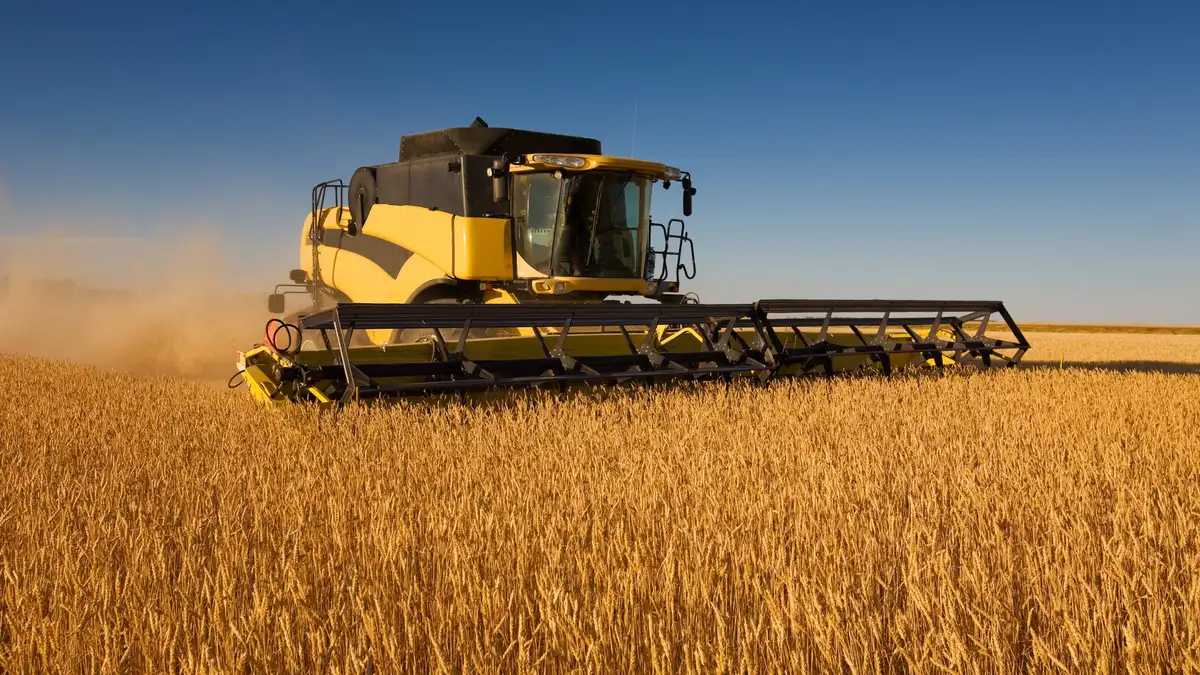
- -Combine harvesters are the most sophisticated harvesting machines in widespread use. They simultaneously cut, thresh, and clean grain crops in a single pass — performing operations that would require separate manual crews working over days or weeks. Combines are used primarily for wheat, maize, soybeans, rice, and other grain crops.
- -Reapers are simpler, tractor-powered or self-propelled cutting machines that cut and lay crops in swaths for subsequent collection. They are appropriate for small-grain crops and are more affordable than full combine harvesters, making them relevant for mid-scale operations in developing agricultural markets.
- -Forage harvesters cut, chop, and blow grass or maize silage crops into transport vehicles for animal feed production. They are essential equipment in commercial livestock and dairy farming systems.
- -Potato harvesters, cotton pickers, sugar cane harvesters, and other crop-specific machines serve specialized production systems. Each is engineered for the specific handling requirements of its target crop, minimizing mechanical damage during harvest.
Post-Harvest and Processing Machinery
The FAO estimates that post-harvest losses in sub-Saharan Africa reach between 20 and 40 percent of total production for many food crops. Much of this loss is preventable with appropriate post-harvest machinery. The economic argument for post-harvest investment is compelling: retaining produce that has already been grown and harvested is, per unit of food, far cheaper than producing additional volume.
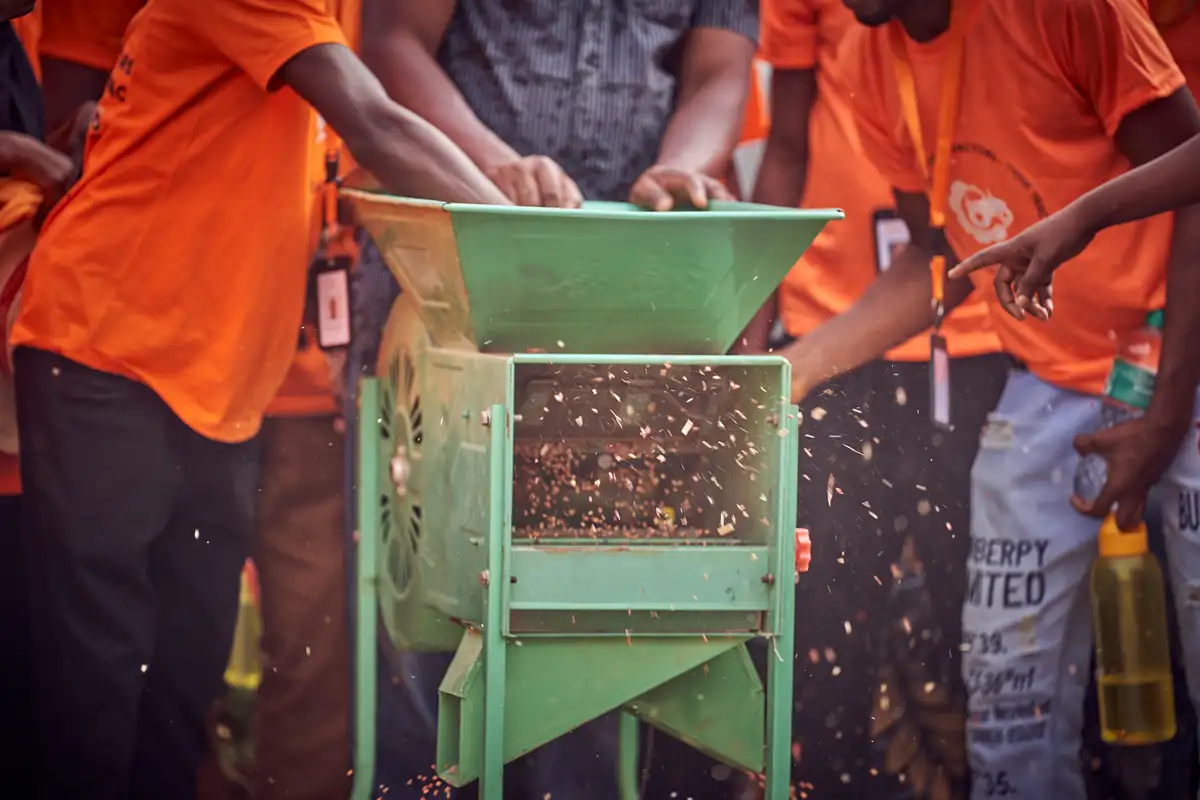
- - Threshers separate grain from stalks and husks after harvest. Mechanized threshing replaces manual beating, dramatically reducing grain loss and labor time. Multi-crop threshers capable of handling maize, sorghum, millet, and cowpea are increasingly common in West African farming systems.
- - Shellers remove grain from cobs or pods. Maize shellers and groundnut shellers are among the most impactful small-scale post-harvest machines in sub-Saharan Africa, where both crops are staple commodities.
- - Dryers reduce grain moisture content to safe storage levels, typically below 13 to 14 percent. Inadequate drying is a primary cause of aflatoxin contamination and storage rot, causing food safety issues with severe public health and market access consequences.
- - Graders sort produce by size, weight, or quality, enabling farmers to access premium markets that demand consistent product specifications. Grading is increasingly important as African agricultural producers seek to supply formal retail and export markets.
- -Milling equipment processes grains into flour, meal, or other consumable forms. Village-level milling services reduce household labor burdens, particularly for women who traditionally perform grain processing manually and create rural enterprise opportunities.
Transport and Storage Equipment
Moving farm inputs to the field and harvested produce to storage or market is a logistical function that consumes significant labor and time. Mechanical transport reduces the physical burden of on-farm logistics and shortens the time between harvest and market — a critical factor in managing the quality of perishable commodities.
- - Farm trailers are tractor-pulled wagons for transporting harvested crops, inputs, and equipment within and between farms. A single tractor-trailer combination can move several tons of produce per trip, replacing dozens of headload trips.
- - Grain carts are large-capacity trailers used in commercial grain farming to transfer grain from combine harvesters to truck transport without the combine needing to leave the field, improving harvesting efficiency significantly.
- - Storage bins and silos are fixed or portable structures that preserve harvested grain. Metal silos, hermetic storage bags, and warehouse-scale grain stores each serve different farm sizes and commodity types. Proper storage infrastructure is often the missing link between field-level mechanization investment and realized market returns.
Why Tractors Are the Backbone of Modern Agricultural Machinery
Across the machinery categories described above, a common thread emerges: the tractor. It powers, pulls, and activates a majority of the implements and systems that make modern farming possible. To understand tractor uses in agriculture, it is important to first understand what makes tractors so fundamentally central to mechanized farm systems.
At the most basic level, a tractor is a prime mover — a machine specifically engineered to generate and transfer mechanical power. Unlike trucks or transport vehicles optimized for road speed, tractors are designed for tractive effort: the ability to pull heavy loads through difficult terrain at low speeds without stalling. This is why the word 'tractor' derives from the Latin 'trahere,' meaning to pull.
Four engineering systems define the tractor's versatility and explain its central role in agricultural machinery:
- - Power Generation: Modern agricultural tractors are powered by diesel engines ranging from 18 horsepower for compact garden tractors to over 600 horsepower for large articulated four-wheel drive machines. This engine provides the mechanical energy that powers every other function of the tractor and its attached implements.
- - Traction Systems: Large-profile tires or tracked systems distribute the tractor's weight over a wide surface area, reducing soil compaction and enabling operation on wet, soft, or sloping ground. Four-wheel drive configurations improve traction on challenging terrain and allow the use of heavier implements.
- - Hydraulic Systems: Tractor hydraulic systems lift, lower, and control the position of mounted implements. The three-point hitch — a standardized hydraulic linkage system — allows implements from dozens of manufacturers to be attached, operated, and detached from a single tractor with relative ease.
- - Power Take-Off (PTO): The PTO is a rotating shaft at the rear (and sometimes front) of the tractor that transfers engine power directly to driven implements such as rotavators, sprayers, seeders, and pumps. Standard PTO speeds of 540 and 1,000 rpm allow a wide range of PTO-driven implements to operate from any compatible tractor.
This combination of capabilities means that a single tractor, supported by a set of interchangeable implements, can perform every major farm operation across the full production cycle from initial land preparation through to transport of harvested produce. No other machine in the agricultural toolbox offers this range.
Consider a typical maize production system in Nigeria. During land preparation, the tractor pulls a disc plow to turn the soil, then a harrow to create a seedbed. At planting, it powers a precision planter to place maize seed at the correct depth and spacing. During the growing season, it pulls a boom sprayer for herbicide and pesticide application and a fertilizer spreader for top-dressing. At harvest, it tows a reaper or operates a tractor-powered thresher. After harvest, it transports produce on a farm trailer to a storage facility or marketing point. One tractor, many implements, a complete farming operation.
This is why tractors are the first and most important mechanization investment for farmers and Mechanization Service Providers (MSPs) in most agricultural development contexts. The FAO and IFAD have documented that in many developing-country contexts, access to tractors — whether through ownership, hire, or service-provider arrangements — catalyzes the adoption of a broader range of mechanization services that compound productivity gains across the farming system.
Also Read: How to Choose the Right Tractor for Your Farm
Types of Tractors Used in Agriculture
Tractors are a diverse family of power equipment, differentiated by size, horsepower, design configuration, and intended application. Choosing the right tractor type for a specific farming operation is as important as choosing the right implement.
Utility Tractors
Utility tractors are the most common type of tractor in global agricultural use, normally ranging from 45 to 130 horsepower. They are designed to be versatile, all-purpose machines capable of handling a wide range of field, transport, and material-handling tasks. Most utility tractors feature a standard three-point hitch, PTO, and hydraulic systems that make them compatible with the broadest selection of implements on the market.
They are the dominant tractor type in smallholder and mid-scale commercial farming systems across Africa, South Asia, and Latin America. For most MSP operations, a fleet of utility tractors provides the most flexible mechanization platform. Their limitation is that they may be under-powered for very heavy tillage operations in extremely compacted soils or for operating the largest harvesting implements.
Row Crop Tractors
Row-crop tractors are purpose-designed for the the cultivation and management of row crops such as maize, soybeans, cotton, and sorghum. Their defining features are narrow, adjustable front axles and high-clearance frames that allow them to straddle crop rows without damaging plants during mid-season operations. Row crop tractors typically range from 100 to 300 horsepower.
They are widely used in the maize belts of East and Southern Africa, the soybean farms of South America, and the cotton fields of West Africa. Their specialized design allows them to perform inter-row weeding, fertilizer banding, and pesticide application on standing crops.
Orchard Tractors
Orchard tractors — sometimes called vineyard tractors — have narrow, low-profile designs that allow them to operate in the confined spaces between fruit tree rows and under low-hanging branches. Their compact profiles, typically between 25 and 80 horsepower, and low center of gravity make them suitable for sloped orchard terrain.
They are common in citrus, mango, apple, grape, and olive production systems. In South Africa's Western Cape fruit production regions and Morocco's orchard sectors, orchard tractors are an important part of the mechanization landscape.
Garden Tractors
Garden tractors are small, typically between 5 and 25 horsepower, intended for intensive horticulture, small farm plots, and market gardens. They can perform light tillage, mowing, snow clearing, and material transport on small landholdings where a larger tractor would be impractical or uneconomical.
In peri-urban farming belts around major African cities — where vegetable production takes place on small plots supplying urban markets — garden tractors provide a practical and affordable entry point to mechanization.
Compact Tractors
Compact tractors bridge the gap between garden tractors and utility tractors, typically operating in the 25 to 50 horsepower range. They offer four-wheel drive, full three-point hitch capability, and PTO systems in a smaller, more maneuverable package.
Compact tractors are popular among smallholder farmers graduating from animal draft power, MSPs serving fragmented smallholder land, and specialized growers requiring precision work in confined spaces. Their lower purchase cost and fuel consumption make them economically available to a broader range of operators.
Industrial Tractors
Industrial tractors are heavy-duty machines designed for earthmoving, construction, and infrastructure work. While not primarily agricultural, they play important roles in farm infrastructure development — clearing land, building irrigation channels, grading farm roads, and constructing storage facilities. On very large farms, industrial tractors may be used for heavy ripping operations in virgin land development.
Four-Wheel Drive (4WD) Tractors
Four-wheel drive tractors deliver power to all four wheels simultaneously, providing superior traction in wet, soft, or hilly conditions. Large articulated 4WD tractors, some exceeding 500 horsepower, are the workhorses of very large-scale grain production in South America, North America, Russia, and Australia.
In Africa, 4WD utility tractors are increasingly preferred for MSP operations across varied soil conditions, as improved traction helps maintain productivity during the wet season, when soils are soft and traction is critical for timely land preparation.
Autonomous and Smart Tractors
The fastest evolving segment of the tractor market is autonomous and precision-guided systems. GPS-guided autosteer systems are now available across a wide range of tractor sizes and price points, significantly improving field-operation accuracy and reducing operator fatigue in large fields.
Fully autonomous tractors that are capable of operating without a human driver are being trialed commercially by major manufacturers. John Deere's autonomous tractor platform, launched for commercial testing in 2022, represents a significant step in this direction. These systems use cameras, machine learning, and GPS to navigate fields, spot obstacles, and adjust operation parameters in real time.
In the African context, while fully autonomous tractors remain a future-oriented technology, intermediate digital tools including GPS tracking for MSP fleet management, mobile-based booking platforms for tractor hire services, and remote diagnostics for maintenance are already improving operational efficiency and service delivery across mechanization ecosystems.
Tractor Attachments for Different Farm Operations
A tractor without implements is an incomplete farm tool. The true productivity of a tractor system lies in the breadth and quality of the implements attached to it. By changing implements, the same tractor becomes a plowing machine, a planting machine, a spraying machine, a transport vehicle, and a processing power source. This section covers the key attachment categories organized by farm activity.
Soil Preparation and Tillage Attachments
- -Disc ploughs.
- -Disc harrows
- -Tine cultivators
- -Rotavators
- -Rippers
It is best practice to match implement size to tractor horsepower. Under-powered tractors attempting to pull oversized plows stall, overheat, and wear engines prematurely. A common guideline is 8 to 15 horsepower per disc for disc plow operations, depending on soil conditions.
Planting and Seeding Attachments
- -Seed drills mount on the tractor's three-point hitch and are available in single-row to 24-row configurations.
- -Precision planters
- -Broadcast spreaders distribute granular material — whether fertilizer, lime, or certain seed types — over a wide swath. While not precision tools, they enable rapid coverage of large areas for materials where exact placement is not critical.
Experts at TracTrac advice calibrating all planting equipment before every season and rechecking after changing seed lots. Seed size variation between varieties and batches affects metering rates and must be corrected for accurate seeding.
Crop Care and Protection Attachments
- -Boom sprayers are the primary tractor-mounted crop protection implement. They consist of a tank mounted on the tractor or a trailed frame, connected to a horizontal boom with multiple spray nozzles. Boom widths from 6 to 36 meters are available; wider booms cover more ground per pass but require more careful management on uneven terrain.
- -Fertilizer spreaders attach to the tractor's three-point hitch and use a spinning disc or oscillating spout mechanism to distribute granular fertilizer evenly across the field. Electronic rate controllers allow the operator to adjust application rates from the tractor cab.
- -Inter-row cultivators mount on row crop tractors and use steerable tine gangs to weed between crop rows, replacing or supplementing herbicide applications. In certified organic production systems, mechanical weeding is the primary weed management strategy.
Harvesting Attachments
- -Tractor-powered reapers are cutting implements that attach to the tractor's PTO and cut grain or forage crops in swaths. They are widely used for wheat and rice harvesting in operations where combine harvesters are not available or economically justified by field size.
- -Maize harvesting attachments for utility tractors can include pull-type combine headers and tractor-powered maize shellers that process harvested cobs.
- -Forage harvester attachments turn the tractor into a chopper for silage production, cutting and blowing grass or maize silage into a trailer being towed alongside. These attachments are critical for commercial dairy and beef operations that rely on stored silage during dry seasons.
Material Handling and Transport Attachments
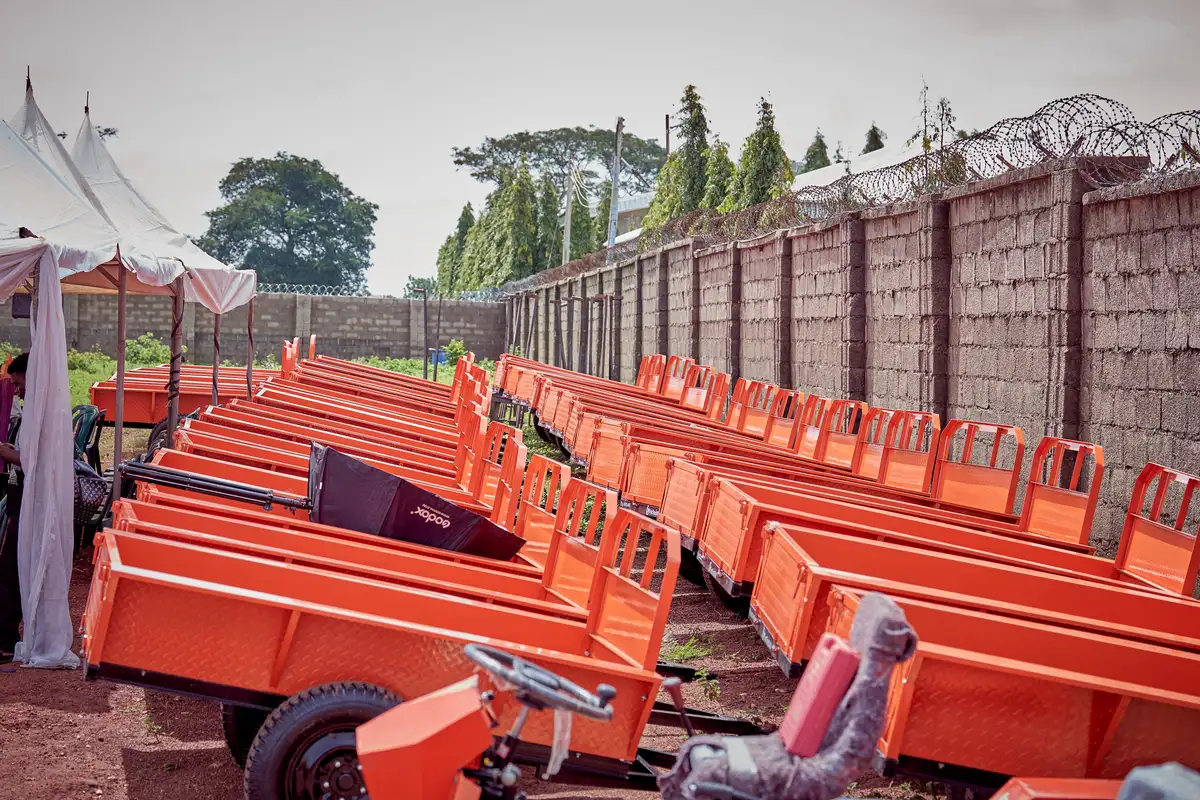
Farm trailers are the most widely used tractor attachment globally and represent one of the most economically impactful mechanization investments for smallholder farmers. A single tractor-trailer combination can transport 2 to 10 tons of produce per trip, reducing dependence on expensive hired transport and enabling faster delivery to market.
- -Front-end loaders are hydraulic bucket attachments fitted to the front of utility tractors, enabling lifting, loading, and moving of bulk materials including grain, soil, compost, and building materials
- -Fork attachments replace the loader bucket with forks for handling pallets, baled silage, or stacked sacks. They are particularly useful in post-harvest logistics operations and seed distribution activities.
Also Read: Understanding Tractor Horsepower: How Does It Affect Performance?
Benefits of Tractors in Modern Agriculture
The case for tractor adoption is built on a robust body of evidence from FAO, IFAD, the World Bank, national agricultural research systems, and the operational experience of farming enterprises worldwide. The benefits are measurable, documented, and directly relevant to the food security and economic development challenges facing the world's agricultural systems.
Increased Farm Productivity and Reducing Labour Requirements
Agricultural mechanization consistently yields advantages attributable to improved operational quality and timeliness. FAO research on mechanization impacts in sub-Saharan Africa has documented that mechanized tillage and planting, combined with improved inputs, can increase yields by 30 to 50 percent relative to manual systems under comparable conditions. The mechanism is straightforward: mechanized operations achieve better seedbed quality, more uniform planting depth, more consistent input application, and more timely execution of critical agronomic operations.
Faster Farm Operations
Speed is an agronomic advantage as much as an economic one. Many crops have optimal planting windows of two to four weeks within which yields are maximized. Similarly, harvest windows for some crops are narrow—maize in humid tropics, for example, can begin developing mold and aflatoxin within days of reaching physiological maturity in wet conditions. Tractor-powered operations compress land preparation, planting, spraying, and harvesting timelines so that farmers can stay within optimal agronomic windows rather than being forced into late or rushed operations by the pace of manual labor.
Improved Farm Profitability
The economic arithmetic of mechanization is favorable across most production systems when properly managed. Higher yields, lower labor costs, reduced post-harvest losses, and faster market delivery improve gross margins. IFAD's assessments of tractor hire programs in West Africa have found that farms accessing mechanization services record significantly higher net incomes per hectare than comparable manual farming households, even after accounting for the cost of hired tractor services. For MSPs providing those services, tractor hire businesses can generate sustainable returns when managed with adequate utilization rates and maintenance protocols.
Greater Precision and Efficiency
Mechanized operations deliver a level of precision in seed placement, fertilizer application, and pesticide dosage that manual operations cannot consistently replicate at scale. This precision translates directly into better resource use efficiency: less seed wasted in gaps, less fertilizer applied outside target zones, less pesticide applied at incorrect rates. As input costs continue to rise globally, precision application enabled by mechanized systems becomes an increasingly important economic advantage for farmers operating on thin margins.
Increased Cultivated Land Area
One of the most direct impacts of tractor access is the ability of farming households and enterprises to cultivate more land. FAO studies in several African countries have documented that farm households with tractor access cultivate two to three times more land than comparable households without it. This expansion of cultivated area is one of the primary pathways through which mechanization drives income growth for rural farming communities.
Better Timeliness of Farm Operations
Timeliness — performing the right operation at the right time — is one of the most impactful but underappreciated dimensions of agricultural productivity. Research from the International Maize and Wheat Improvement Center (CIMMYT) has consistently shown that late planting by two to four weeks can reduce maize yields by 20 to 40 percent depending on the variety and location. Tractor-powered land preparation compresses the window between rainfall onset and planting, enabling farmers to plant on time regardless of the area they are managing.
Enhanced Food Security
At the systems level, the cumulative effect of higher yields, larger cultivated areas, reduced post-harvest losses, and improved input efficiency is greater food availability. The African Union's Agenda 2063 agricultural targets and the continent's commitment to the Malabo Declaration on accelerated agricultural growth both explicitly reference mechanization as a critical lever for achieving food security objectives. The FAO estimates that addressing Africa's mechanization gap could contribute significantly to the continent's ambition of ending hunger, a target that remains challenging given current productivity trajectories.
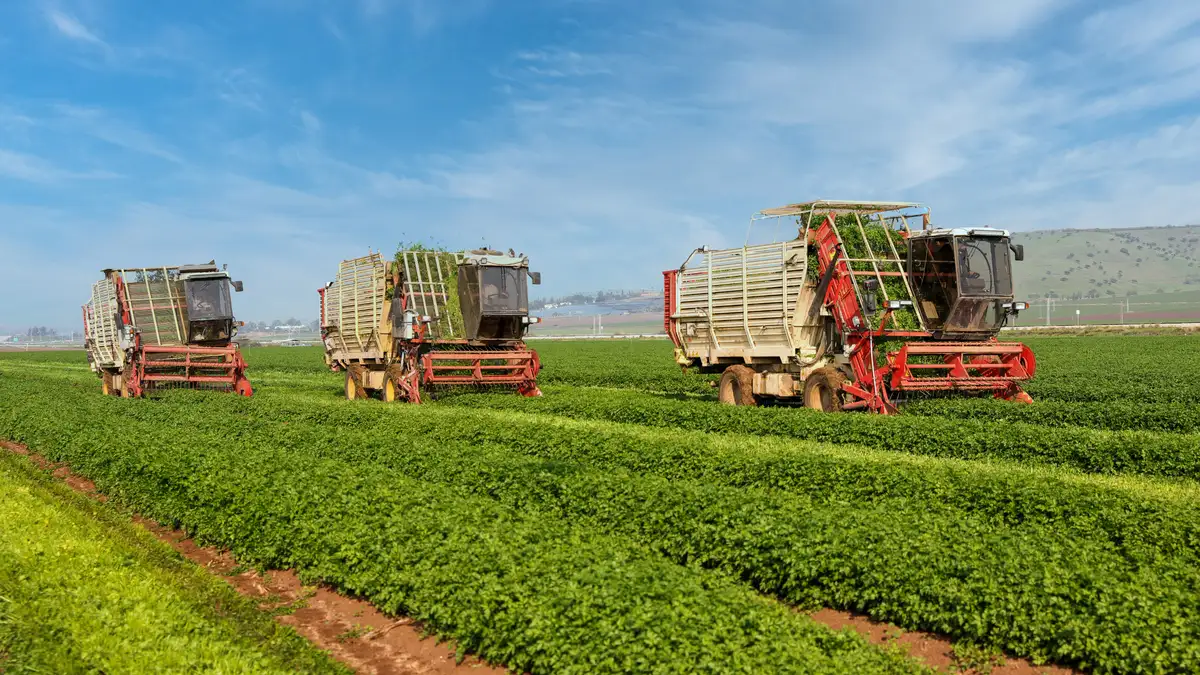
The Future of Tractors and Agricultural Mechanization
Agricultural machinery in its full diversity of soil preparation tools, planting systems, irrigation equipment, crop protection implements, harvesting machines, post-harvest infrastructure, and transport assets is the technological foundation of modern food production. Understanding this machinery landscape is essential for anyone engaged in farming, agribusiness, agricultural finance, development programming, or policy design.
Within this landscape, the tractor occupies a position of irreplaceable centrality. It is the power source, the prime mover, and the operational anchor of mechanized farm systems across the world. Through its hydraulic systems, PTO outputs, and traction capabilities, a single well-maintained tractor connected to a library of interchangeable implements can execute every critical function of a crop production system.
The versatility of tractor attachments is precisely what makes tractor-based mechanization so economically compelling for both individual farmers and MSPs. Rather than investing in a fleet of single-purpose machines, an operator with a capable tractor and the right implement set can serve the full spectrum of farm mechanization needs within a community or region.
Closing the mechanization gap, particularly in sub-Saharan Africa, where tractor density remains far below the FAO-recommended minimum for effective agricultural development is one of the most impactful investments the agriculture sector can make.
Looking forward, the tractor itself is undergoing a technological transformation. GPS autosteer systems, telematics platforms, remote diagnostics, and fully autonomous tractor systems are making farm machinery smarter, more precise, and more data-driven. The integration of digital agriculture tools with mechanization services is creating new possibilities for efficiency gains that extend beyond what mechanical engineering alone can deliver.
For smallholder farmers in Nigeria, Ghana, Ethiopia, Kenya, or any other agricultural economy where mechanization access remains a binding constraint, the pathway forward is clear: increased access to appropriate tractor services, through ownership, hire, or innovative MSP models, represents one of the highest-impact investments in agricultural productivity and food security available. The machines are proven. The evidence is compelling. The opportunity is significant.
Frequently Asked Questions (FAQs)
1. What are the main uses of tractors in agriculture?
Tractors are used across every stage of the farming cycle. Their primary uses include land clearing, soil tillage and preparation, mechanized planting and seeding, fertilizer and pesticide application, irrigation pump operation, harvesting support, and transportation of produce and farm inputs. Because tractors power interchangeable implements through their hydraulic systems and Power Take-Off (PTO), a single tractor can perform all of these functions by simply changing the attached implement.
2. What are the different types of tractors used in agriculture?
The major types of agricultural tractors are utility tractors (the most common type, 45-130 HP), row crop tractors (designed for work between crop rows), compact tractors (25-50 HP, suitable for smallholder farming), garden tractors (5-25 HP for small plots), orchard tractors (low-profile for fruit production), four-wheel drive tractors (for large-scale or difficult terrain operations), and autonomous smart tractors (GPS-guided systems representing the emerging frontier of agricultural technology).
3. How do tractor attachments work and why are they important?
Tractor attachments (also called implements) connect to the tractor through a standardized three-point hitch at the rear, receive hydraulic power to raise and lower, and where applicable receive rotational power through the PTO shaft. Different attachments transform the tractor into different machines — a disc plow for tillage, a seed drill for planting, a boom sprayer for crop protection, or a trailer for transport. The ability to change implements is what makes tractors the most versatile and cost-effective mechanization investment available to farmers and service providers.
4. What are the benefits of using tractors in smallholder farming?
For smallholder farmers, tractor access delivers several significant benefits: it enables timely land preparation and planting within optimal agronomic windows, reduces dependence on scarce and expensive seasonal labor, increases the area a household can effectively cultivate, improves the quality and consistency of tillage and planting operations, and reduces physical labor burdens on farming households. Studies supported by FAO and IFAD have documented yield increases of 30 to 50 percent in smallholder systems that transition from manual to mechanized production under comparable conditions.
5. What is a Mechanization Service Provider (MSP) and how does it relate to tractor uses in agriculture?
A Mechanization Service Provider (MSP) is a business or enterprise that owns agricultural machinery — typically tractors and implements — and offers mechanization services to farmers on a hire or contract basis. MSPs are an important alternative to individual farm ownership, allowing smallholder farmers to access tractor services without bearing the full capital cost of equipment ownership. MSPs generate revenue by offering services such as land preparation, planting, spraying, harvesting, and transport across multiple client farms throughout the farming season. Programs supported by the Mastercard Foundation, IFAD, and various national governments across Africa have actively promoted the MSP model as a financially sustainable approach to expanding agricultural mechanization access.