

Agricultural mechanisation in Nigeria is often discussed in terms of tractors, equipment and the need to increase the number of machines available to farmers. But machines are only one part of the equation.
For agricultural mechanisation to work for smallholder farmers, there must also be businesses that can provide services, technologies that improve access, systems that move equipment efficiently, solutions that keep machinery operational and entrepreneurs who can identify and solve the gaps across the value chain.
This is where young innovators have an important role to play.
The TracTrac Young Innovators in Agricultural Mechanisation Pitch Challenge, an initiative founded as part of the TracTrac Investment Promotion Series, brought this idea into focus by creating a platform for young Nigerians to present businesses, ideas and solutions that could help accelerate agricultural mechanisation across the country.
Under the theme “Powering the Future of Agricultural Mechanisation in Nigeria through young people,” the challenge invited Nigerians aged 18 to 35 to answer a practical question:
How can your business, idea or solution accelerate agricultural mechanisation for Nigerian smallholder farmers?
More than 200 applications were received, with five finalists selected to pitch their solutions in Abuja on 30 September 2026 at the TracTrac Mechanisation Investment Roadshow 2026, which is the grand finale of the investment promotion series.
Why Young Innovators Matter to Agricultural Mechanisation in Nigeria
The agricultural mechanisation challenge is not simply about getting more machines into Nigerian fields. It is also about developing the ecosystem that allows those machines and services to reach farmers effectively.
The TracTrac Young Innovators in Agricultural Mechanisation Pitch Challenge was designed around this broader understanding of mechanisation. Young entrepreneurs were invited to submit solutions across areas including mechanisation services, equipment access and hiring, logistics, technology and digital solutions, machinery support and maintenance, and other innovations capable of addressing barriers to mechanisation.
This matters because the experience of a smallholder farmer does not begin and end with the availability of a tractor.
A farmer needs to be able to access the right equipment, at the right time and at a cost that works. Equipment needs to reach farms. Operators and service providers need viable businesses. Machinery needs maintenance and repairs. Farmers and providers need systems that can connect demand and supply.
Each of these represents an opportunity for innovation and enterprise.
The challenge therefore placed young people not only as participants in agricultural development, but as potential builders of the systems that can make mechanisation more accessible and sustainable.
Five Young Innovators, Different Solutions to a Shared Challenge
The response to the challenge demonstrated that there is no single pathway to expanding agricultural mechanisation.
From more than 200 applications, five young innovators emerged as finalists and they brought different perspectives to this challenge:
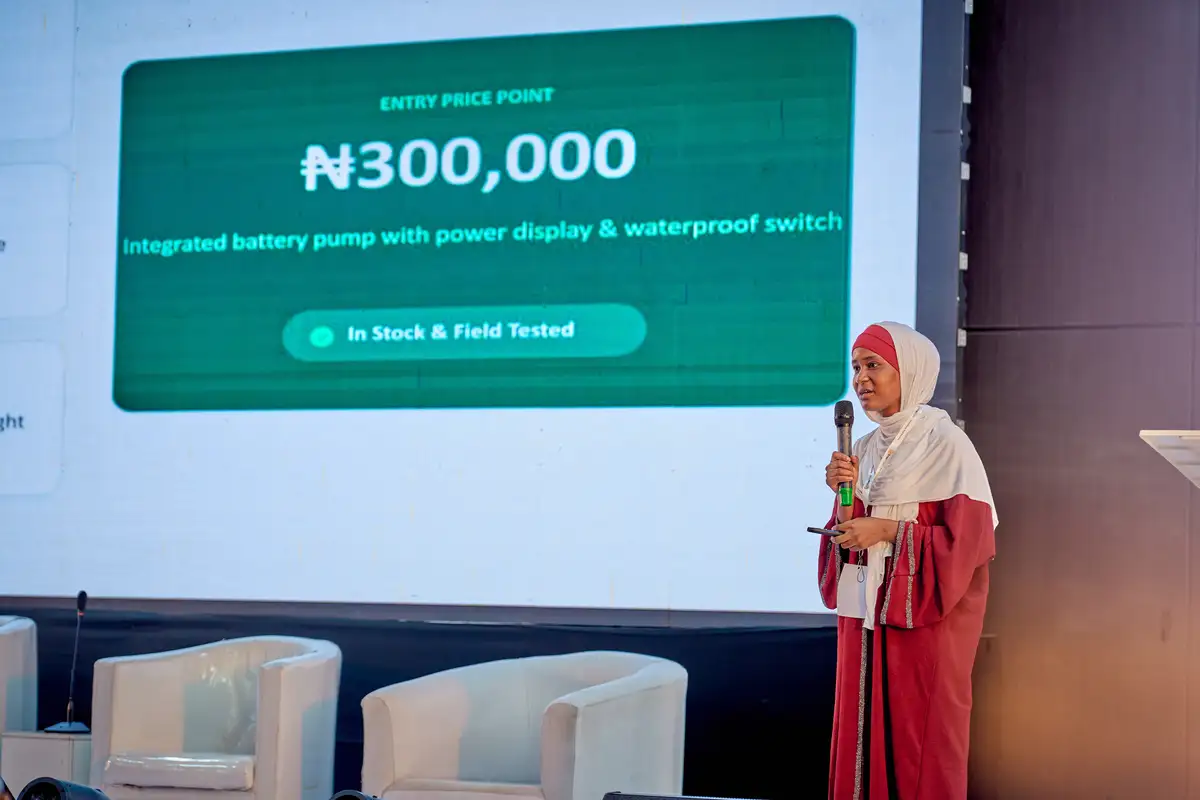
-Hadiza Shettima, with DSIT Battery Powered Water Pump, presented a solution around equipment and access to agricultural water services.
-Akuhwa Sewuse Michelle, through WIMA Women Power, brought a women-focused dimension to the mechanisation conversation.
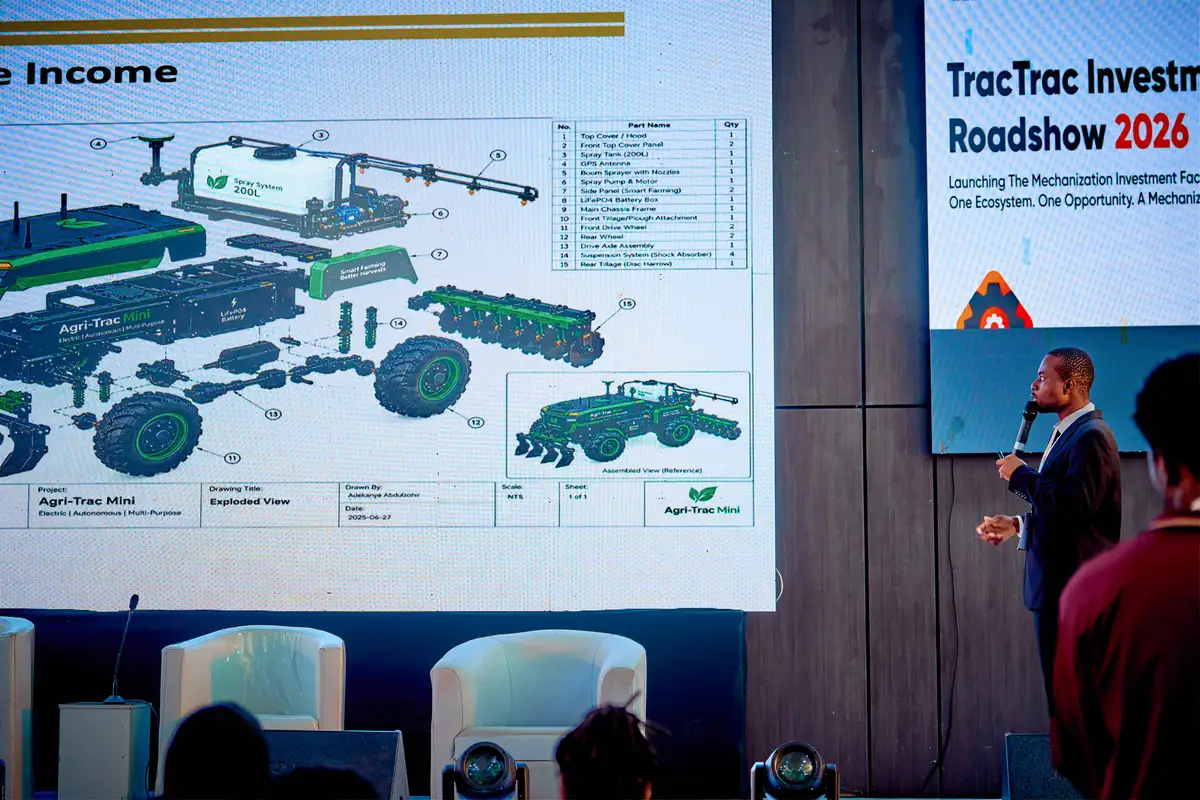
-Adekanye Abdulzohir, with Agri-Trac Mini, presented an approach to smaller-scale mechanisation.
-Mercy Bulus, through Farmlink Jema’a, represented a service and market-facing approach to connecting agricultural needs with solutions.
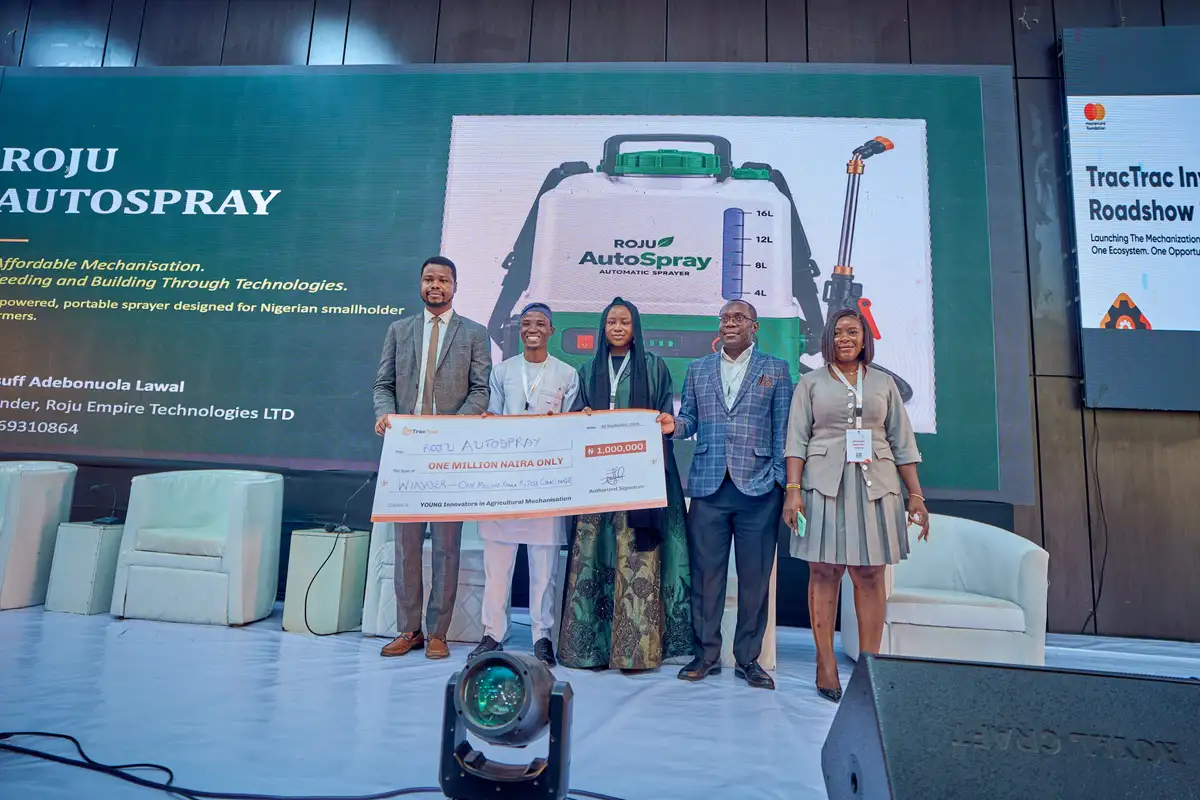
-Yusuff Adebonuola Lawal, with Roju Autospray.
Together, the finalists demonstrated something bigger than the outcome of a competition. They showed the diversity of opportunities available within agricultural mechanisation and the range of businesses that can contribute to solving the access challenge.
What the TracTrac Young Innovators in Agricultural Mechanisation Pitch Challenge Was Designed to Identify
Applicants were assessed against criteria that considered the clarity of the problem being addressed, the strength of the solution, market and customer need, business sustainability, feasibility, potential mechanisation and farmer impact, scalability, innovation and the proposed use of the prize.
A good idea must ultimately be able to work in the real world and fit the realities of Nigeria's farmers, especially smallholder farmers.
For young entrepreneurs developing agricultural mechanisation solutions, this means understanding who needs the solution, how it will reach them, how the business will generate revenue and how it can grow beyond an initial pilot or customer base.
It also means understanding impact.
A solution that improves equipment access, reduces downtime, makes mechanisation services more efficient or enables more farmers to access machinery can contribute to the broader objective of making mechanisation more available and responsive to smallholder farmers.

Yusuff Adebonuola Lawal Takes the ₦1 Million Prize
At the conclusion of the challenge, Yusuff Adebonuola Lawal of Roju Autospray emerged as the winner of the TracTrac Young Innovators in Agricultural Mechanisation Pitch Challenge, taking home the ₦1 million grand prize.
While the prize represents direct financial support for the winning venture, its significance extends beyond the value of the cheque.
For an early-stage or growing enterprise, targeted capital can provide an opportunity to strengthen operations, develop a solution, reach more customers or test the next stage of a business model.
More broadly, the prize sends a signal about the type of entrepreneurship that agricultural transformation requires: entrepreneurs who can identify practical problems within the food system and build commercially viable solutions around them.
Investing in the People Behind Agricultural Mechanisation
Nigeria's mechanisation agenda will require investment in machines, but it will also require investment in the people and businesses that make those machines useful to farmers.
Young Nigerians can play a role in developing new mechanisation services, improving equipment access, building digital platforms, supporting machinery maintenance, solving logistics challenges and creating more efficient connections between farmers and service providers.
The TracTrac Young Innovators in Agricultural Mechanisation Pitch Challenge offered one platform for these ideas to emerge.
Its deeper value is in the question it asked of young Nigerians: not simply how can you participate in agriculture?, but what can you build to help solve one of the constraints holding agricultural productivity back?
The five finalists of the Challenge offered a glimpse of that possibility. Their ideas demonstrate that the next generation of agricultural mechanisation solutions may come not only from established equipment manufacturers, but from young Nigerians looking at the challenges around them and asking what they can build differently.