
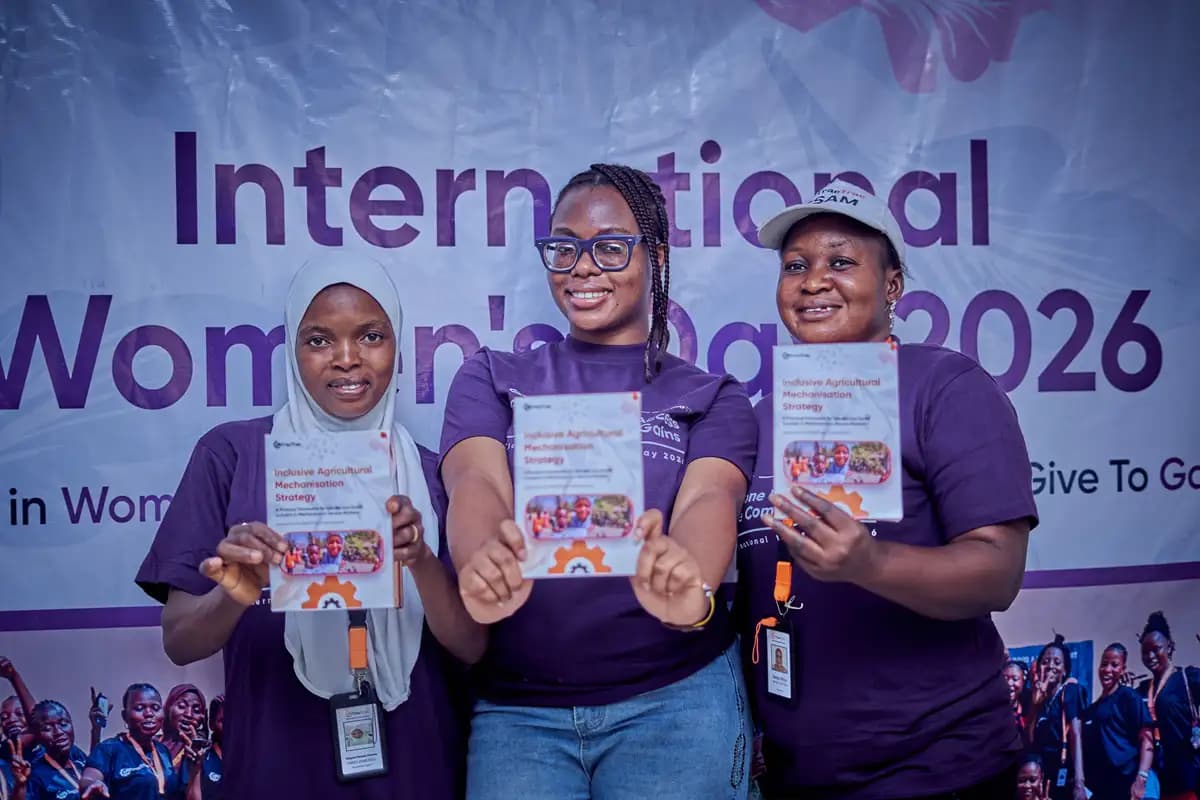
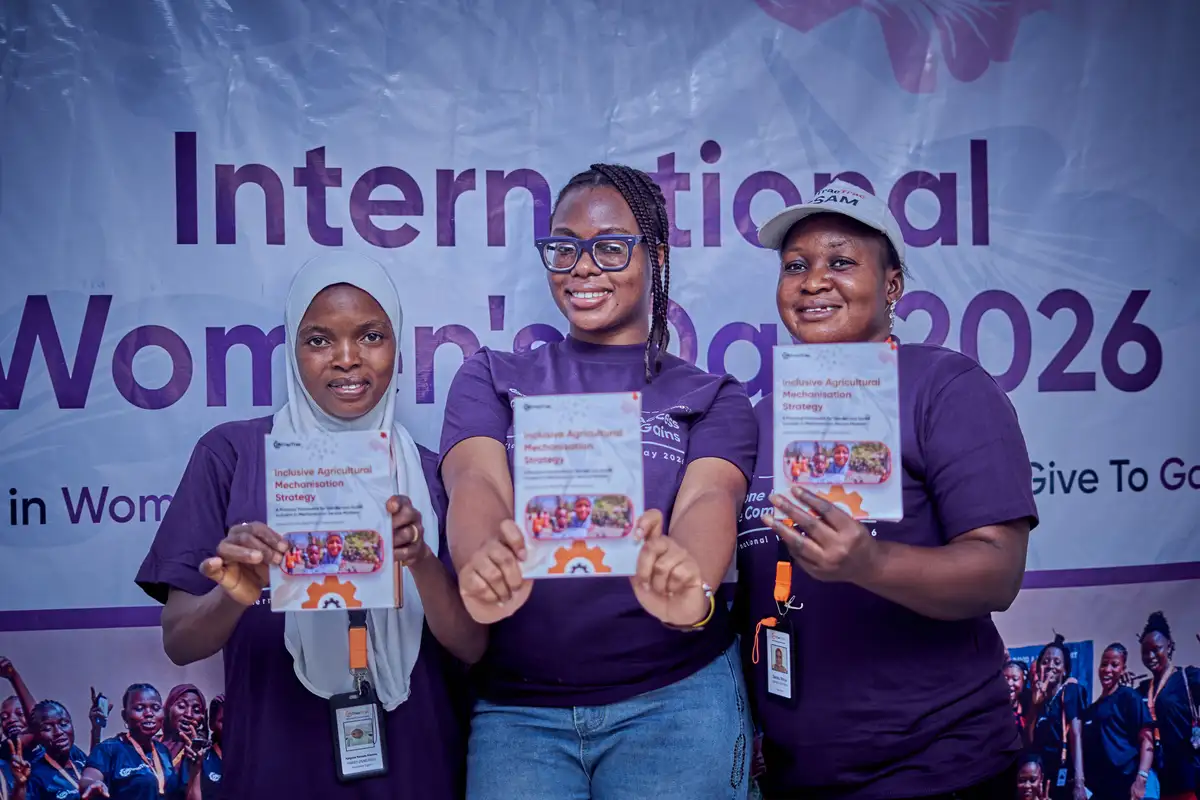
On March 9, 2026, at a convening aligned with International Women's Day, TracTrac launched its Inclusive Agricultural Mechanization Strategy — a practical framework grounded not in theory, but in field implementation across Nigeria's mechanization service markets. The full strategy is available for download, and what follows are highlights from its key findings.
At a time when governments and development partners are intensifying investments in agricultural productivity, one question remains persistently underexamined: who benefits from mechanization — and who is systematically left out?
While mechanization is widely recognized as a catalyst for productivity, labour efficiency, and rural transformation, women, youth, persons with disabilities, and displaced populations continue to face structural barriers that limit both their participation in and benefit from mechanized agriculture. The learning experience of the ISSAM project suggests that such exclusion is not incidental. It is systemic.
Understanding the Inclusion Gap
In sub-saharan Africa, mechanization strategies have historically focused on increasing the supply of machinery; tractors, harvesters, and service providers. However, evidence from global institutions such as the Food and Agriculture Organization (FAO) and the World Bank indicates that access, not availability, is often the binding constraint.
Women account for an estimated 40–60% of the agricultural labour force in Africa, yet remain significantly underrepresented in mechanization enterprises — not due to a lack of capability or interest, but because of structural barriers including limited access to finance, social norms that frame machinery as male-dominated, and time poverty driven by unpaid care responsibilities.
87.5% of information about mechanization opportunities circulated through male-dominated networks. Only 25% of participants believed mobilization efforts adequately reached women.
Exclusion, the data shows, occurs not at the point of training or financing — but at the very first stage: information access.
Also read: Abigail's Story: How The ISSAM Project is Creating a New Generation of MSPs
Reframing Inclusion as a Market Systems Issue
TracTrac's strategy departs from conventional approaches that treat inclusion as a participation target. Instead, it frames inclusion as a market systems design challenge. When inclusion is treated as an output, interventions tend to focus on downstream fixes — quotas, outreach campaigns, or standalone women-focused programs. When it is understood as a systems issue, the focus shifts upstream to the rules, norms, and structures that shape who gets in.
The ISSAM framework identifies four core system layers where exclusion is embedded:
- -Mobilisation and recruitment systems
- -Selection and onboarding processes
- -Enterprise and market structures
- -Enabling environments and institutional safeguards
The strategy redesigns each of these layers to operationalize inclusion in a manner that is both scalable and economically viable.
As African countries pursue agricultural transformation, the effectiveness of mechanization investments will depend on whether they reach the populations that need them most. The TracTrac Inclusive Agricultural Mechanization Strategy demonstrates that inclusive outcomes are achievable — but only when inclusion is embedded at the core of program design, not bolted on at the end.
The launch of this strategy on International Women's Day is both symbolic and substantive. It reflects a growing recognition that inclusion in agriculture is not simply about access to resources — it is about agency within systems.
Mechanization alone will not transform agriculture. Inclusive mechanization might.
For development actors, the full strategy provides the framework, data, and implementation guidance to put that proposition into practice.
Download the full strategy
Explore the complete framework, field data, and implementation guidance in the TracTrac Inclusive Agricultural Mechanization Strategy.
Access the full report here - TracTrac Inclusive Agricultural Mechanization Strategy PDF.pdf