
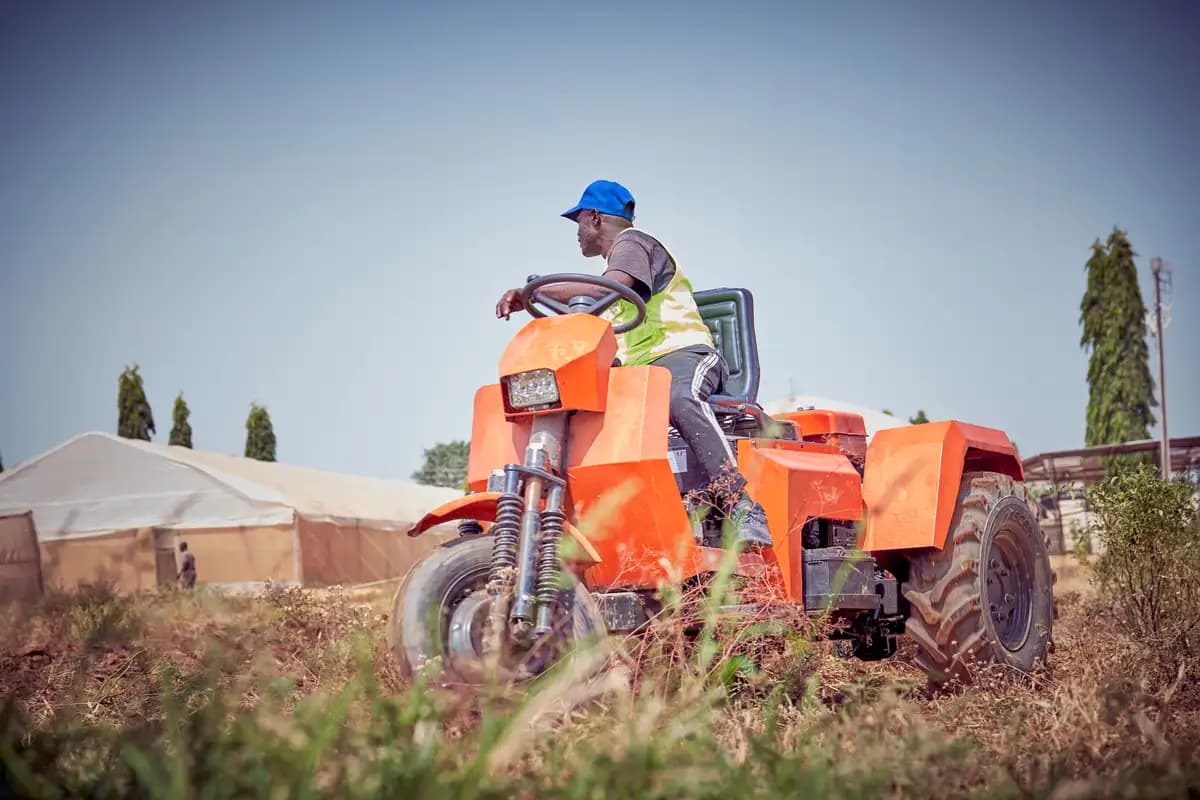
Less than 10% of Nigerian farm power comes from machines. The other 90% is human hands, animal labour, and hope that the rains come right.
But agriculture is changing worldwide. Countries that produce more food today rely on machines like tractors, planters, harvesters, and irrigation systems to make farming faster, easier, and more productive, as seen in global agricultural mechanization trends.
Across the agricultural ecosystem, there is growing recognition that improving access to mechanization will be critical to increasing productivity and strengthening the country’s food systems.
However, one thing is becoming increasingly clear: the conversation is no longer just about distributing tractors. It is about building a complete ecosystem, one that supports land development, technology adoption, financing, insurance, and digital platforms that help farmers access mechanization services more easily.
There is also a growing understanding that mechanization cannot succeed as a government-only effort. Sustainable progress will require stronger participation from the private sector, service providers, and technology platforms capable of delivering these services efficiently to farmers across the country.
The goal is simple: make modern farm machines more accessible to Nigerian farmers so they can produce more food with less stress.
But what exactly does this shift toward mechanization mean for farmers and agribusinesses?
Let’s break it down.
Why Mechanization Matters Now More Than Ever For Farming in Nigeria
As conversations around mechanized farming in Nigeria continue to grow, experts increasingly agree that modern tools are essential for improving productivity across the country’s agricultural sector.
Nigeria's population continues to grow, and with it comes a rising demand for food. Yet many farmers still struggle with low productivity because farming is mostly manual. Manual farming limits how much land a farmer can cultivate, how quickly they can plant, and how efficiently they can harvest.
Studies on agricultural mechanization in Sub-Saharan Africa show that land preparation done manually can take up to 17 days per hectare, while a tractor can complete the same work in about 0.3 days, depending on field conditions.
Farm machines address this gap directly:
- Tractors significantly reduce the time required for land preparation
- Planters help farmers plant faster and more evenly, improving crop establishment
- Harvesters reduce post-harvest losses through faster, more efficient harvesting
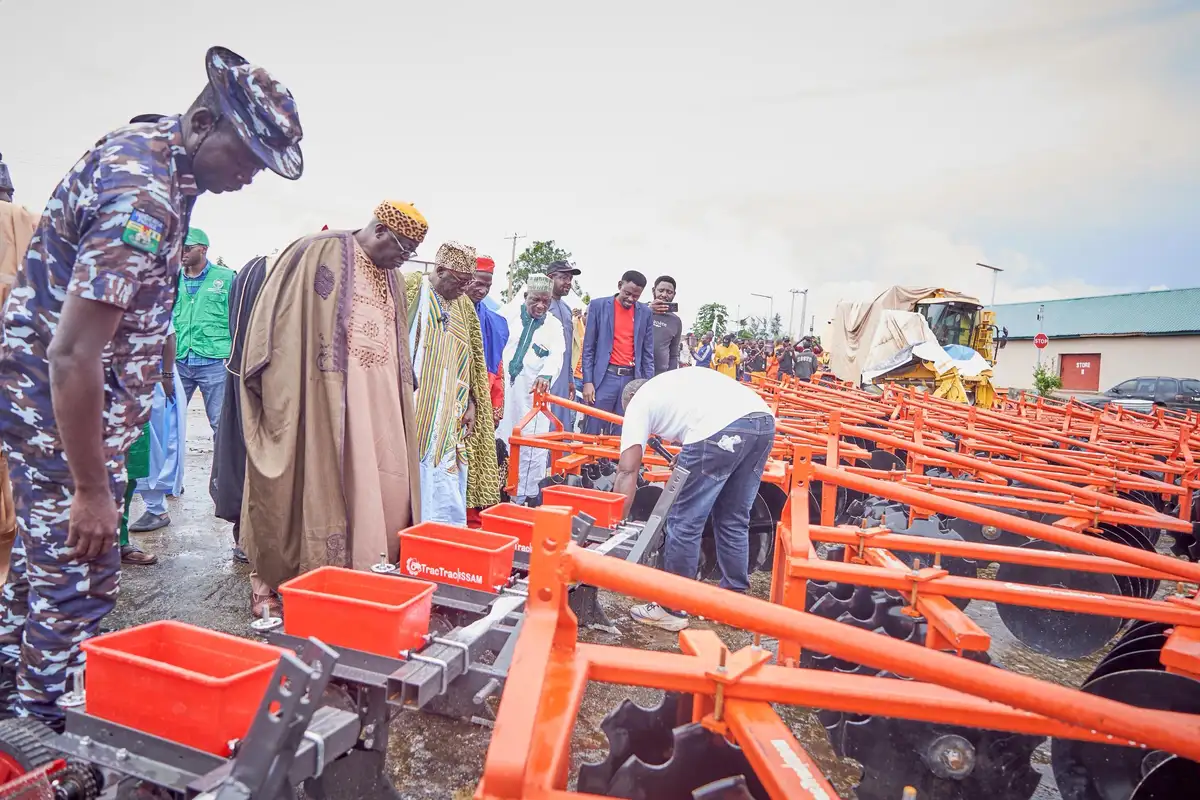
Modern tools are no longer optional. They are necessary if Nigeria is to improve food security. This shift highlights the growing importance of agricultural mechanization in Nigeria as a key driver of productivity and food security.
The Biggest Problem: Most Farmers Can’t Access Machines
One of the biggest challenges across the sector is that most farmers simply cannot afford tractors or modern equipment.
Even when machines exist, they are often:
- Too expensive for smallholder farmers
- Located far away from rural communities
- Poorly maintained
- Not available when farmers need them most
As a result, many farmers remain stuck using manual methods.
Improving access to farm machinery for smallholder farmers remains one of the most critical challenges the sector must address. It is therefore not just about ownership; it is about access to services. Farmers may not need to buy tractors themselves. They just need to be able to access them when needed, like a service.
Mechanization Service Providers Will Play a Big Role
One of the most important shifts happening in the industry is the rise of mechanization service providers. Instead of every farmer buying a tractor, companies or service providers own these machines and make them available to farmers as needed.
In India, this model has helped smallholder farmers access tractors and combine harvesters through hiring services, dramatically reducing the cost burden of mechanization. Similar approaches have taken hold in Bangladesh and Kenya, where service-based models have improved the timeliness of farm operations and yields for smallholders.
For farmers, this means:
- No need to spend millions buying equipment
- Access to machines during planting or harvest
- Lower labour stress and better productivity
For agribusiness companies, it also opens a new opportunity: providing mechanization as a service while building sustainable businesses.
Training Farmers and Machine Operators
Another major challenge across the ecosystem is the lack of technical skills.
Many machines that were previously introduced across Nigeria eventually broke down because there were not enough trained operators or technicians to maintain them.
- Addressing this will require:
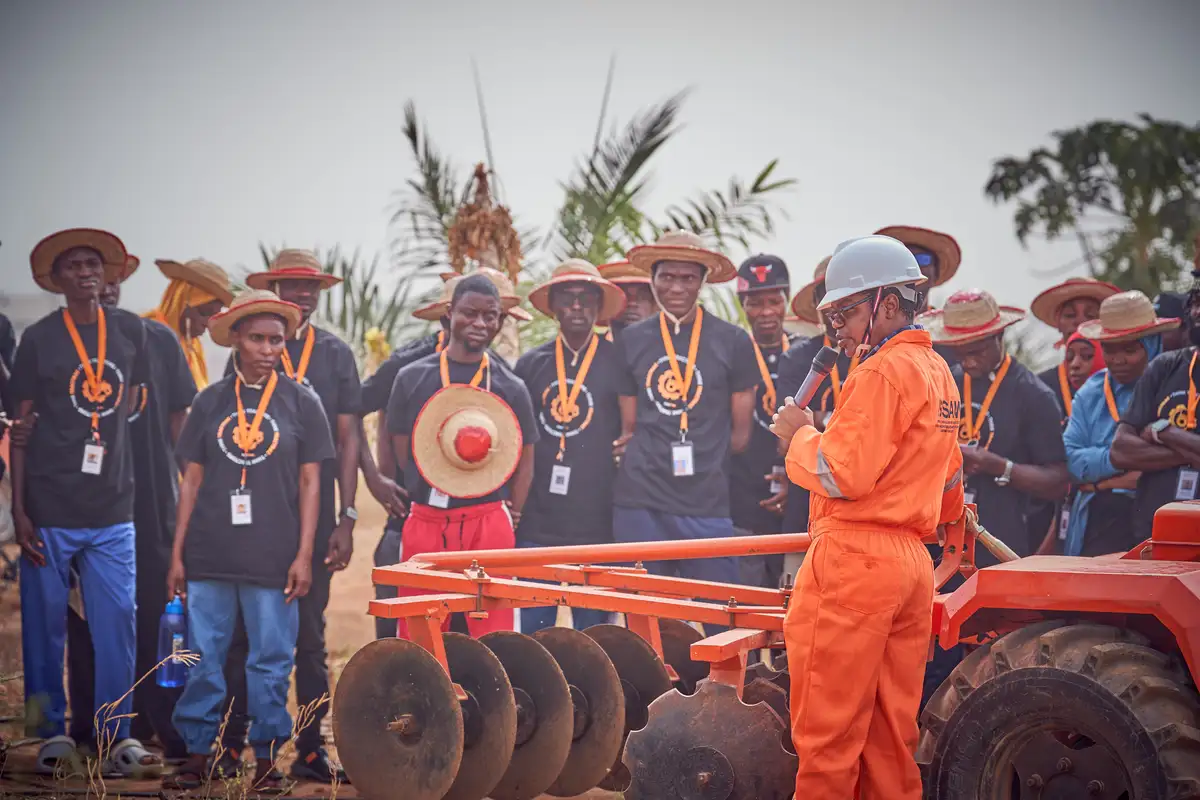
- Training tractor operators
- Building technical repair skills
- Establishing maintenance centers
- Supporting agricultural engineering education
Mechanization doesn’t only require machines; it requires people who know how to use and maintain them properly.
Mechanization Can Also Create Jobs
Mechanization doesn't just improve productivity. It expands opportunity across the agricultural value chain.
In reality, a strong mechanization ecosystem can create new opportunities, such as:
- Tractor operators
- Equipment technicians
- Spare parts suppliers
- Mechanization service providers
- Agricultural equipment logistics
Strengthening Local Manufacturing
Nigeria currently imports a large portion of its agricultural machinery. There is increasing focus across the sector on strengthening local manufacturing and assembly of farm equipment.
Supporting local manufacturers can help:
- Reduce equipment costs
- Improve the availability of spare parts
- Create local jobs
- Strengthen Nigeria’s agricultural industry
Over time, this could make machines more affordable and accessible to farmers across the country.
Why Private Sector Innovation Matters
While government direction is important, real impact often occurs when private-sector innovators step in to solve access problems. Technology and service platforms are increasingly helping farmers connect with mechanization services more efficiently.
Companies like TracTrac are already playing this role, by developing digital platforms such as TracTrac Plus that allow farmers to discover, book, and access mechanization services, while also training a new generation of service providers through initiatives like the ISSAM project.
This kind of private sector innovation plays a key role in making mechanization practical and scalable for everyday farmers.
What This Means for the Future of Farming in Nigeria
Nigeria is gradually moving away from a system that relies heavily on manual labour toward one where technology, machines, and skilled operators work alongside farmers.
If this transition is sustained, it could lead to:
- Higher crop yields
- Reduced farming stress
- Lower post-harvest losses
- More jobs in agricultural services
- Greater food security
But this shift will not happen automatically.
It will require collaboration between the government, private sector innovators, agribusinesses, and farmers themselves.
The Bottom Line
At its core, the push toward mechanization is about making farming easier, faster, and more productive for Nigerian farmers. Improving access to machines, building technical skills, and enabling service-based models will be critical to modernizing agriculture across the country.
For Nigerian farmers, the stakes are straightforward: productivity, income, and food security all depend on closing the gap between the tools that exist and the hands that need them. The question is no longer whether mechanization matters; it is how quickly the right systems, partnerships, and people can be put in place to deliver it at scale.
The future of farming will rely not just on hard work, but also on access to the right tools.
Frequently Asked Questions About Agricultural Mechanization in Nigeria (FAQs)
1. What are the advantages of agricultural mechanization?
- Increases Farm Income:: Agricultural mechanization increases farmers’ income by reducing labour costs, improving yields, and enabling them to farm at a larger, more profitable scale.
- Increased Productivity and Yield:: Machines enable the cultivation of large tracts of land, resulting in higher yields.
- Reduced Labor and Drudgery:: It minimizes the need for manual labor, reducing the physical strain on workers and mitigating labor shortages.
- Improved Quality of Produce:: Specialized machinery ensures better processing, handling, and consistency of agricultural products.
2. What are the types of mechanization in agriculture
The main types of agricultural mechanization include land preparation, planting, harvesting, processing, and post-harvest handling. Each type focuses on using machines and equipment to improve efficiency at different stages of the farming process.
3. What is agricultural mechanization in Nigeria?
Agricultural mechanization in Nigeria refers to the use of machines, tools, and technology to carry out farming activities such as land preparation, planting, harvesting, and processing. It involves replacing or supporting manual labour with equipment to improve efficiency, increase productivity, and reduce losses across the agricultural value chain.
4. Problems of Agricultural Mechanization
Challenges include high equipment costs, limited access for smallholder farmers, poor maintenance, lack of skilled operators, and inadequate infrastructure to support widespread use.