
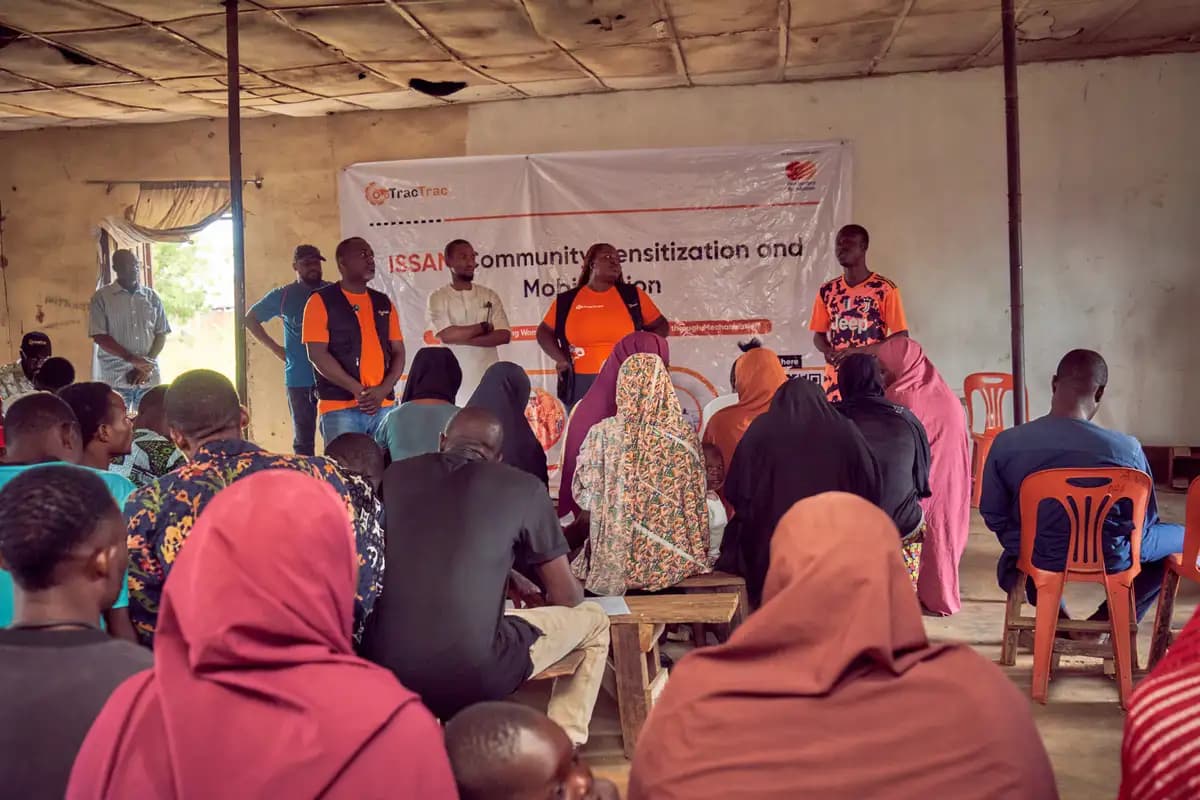
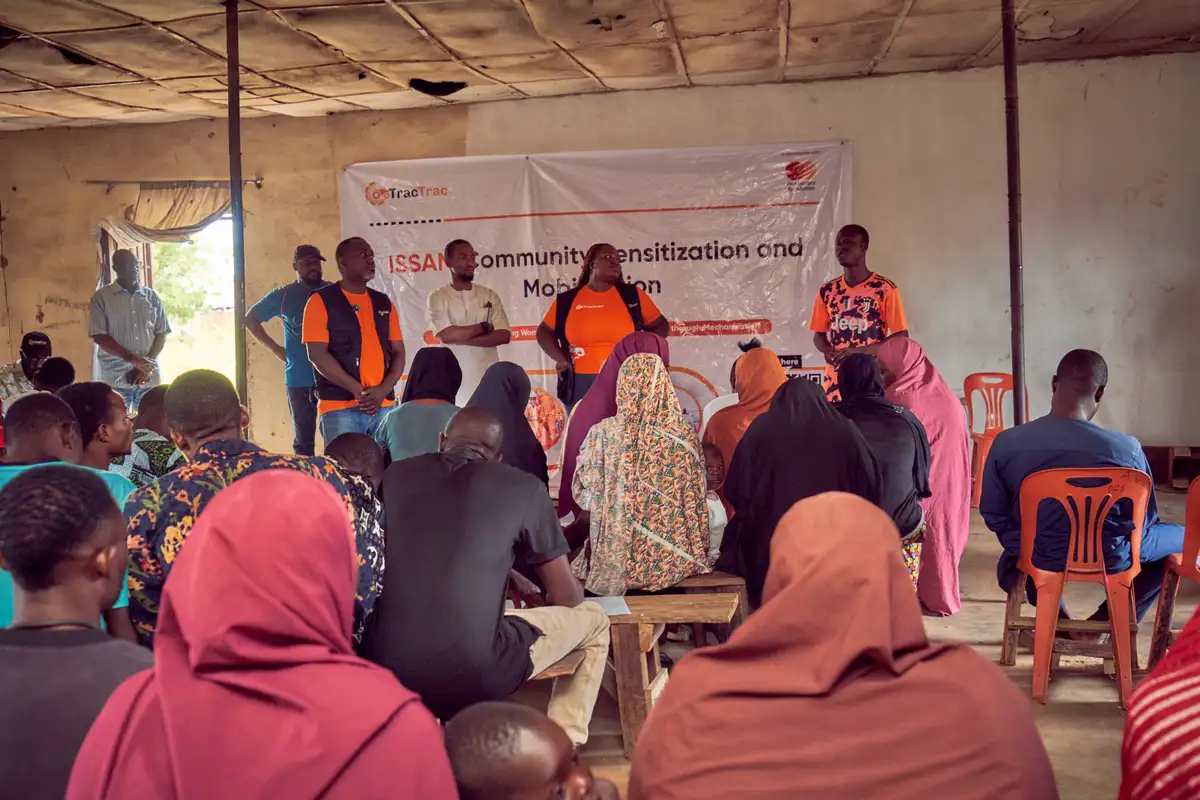
 From 17,698 applications across 2 states to 600 certified MSPs graduated (293 in Cohort 1, 307 in Cohort 2, Nasarawa State), with more cohorts in training.
This is how TracTrac, in partnership with the Mastercard Foundation are transforming agricultural mechanization through intentional design, careful selection, and scalable impact.
All over Nigeria, young people are searching for opportunity. Not temporary fixes or empty promises, but pathways to dignified work, sustainable income, and a future they can build with their own hands.
When TracTrac launched the second year of the Improving Smallholder Farmers' Access to Small-Scale Agricultural Mechanization Services (ISSAM) project in October 2025, the response was overwhelming.
Over 17,000 young Nigerians applied to become trained Mechanization Service Providers (MSPs). This wasn't just interest but evidence of a generation ready to engage with agriculture when given the right tools, training, and support systems.
This is the story of how ISSAM Year 2 turned that demand into a measurable impact.
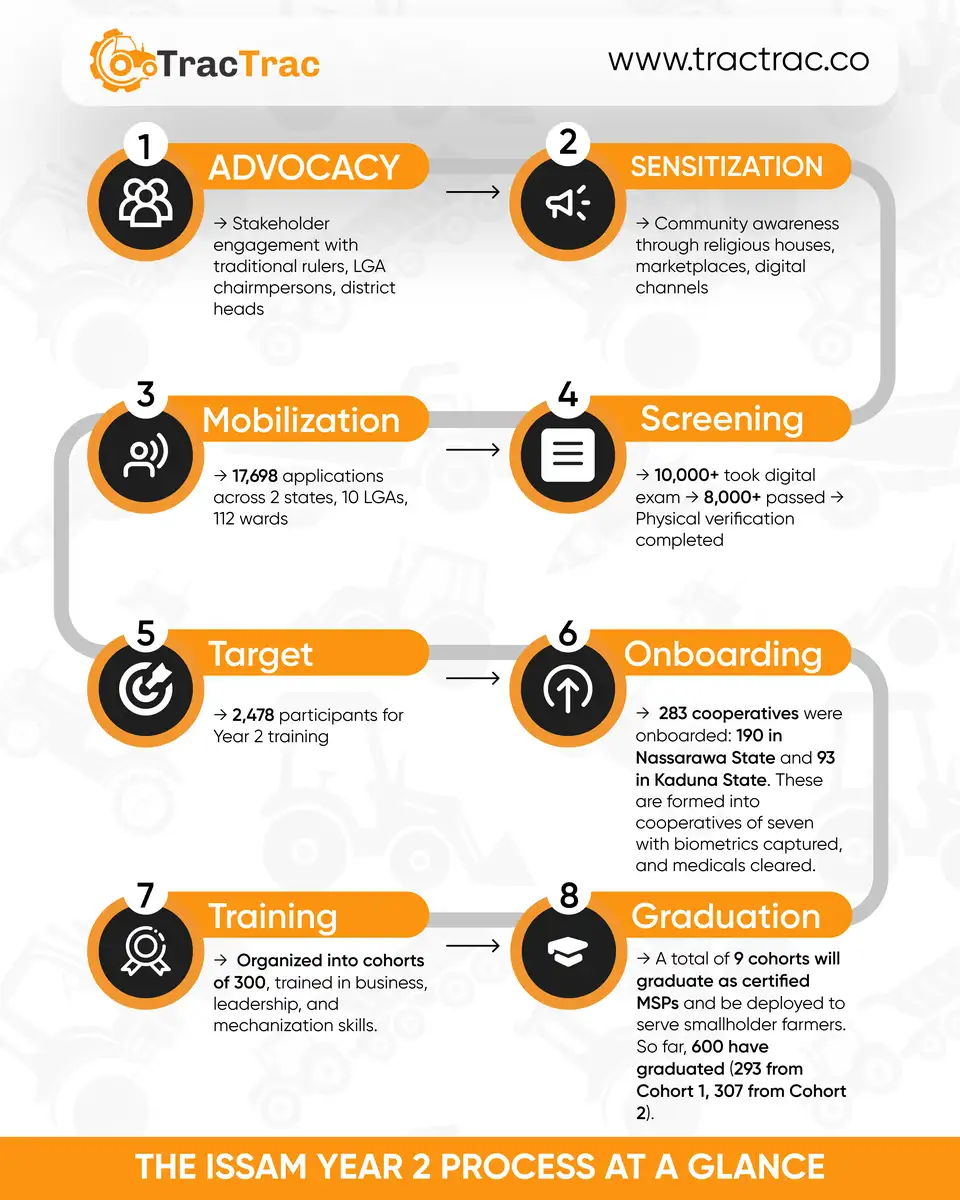
THE ISSAM YEAR 2 PROCESS AT A GLANCE:
Year 2 Begins: Building on a Foundation
The ISSAM project operates on a fiscal year cycle from October 1st to September 30th. Year 1 established proof of concept across six Local Government Areas (LGAs) in Nasarawa State. By October 2025, as Year 2 began, TracTrac had gathered critical lessons about what worked, what didn’t, and how to scale intentionally.
The first step was a comprehensive learning event, a structured review of Year 1. What were the bottlenecks in recruitment? Where did the training model excel? This wasn’t a formality. It was institutional learning in action.
From this review came a clear directive: expand strategically. Year 1 had covered six LGAs in Nasarawa State’s northern and central senatorial districts. Seven LGAs remained, but not all were viable. Security assessments ruled out some areas near the Benue border, while Keffi, now a cosmopolitan center, no longer fit the project’s rural and peri-urban focus.
That left five target LGAs: Awe, Obi, Keana, Lafia, and Doma, all in the southern senatorial district.
In Kaduna State, five LGAs were selected: Sabon Gari, Kauru, Makarfi, Kubau, and Zango Kataf.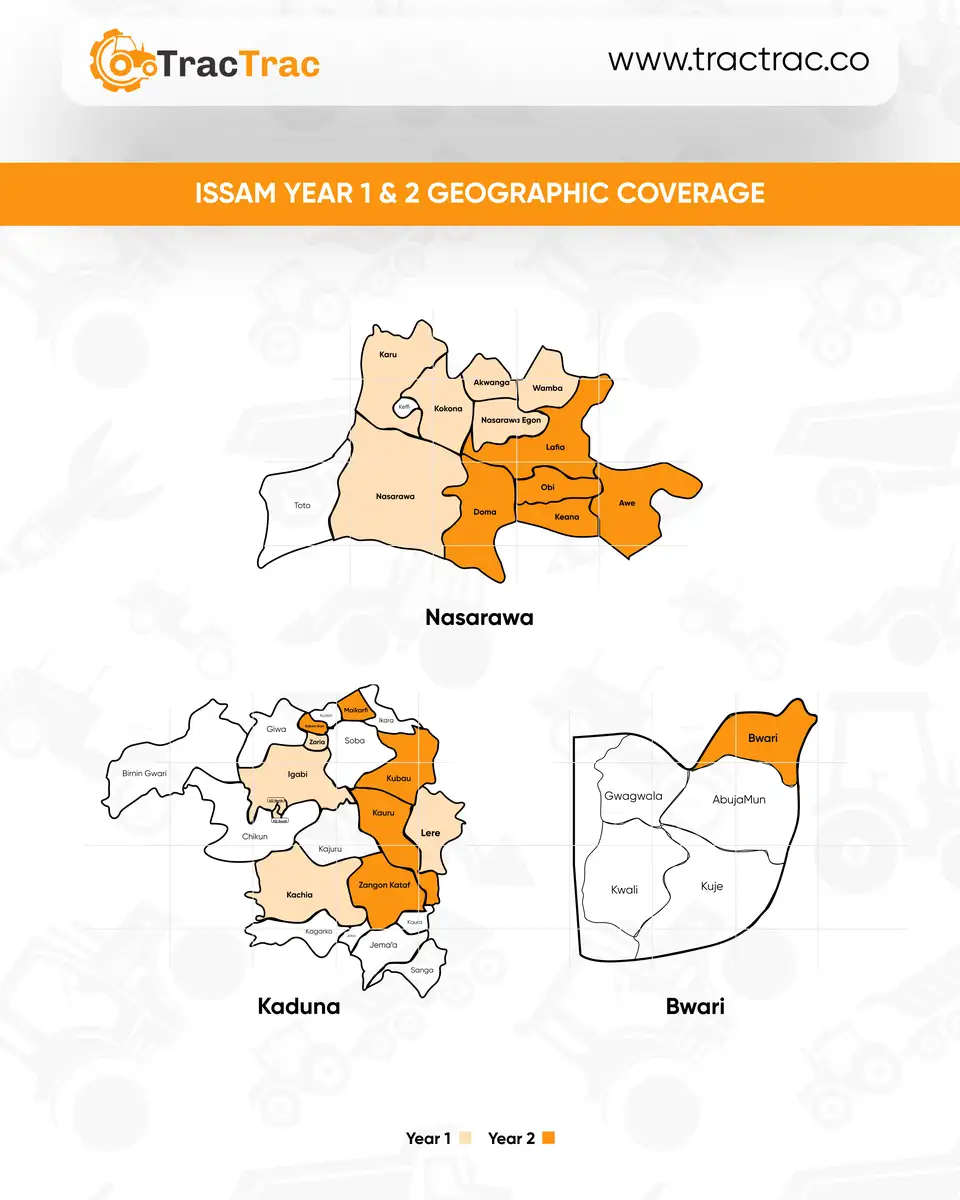
This wasn’t just expansion. It was equity. ISSAM Year 2 would reach communities across both states that Year 1 hadn’t touched. With this expanded reach, TracTrac planned to train 2,478 participants across the ten LGAs.
Also Read: TracTrac Flags Off Distribution of Mechanization Equipment to Formed Cooperatives in Nasarawa State
Expansion & Strategic Growth
With target areas identified, TracTrac deployed a deliberate mobilization strategy rooted in local legitimacy and community buy-in.
Stakeholder mapping came first. Who held influence in these communities?
Traditional rulers, district heads, LGA chairmen, religious leaders, and opinion shapers. Five committees, led by TracTrac team leads, conducted advocacy visits to these stakeholders. They submitted letters of intent, presented the ISSAM model, and requested audiences.
The response was immediate. Paramount rulers convened their district heads. LGA chairmen called ward leaders. In palaces and council chambers across five LGAs, TracTrac laid out the vision: dignified work for youth ages 18–35, with 50% women and 5% persons with disabilities (PWDs), trained to become MSPs who would serve smallholder farmers in their own communities.
Questions were asked. Concerns were addressed. And when the meetings ended, TracTrac moved into the communities.
Sensitization followed, ward by ward, marketplace by marketplace. Churches, mosques, town halls, and digital channels carried the message: mechanization is a livelihood, and ISSAM is the pathway.
The numbers tell the story of that reach. 17,698 young people applied.
Across two states (Nasarawa and Kaduna), ten LGAs, and 112 wards, the message resonated. This wasn't passive interest. There was active demand from youth who saw agriculture not as a fallback, but as a viable career when paired with modern tools and training.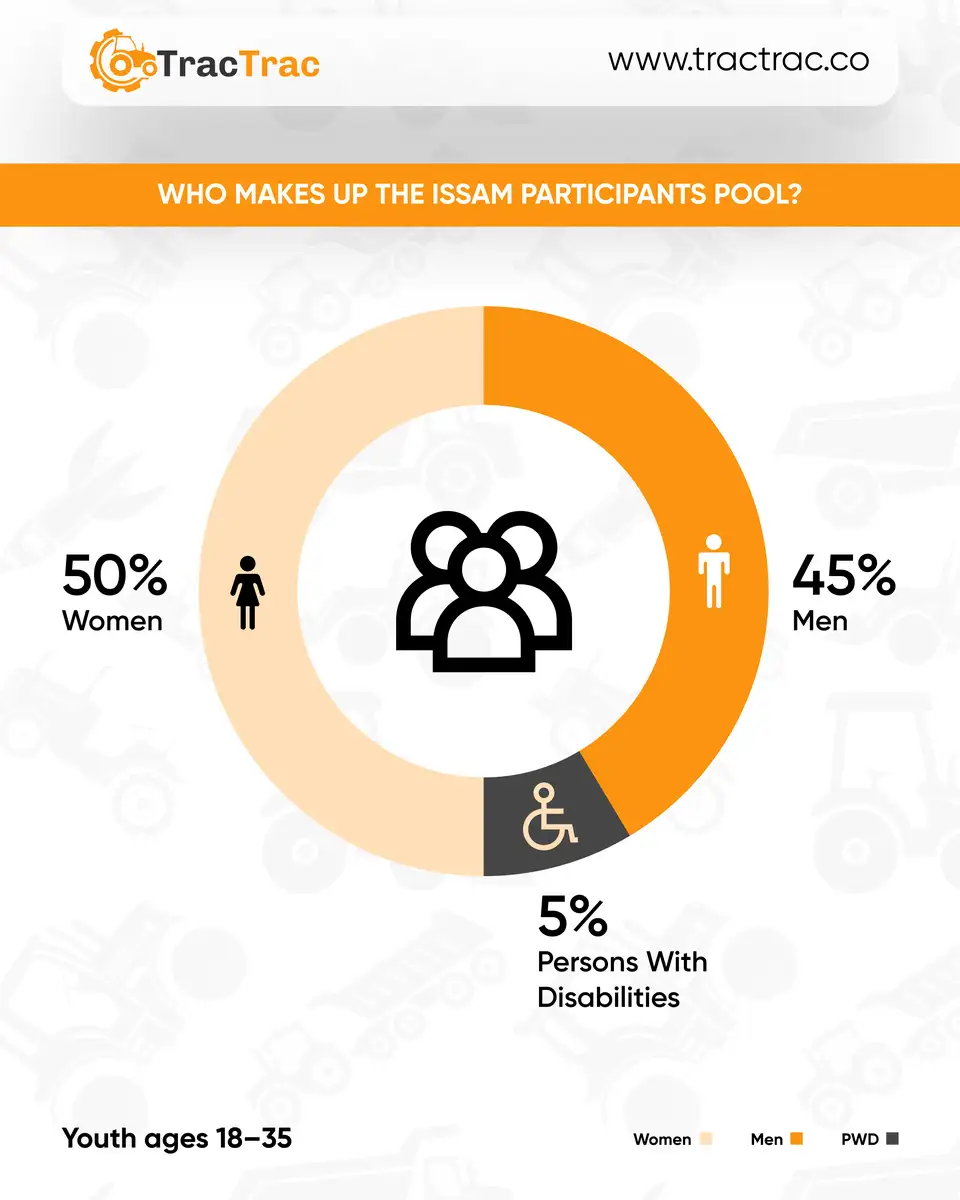
From Thousands to the Selected Few
High application numbers are only meaningful if the selection process is credible. ISSAM Year 2 employed a multi-stage screening system designed to identify not just interest, but readiness.
Stage 1: Digital Examination
Year 1 used paper-based exams, which created logistical bottlenecks and limited reach. Year 2 adopted “ClassMarker”, a digital examination platform that allows applicants to take tests remotely within a designated timeframe.
Over 10,000 candidates wrote the exam. The test assessed basic literacy, numeracy, and comprehension, core competencies needed to operate in a mechanized, digitally-enabled cooperative model.
Over 8,000 passed.
Stage 2: Physical Verification
Passing the exam wasn't enough. ISSAM's eligibility criteria were clear: candidates must hold at least a secondary school certificate, demonstrate literacy, and be able to use Android devices. Physical verification sessions were conducted in communities to confirm these requirements and screen out ineligible applicants.
This stage also served another purpose: face-to-face interaction allowed TracTrac staff to assess communication skills, motivation, and readiness to cooperate.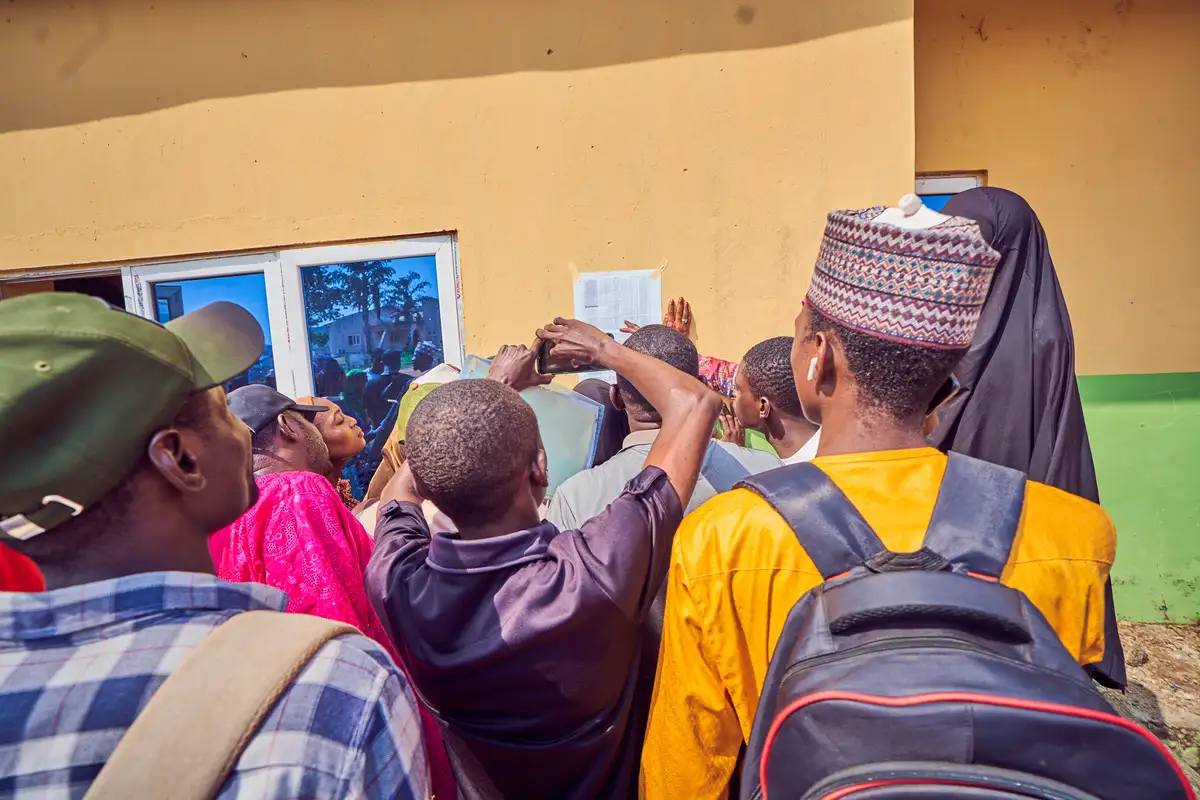
Stage 3: Pre-Camp Onboarding
One of the most significant improvements from Year 1 was the introduction of pre-camp onboarding. In Year 1, the first two days of training were consumed by administrative tasks, biometric capture, ID card printing, and group formation. This ate into precious capacity-building time.
Year 2 moved these processes upstream. Selected candidates were onboarded in their communities, where they:
- Had their biometrics captured (fingerprints, photos)
- Were formed into cooperatives of seven members, each with defined roles: tractor operators, booking agents, secretary, treasurer, and cooperative manager
- Received printed ID cards
- Defined their cooperative's name, mission, and vision
- Underwent health screening for selected medical conditions. This proactive measure supports early identification of potential health risks and enables the team to put appropriate support systems in place before participants arrive on campus.
A total of 2,478 young people were onboarded: 1,640 in Nasarawa State and 838 in Kaduna State.
This pre-camp process wasn't just efficient. It was transformative. By the time participants arrived at the training camp, they weren't strangers being organized into groups. They were functioning cooperatives ready to learn.
Strengthening the Training Model
ISSAM’s training model is designed to produce not just tractor operators, but complete Mechanization Service Providers, young entrepreneurs capable of running sustainable, community-based mechanization businesses.
Year 2 introduced several curriculum and delivery improvements based on feedback from Year 1.
1. Subject Matter Experts for Core Modules
Building on Year 1's training approach, Year 2 introduced key improvements. The curriculum was restructured to prioritize practical, hands-on sessions before classroom activities, allowing participants to engage with equipment and real-world scenarios from the start. Subject-matter experts, including the Agricultural Mechanization Training Academy, delivered specialized, hands-on mechanization training.
2. Extended and Repositioned Engineering Training
In Year 1, engineering and hands-on mechanization training were delivered toward the end of the program and often felt compressed. In Year 2, this module was moved earlier in the schedule and expanded from two days to three days, combining one day of classroom theory with two days of intensive practical sessions. The engineering module also introduced more farm machines and tools for practical training compared to Year 1, familiarizing trainees with equipment across the full agricultural cycle from pre-planting to post-harvest stages.
Tractor operators also received additional field-based training beyond the core camp program to deepen their technical proficiency.
3. Structured Batching for Quality and Safety
Instead of training all 190 cooperatives and 93 onboarded participants at once in Nasarawa and Kaduna, ISSAM organized cohorts of approximately 300 participants per batch. Each cohort was further divided into two equal classes running concurrently. This approach improved instructor-to-participant ratios, strengthened supervision during practical sessions, and allowed more personalized mentorship.
Upon arrival at camp, participants underwent biometric re-verification to confirm identity. They received a safeguarding orientation covering consent, dignity, and protection standards, along with hygiene kits, accommodation assignments, and a detailed walkthrough of program expectations and outcomes.
 Graduation of Cohorts 1 and 2: A Milestone Moment
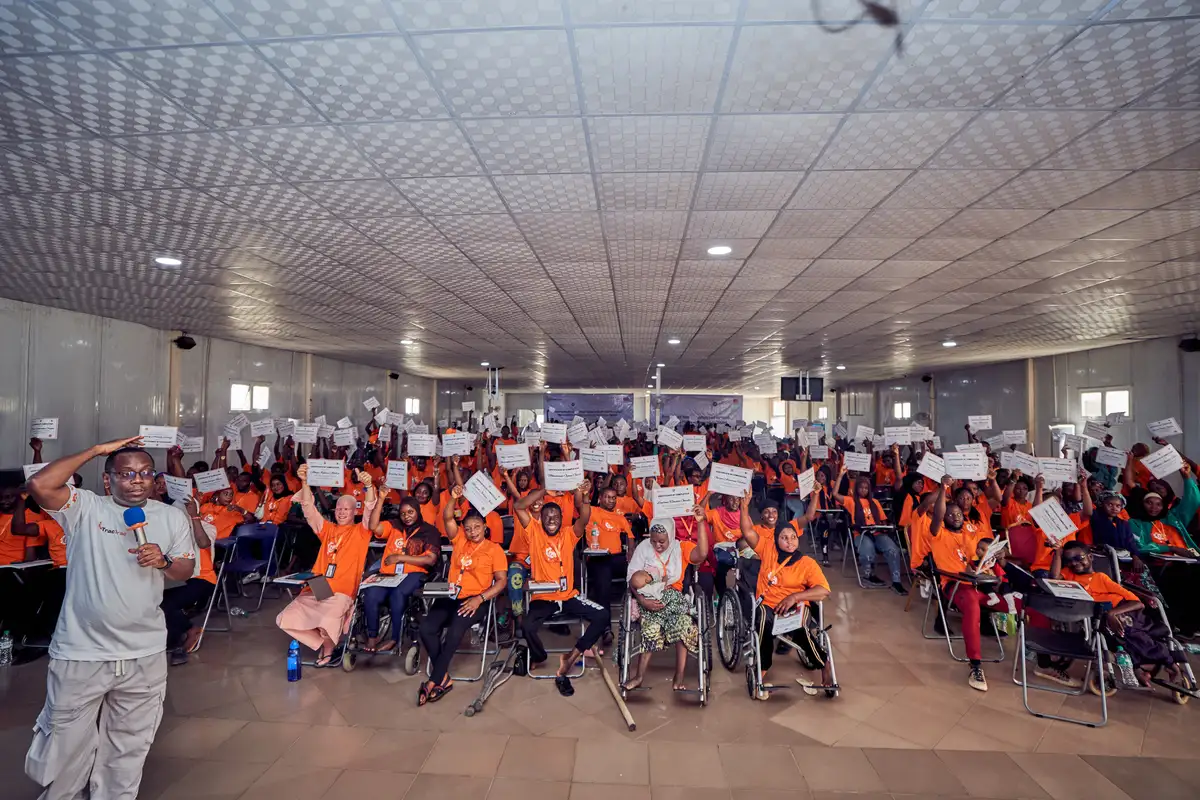
As of February 2026, 600 young Nigerians from Nasarawa State have graduated as certified Mechanization Service Providers across two cohorts: 293 in Cohort 1 and 307 in Cohort 2. Training in Kaduna State is set to begin soon.
This wasn't just a ceremony for TracTrac but a validation of the process. These 293 had moved through every stage – application, screening, onboarding, training – and emerged as equipped, organized, and ready to deploy MSPs.
They weren't job seekers anymore. They were now mechanization service providers, returning to their communities with:
- Technical skills in tractor operation, equipment handling, and maintenance
- Business and financial management capabilities
- Membership in a structured, legally recognized cooperative
- Access to TracTrac's digital booking platform for customer acquisition
- Ongoing support from TracTrac field staff
The graduation marked the beginning, not the end, of their ISSAM journey.

Testimonials: Voices from the Program
Abigail Francis, 26, Cooperative Manager, Doma LGA
At first, I thought it was one of those NGOs, big announcements but empty promises. But everything TracTrac posted is real. The programme empowered me to become a mechanization service provider. I was introduced to tools and training that can make life easier for my community and me. My cooperative and I plan to establish a big agricultural business. My life will change financially for my family and me.
Read Abigail's full story here.
Timothy Samuel, 21, Cooperative Manager from Doma LGA
(Participant with a disabilty)
I believe that whatever someone with two legs can do, I can do just as well, if not better. I had doubts about the Issam project at first, but I refused to let the opportunity pass me by. Today, I support smallholder farmers and hope my impact inspires others to believe in themselves. TracTrac changed me, and now I’m ready to do the same for others.
What Comes Next After Graduation?
Graduation is not the end of ISSAM's engagement with these MSPs. It's the start of deployment and monitoring.
TracTrac equips them by helping put foundational structures in place, including registering cooperatives formally with the Ministry of Trade (Nasarawa State Cooperative Societies) and facilitating the opening of corporate business accounts.
While cooperatives prepare to return to their communities, they:
- Sensitize farmers about who they are and the mechanization services they will offer
- Strengthen group cohesion through regular meetings
- Prepare to begin operations once the equipment is distributed
TracTrac field staff conduct monitoring visits throughout the MSPs' journey. Before equipment distribution, staff visit cooperatives once or twice to assess group dynamics, functionality, and business readiness. After equipment is deployed, regular monitoring visits focus on:
- Tracking service delivery and customer satisfaction
- Providing ongoing mentorship and troubleshooting
- Collecting data on hectares serviced, farmers reached, and income generated
- Identifying challenges and adapting support as needed
Meanwhile, training continues. Cohort 3 is already underway in Nasarawa, while training in Kaduna State is scheduled to begin soon.
By the end of ISSAM Year 2 (September 2026), TracTrac aims to have trained and deployed thousands of MSPs across ten LGAs, creating a scalable, replicable model for youth-led mechanization across Nigeria.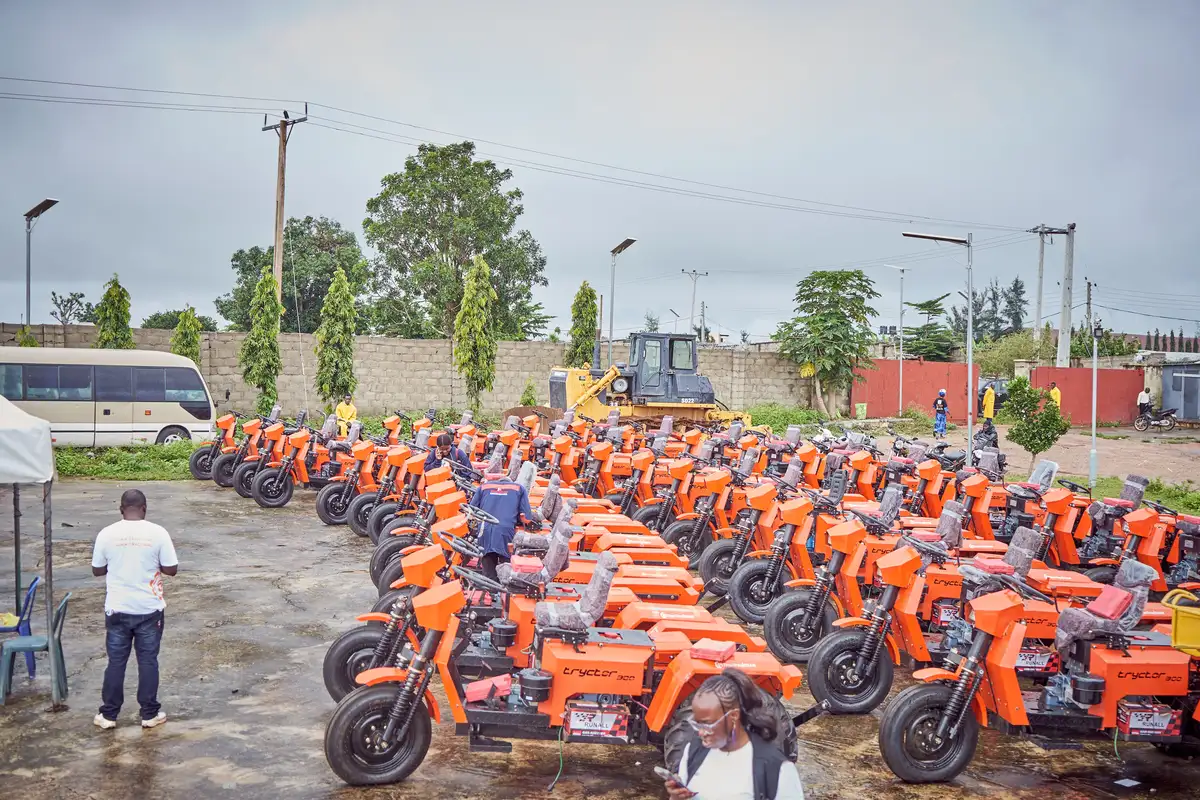
What This Means for Mechanization Going Forward
ISSAM Year 2 shows that agricultural mechanization is not just a technical challenge. It is a systems challenge.Its strength rests on five pillars:
1.Demand-Driven Design
17,698 applications demonstrate that when agriculture is positioned as a dignified, income-generating pathway, young Nigerians respond.
Rigorous Selection Builds Credibility
From 17,698 applicants to 8,000 screened candidates to 2478 onboarded participants across two states and 600 graduates in Nasarawa cohort 1 & 2, the process prioritizes readiness over volume, ensuring partners can trust the quality of every Mechanization Service Provider trained.
2.Institutional Learning Drives Improvement
Digital exams, pre-camp onboarding, expanded technical sessions, and curriculum revisions reflect deliberate iteration, not chance.
3.The Cooperative Model Multiplies Reach
A structured team of seven delivers greater efficiency, shared accountability, and wider service coverage than isolated individuals.
4.Technology Enables Scale and Transparency
From biometric verification to digital testing, technology strengthens efficiency while maintaining accountability.
ISSAM Year 2 is not just a training intervention. It is a scalable model linking youth employment to improved agricultural productivity, with structure, rigor, and sustainability at its core.
As Godson Ohuruogu, CEO of TracTrac, puts it: "We are here to help you build capacity to sustain this mechanization business sufficiently."
That commitment to sustainability is what separates ISSAM from short-term interventions. For 600 young Nigerians so far, this wasn't luck. It was built, one stage, one cooperative, one trained MSP at a time.