
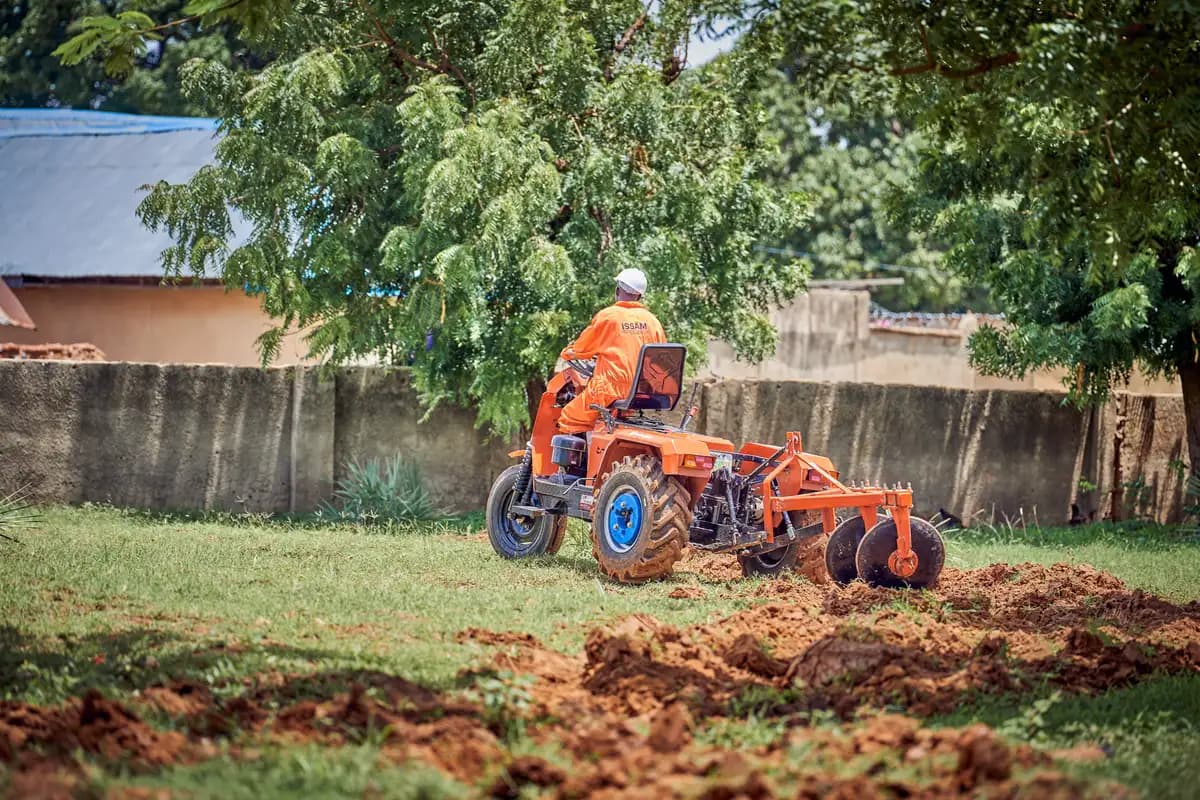
Climate change is no longer a future concern for agriculture, but it is today's reality.
Across Nigeria, farmers are already experiencing the effects of changing weather patterns. Yet while climate-smart agriculture has become central to discussions on building resilient food systems, one critical enabler often receives less attention: mechanization. Without the right machines and technologies, many climate-smart farming practices cannot be implemented efficiently or at scale for millions of smallholder farmers who need them.
This is where climate-smart agriculture, sustainable farming, and agricultural mechanization come into the conversation.
What Is Climate-Smart Agriculture?
The Food and Agriculture Organization (FAO) defines Climate-Smart Agriculture (CSA) as an approach that sustainably increases agricultural productivity, strengthens resilience to climate change, reduces greenhouse gas emissions where possible, and supports national food security goals. Rather than being a single farming technique, CSA is an approach that helps farmers produce more while adapting to changing environmental conditions.
It is sometimes called climate-resilient agriculture or smart farming, and it rests on three core pillars: productivity, adaptation, and mitigation.
Productivity means growing more food from the same land without degrading it. Adaptation means adjusting farming practices to withstand changing weather patterns. Mitigation means reducing the agricultural sector's contribution to the emissions that drive climate change.
In practical terms, climate-smart agriculture includes drought-tolerant crop varieties, efficient irrigation systems, soil conservation practices, precision planting that reduces input waste, and the use of data and technology to make better farming decisions. It is a philosophy of farming that takes the long view, focusing on land health, water, the atmosphere, and the generations of farmers who will come after.
What role does mechanization play in climate-smart agriculture?
One critical reality often overlooked in discussions of climate-smart agriculture is that most climate-smart practices cannot be implemented effectively without agricultural mechanization. While climate-smart agriculture provides the framework for building resilient farming systems, mechanization supplies the tools needed to put many of these practices into action. In other words, machines are not simply productivity enhancers; they enable climate resilience.
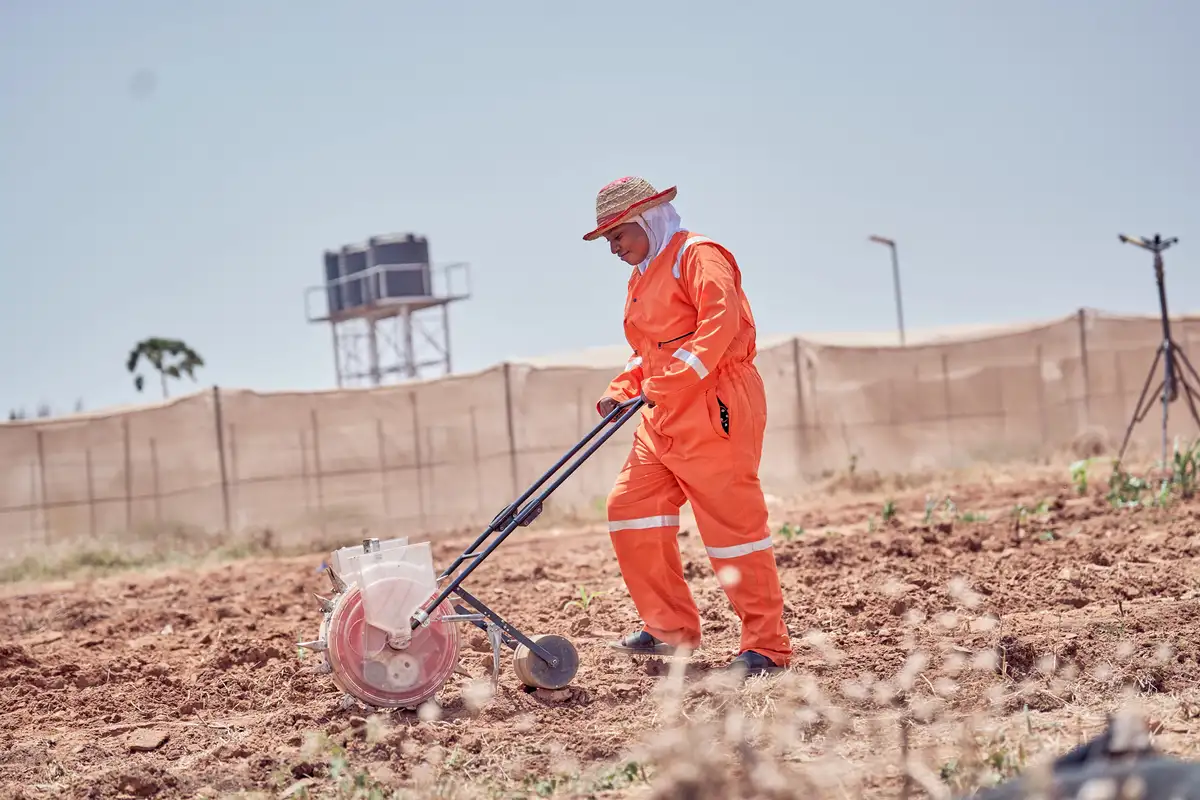
Take precision agriculture, for example. Precision planting, one of its core practices, helps reduce seed waste and improve crop establishment by ensuring seeds are placed at the right depth, spacing, and time. Achieving this level of accuracy requires planters, not guesswork. Likewise, efficient irrigation depends on pumps and water distribution systems, while timely harvesting, which reduces crop losses during increasingly unpredictable weather, requires harvesters capable of covering large areas quickly. Even soil conservation practices, such as minimum tillage, rely on specialized mechanized implements that reduce soil disturbance and limit carbon release.
Manual farming, for all its resilience and accumulated knowledge, cannot always respond quickly enough to the compressed and unpredictable planting and harvesting windows that climate change is creating. When the rains arrive two weeks late and end three weeks early, a farmer with access to a tractor has a fighting chance of planting and harvesting within that narrow window. A farmer relying solely on a hoe does not.
This is the essence of climate-smart mechanization. It is not merely about increasing productivity or reducing labor; it is about equipping farmers to adapt, respond, and survive in a changing climate.
Challenges Limiting the Implementation of Climate-Smart Agriculture Practices in Nigeria
Nigeria faces a unique set of pressures. The country has over 36 million farming households, the majority of which are smallholder farmers operating on small plots with limited resources. Climate variability hits these farmers the hardest. They have the least capacity to absorb shocks, the fewest resources to adapt, and the most to lose when a growing season goes wrong.
Although agriculture contributes roughly one-quarter of Nigeria's Gross Domestic Product (GDP) and employs more than one-third of the country's labour force, the sector continues to struggle with low levels of agricultural mechanization. Compared with many of its peers in sub-Saharan Africa, Nigeria's mechanization density remains critically low, limiting farmers' ability to adopt climate-smart practices and respond quickly to changing weather conditions. For smallholder farmers in particular, limited access to machinery can turn climate-smart practices that are technically possible into practices that are difficult to implement in the field.
The challenge, however, is not simply a shortage of machines. Despite genuine efforts to mainstream climate change adaptation into national policy and development planning, translating policy ambition into practical impact has proven difficult. Funding gaps, limited technical capacity, and weak institutional coordination continue to slow progress, making it harder for climate-smart agriculture and mechanization initiatives to reach the farmers who need them most.
How Digital Technology Is Making Climate-Smart Mechanization Accessible to Nigerian Farmers
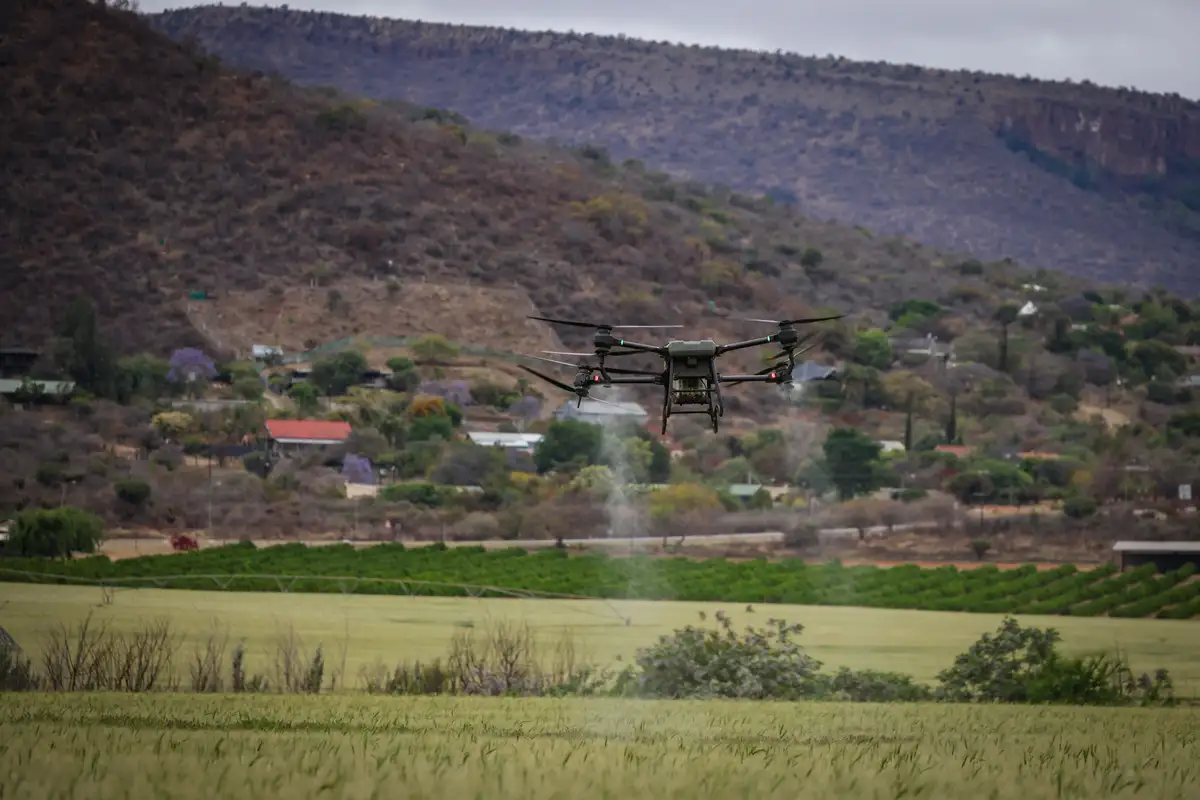
Climate-smart mechanization is not only about physical machines. Digital tools are becoming an essential part of the picture. Remote sensing, geographic information systems, and satellite data can tell farmers where moisture levels are dropping before visible signs of drought appear. Artificial intelligence can help predict optimal planting windows based on weather patterns. Internet of Things sensors on equipment can monitor soil conditions in real time.
These tools do not replace the farmer's knowledge. They extend it, giving smallholder farmers access to information that was previously available only to large commercial operations with dedicated agronomists. When a smallholder farmer can receive a data-driven recommendation on the best day to plant based on satellite weather data, the gap between subsistence farming and smart farming begins to close.
Digital technology is also reshaping how farmers access the machines themselves. Mobile applications that connect farmers to tractor owners for hire are emerging as one of the most practical solutions to Nigeria's mechanization access problem. Rather than purchasing expensive machinery that may be used only a few times each season, farmers can now book equipment directly through tractor-hailing apps: on-demand, location-based, and available exactly when the farming calendar demands it.
TracTrac Plus, for example, operates as a tractor-hailing platform connecting smallholder farmers to mechanization service providers and tractor owners across Nigeria, making it possible to hire a tractor the same way you would book any other service: quickly, transparently, and at a price that works.
This approach helps lower the cost barrier while ensuring that equipment is available during critical farming periods.
“For many smallholder farmers, access, not ownership, may be the most practical path toward climate-smart agriculture.”
The Path Forward: Building the Future of Climate-Smart Agriculture in Nigeria
Building a climate-smart mechanization system in Nigeria requires movement on several fronts simultaneously.
Financing mechanisms must make mechanized services affordable for smallholder farmers who cannot absorb the upfront cost of equipment. Service-based models, where farmers pay per hectare for mechanized work rather than owning machines outright, are already proving this is possible.
Research and development needs to produce machines suited to Nigerian conditions, machines that are smaller, more fuel-efficient, easier to maintain, and designed for the crop types and farm sizes that actually exist in the country rather than being imported from contexts with very different realities.
Extension services need to connect farmers not just to machines but also to the knowledge of how to use them in climate-adaptive ways, including when to plant, how to conserve soil moisture, and how to manage residue after harvest.
And the private sector needs to be the engine that delivers all of this at scale. The government can set the conditions, but the entrepreneurs, manufacturers, service providers, and technology platforms building mechanization ecosystems on the ground will determine whether climate-smart agriculture remains a concept or becomes a reality in Nigerian fields.
Nigeria's farmers have always adapted, but the pace of climate change is now outrunning traditional adaptation. The window to build systems that protect Nigeria's food supply is open now. Climate-smart mechanization is not a future investment but a present necessity, not only for the farmer already watching the rains arrive later each year, but also for the more than 200 million Nigerians whose food security depends on what that farmer can produce.